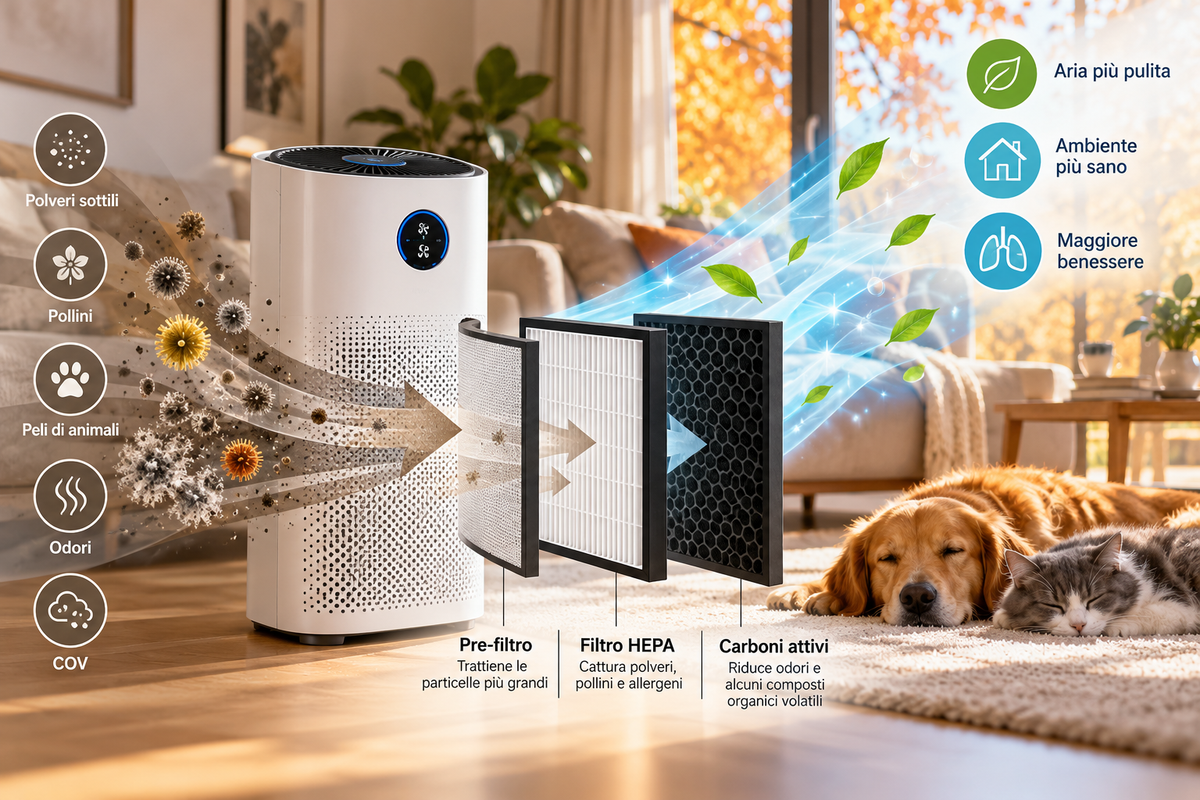
With the arrival of autumn 2026, choosing an activated carbon air purifier can help improve indoor air quality, especially when you spend more time at home and ventilate rooms less frequently. But which model should you buy? To choose the air purifier that best suits your needs, it’s important to compare filtration systems, coverage area, noise levels, energy consumption, and the cost of replacement filters.
Why buy an activated carbon air purifier?
An activated carbon air purifier uses a porous material that can adsorb many odors and some volatile organic compounds (VOCs) in the air. This is an option worth considering in spaces where you want to reduce cooking odors, smoke, and other gaseous pollutants, depending on the characteristics and amount of activated carbon used.
For more comprehensive filtration, it’s advisable to choose a device that combines activated carbon with a HEPA filter. The latter captures airborne particles such as fine dust, pollen, and other allergens, while activated carbon targets certain gases and odors. The two systems serve different but complementary functions.
How to choose an air purifier: 5 key criteria
1. Room size and CADR
The first thing to check is the purifier’s capacity to treat the air in the room. Check the square footage recommended by the manufacturer and the CADR value (Clean Air Delivery Rate), which indicates the amount of clean air delivered by the device. An undersized model may not provide adequate air exchange.
2. HEPA filter and activated carbon
If you want to reduce both particles and odors, choose an air purifier with combined filtration. The HEPA filter is designed to capture airborne particles, while activated carbon helps reduce some odors and gaseous compounds. For the latter, effectiveness also depends on the amount and quality of the filter material.
3. Noise level and nighttime use
If the purifier will be used in a bedroom or study, check the noise level in decibels (dB). Night mode can reduce noise, but often also reduces airflow. So weigh the trade-off between quiet operation and performance.
4. Energy consumption and maintenance
To choose an affordable air purifier for everyday use, compare its power consumption in watts and the availability of replacement filters. Consider not only the initial price, but also the cost of HEPA and activated carbon filters, their estimated lifespan, and the replacement frequency recommended by the manufacturer.
5. Sensors and smart features
More advanced models may include sensors to detect certain changes in air quality, automatic mode, a timer, and app control. These features help adjust operation to room conditions, but they do not replace good filtration capacity.

Which air purifier should you buy in fall 2026?
The right choice depends on the room and the problem you want to address. Here’s what to consider before buying.
| Need | Features to look for |
|---|---|
| Cooking odors and smoke | Activated carbon filter with adequate capacity |
| Dust and pollen | HEPA filter and appropriate CADR |
| Bedroom | Night mode and low noise |
| Large living room | Airflow suited to the room size |
| Everyday use | Low energy consumption and readily available filters |
| Automatic operation | Sensors and automatic mode |
Before buying, always check the stated performance for the specific model: not all activated carbon purifiers have the same adsorption capacity, and not all are designed to treat the same pollutants.
How much does it cost to maintain an air purifier?
The purchase price is only part of the cost. The total cost depends on the device’s power consumption, hours of use, the price of replacement parts, and how often the filters need replacing.
To estimate electricity consumption, you can use this formula:
Daily consumption (kWh) = power (W) × hours of use ÷ 1,000.
For example, a 40 W purifier used for 8 hours a day consumes 0.32 kWh per day at its rated power. Actual consumption may vary depending on the selected speed and operating mode.
Activated carbon purifier: what to check before buying
Before choosing a model, check these factors:
- Recommended area and CADR value.
- Presence of a HEPA filter and activated carbon, if you need both types of filtration.
- Noise levels at the speed you’ll typically use.
- Electricity consumption and availability of replacement filters.
- Filter cost and replacement instructions.
- Additional features that are genuinely useful for your environment.
Remember that an air purifier does not replace ventilation, removing sources of pollution, or necessary interventions in the presence of mold and damp. In addition, effectiveness against gases varies depending on the type of contaminant and the filtration system: for ozone, avoid devices that intentionally generate it.
Conclusion: which air purifier should you choose?
The best activated carbon air purifier for fall 2026 is one that combines an adequate airflow for the room, a filtration system suited to your needs, acceptable noise levels, and sustainable maintenance costs.
If you want to reduce both particles such as dust and pollen and certain household odors, choose a model with a HEPA filter and activated carbon. Before buying, compare the technical specifications, check the price of replacement filters, and consider the total cost of use: this will help you choose a solution that suits your home without paying for features you don’t need.
FAQ – Purifier air to carbon activated
1. What is an activated carbon air purifier used for? A purifier air to carbon activated helps to reduce odors and some compounds organic volatile present in the air home. For capture also dust fine, pollen and other particles, is recommended choose a model with filter HEPA.
2. What is the best activated carbon air purifier to buy in 2026? The model best is that with flow rate CADR adequate to surface area of the room, filter to carbon activated effective, noise level contained and filters of replacement easily easy to find. The choice depends by pollutants that if wants reduce and by budget available.
3. How much electricity does an activated carbon air purifier use? The consumption depend by power and by hours of operation. For for example, a model by 40 W used per 8 hours per day consumes about 0,32 kWh per day to power rated, to which is applied the cost of electricity electric.
4. How often should the activated carbon filter be changed? The frequency of replacement depends by model, the intensity of use and by quantity of odors and contaminants present. It is important follow the instructions of the manufacturer’s and replace the filter when reaches the limit of use expected.

Leave a comment
This site is protected by hCaptcha and the hCaptcha Privacy Policy and Terms of Service apply.