Cutlery isn't just a kitchen tool: it reflects the style of the table, respect for tradition, and concern for health. From proper table settings to the choice of materials like nickel-free cutlery , to models designed for children, every detail matters. In this article, we'll discover how to best use them and how to keep them clean and shiny.
Cutlery at the table: the etiquette you should know
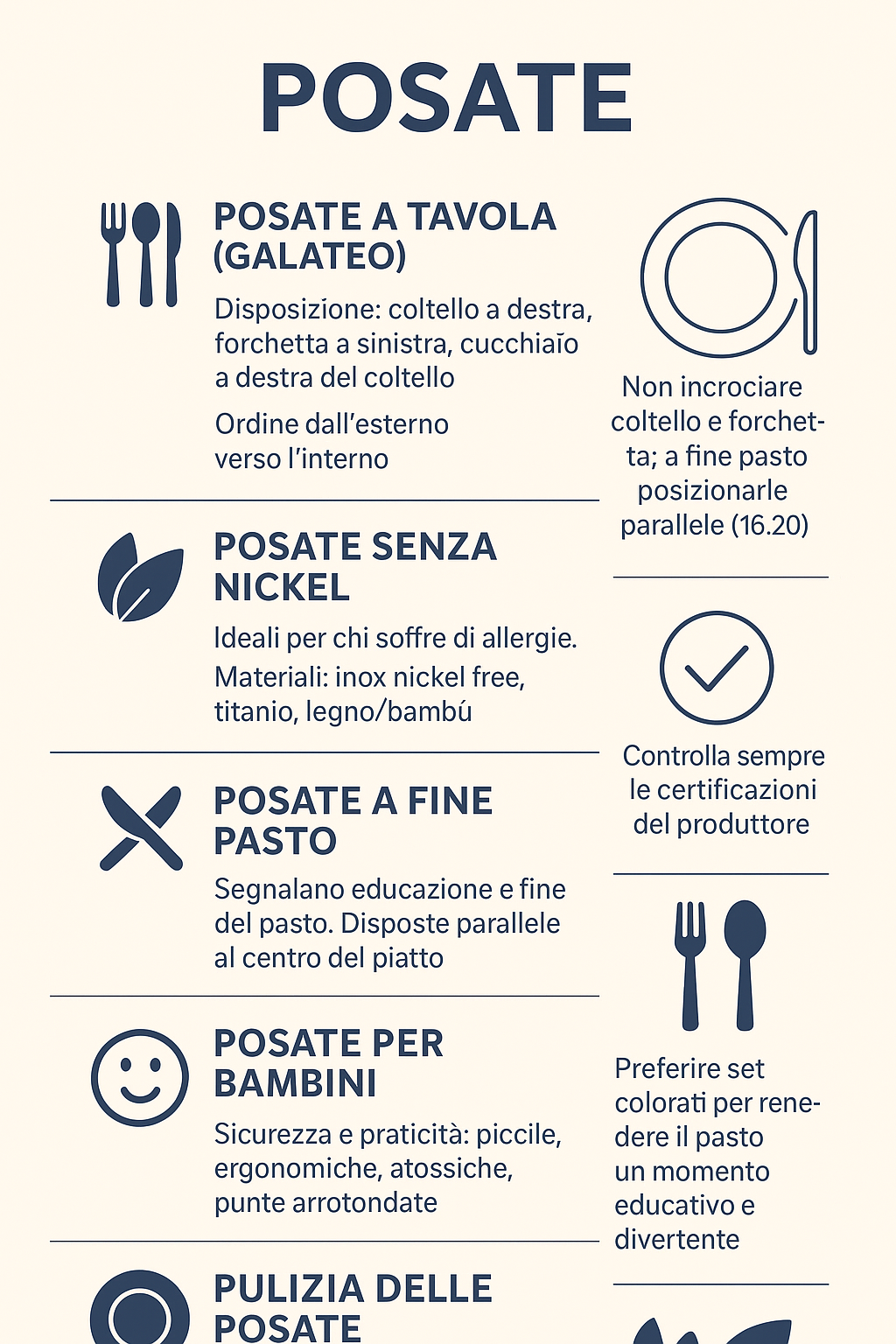
Cutlery etiquette establishes precise rules, especially at formal dinners:
-
Initial arrangement : knife to the right of the plate (blade facing inward), fork to the left, spoon to the right of the knife.
-
Order of use : start from the outermost cutlery pieces and work your way in, following the courses.
-
End of meal : cutlery parallel to the center of the plate (4:20 pm on the clock face), signal to the waiter that the diner has finished.
One detail that makes a difference? Never cross your knife and fork: it could be interpreted as rudeness.
Nickel-free cutlery: a healthy choice
More and more people are choosing nickel-free cutlery to avoid allergies or irritation. The main alternatives are:
-
18/10 stainless steel certified “nickel free”
-
Titanium , light and resistant
-
Cutlery made of bamboo or treated wood , perfect for those looking for eco-friendly solutions
Opting for these versions means combining design and food safety, especially for those with highly sensitive skin.
🔎Find out why we trusted an Italian brand
Cutlery at the end of a meal: style and rules
The moment of concluding a meal is not only a culinary one, but also a matter of etiquette . According to etiquette:
-
Cutlery should never be left scattered on the plate.
-
If you take a break, leave the cutlery in an upside-down “V” shape, without overlapping them.
-
At the end of the meal, as mentioned, the knife and fork are placed parallel to the center of the plate.
These small touches convey elegance and attention.
Children's cutlery: practicality and safety
Children's cutlery is not a simple scaled-down version: it must be designed with specific features:
-
Small size and ergonomic handle
-
Non-toxic materials (nickel-free stainless steel or food-grade silicone)
-
Rounded tips , to ensure safety during the first approaches to independence at the table
Many brands offer colorful and fun sets to turn mealtime into an educational game.
Cleaning Cutlery: Practical Tips
Cutlery maintenance is essential to maintain its aesthetics and hygiene:
-
Instant wash : prevents food residue from causing stains or corrosion.
-
Dishwasher safe, yes, but with caution : prefer delicate cycles and non-aggressive detergents.
-
Natural polish : a microfiber cloth or a remedy like water and vinegar restores shine.
For wooden or bamboo cutlery, it is best to hand wash and dry immediately to avoid warping.
🔎Find out why we need to be careful about materials
FAQ about cutlery
1. How should cutlery be placed at the table according to etiquette?
Knife on the right with blade facing inward, fork on the left and spoon to the right of the knife.
2. Does stainless steel cutlery always contain nickel?
Not all: there are lines of nickel-free stainless steel cutlery, ideal for allergy sufferers.
3. How do you mark the end of a meal with cutlery?
Place the knife and fork parallel to the center of the plate, as if to indicate 4:20 PM.
4. Which cutlery is best for children?
Those with ergonomic handles, safe materials and rounded tips.
5. What is the best way to clean cutlery?
Wash immediately after use, delicate cycle in the dishwasher or use natural remedies like water and vinegar for polishing.

Leave a comment
All comments are moderated before being published.
This site is protected by hCaptcha and the hCaptcha Privacy Policy and Terms of Service apply.