25% of adolescents between 14 and 17 years old suffer from cellphone addiction. 61.4% use tablets or smartphones every day, often as a "digital pacifier." Many start between 2 and 3 years old. Pediatricians [da] report an alarming increase in cases, with young children showing language and behavioral disorders associated with prolonged screen use.
Is psychomotor play really important for children's development?
The answer is yes: it represents one of the foundations on which coordination, autonomy, and cognitive abilities are built in the early years of life.
In summary, children learn through movement. It is not just about playing but developing fundamental skills that influence physical, mental, and emotional growth.
What psychomotor play is, in simple terms
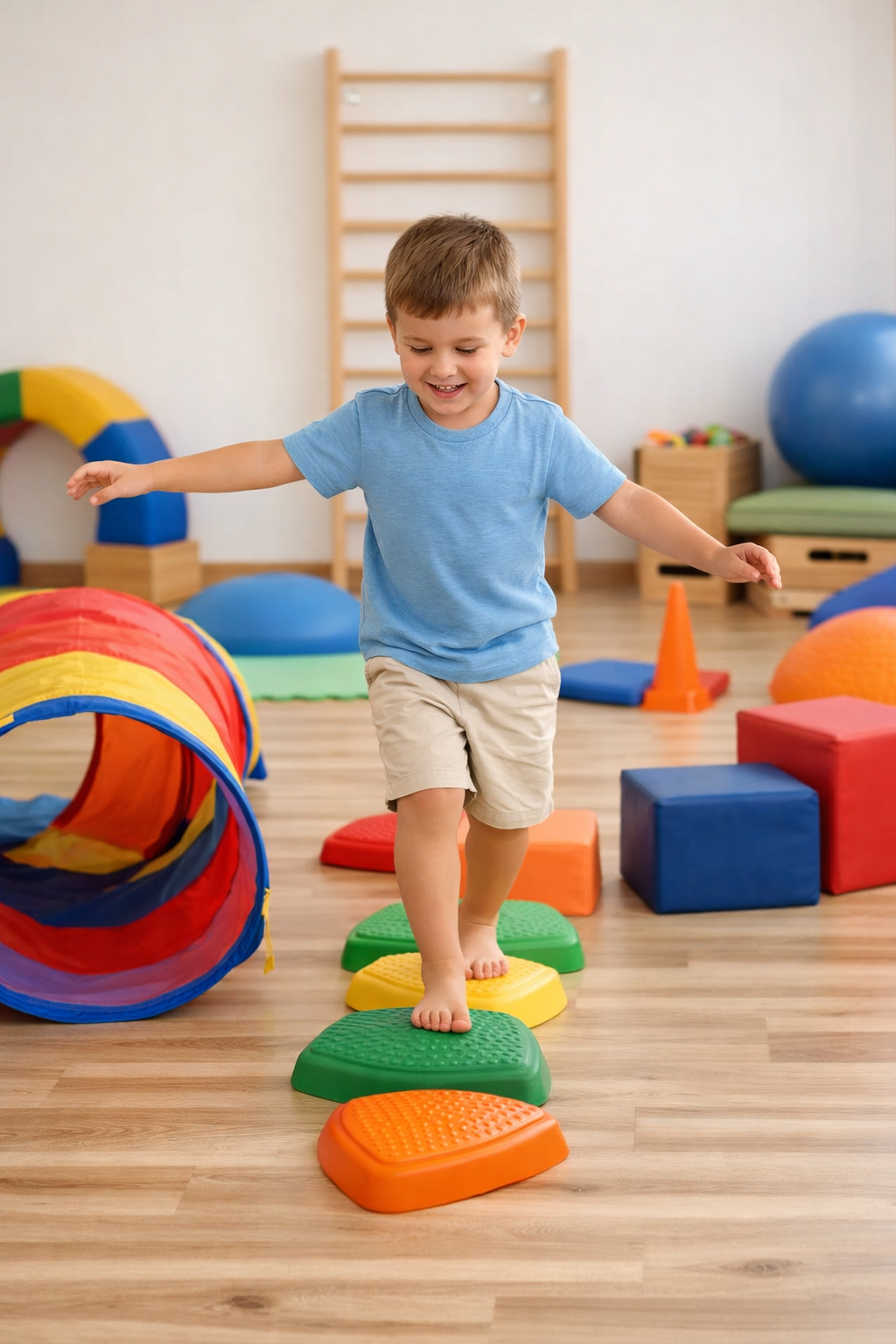
Psychomotor play includes all activities in which the child uses their body to interact with space and their surroundings.
Through movement, the child learns to know themselves, orient themselves, and respond to stimuli. It is a type of concrete learning based on direct experience, not theoretical rules.
🔎How to choose a psychomotor game for your child
Why it is so important in the early years
In the early years of life, the brain is particularly receptive. Every experience helps build fundamental connections for development.
Movement plays a central role in this process. It allows the child to develop balance, coordination, and body awareness. These skills are not isolated but also influence attention, learning ability, and personal confidence.
What psychomotor play really develops
Reducing psychomotor play to a simple physical activity is a mistake. Its impact is much broader.
From a cognitive point of view, it helps the child understand relationships, solve small problems, and orient themselves in space. On the motor level, it improves movement control and balance. Emotionally, it strengthens self-esteem and confidence in their abilities.
All these aspects develop together, creating harmonious growth.
The current context: less movement, more passivity
Today many children have fewer opportunities to move freely compared to the past. The time spent sitting or in front of screens has increased, while the time dedicated to physical exploration has decreased.
This change can affect development because it reduces spontaneous motor experiences that are fundamental in the early years.
The problem is not technology itself, but the lack of balance between active and passive activities.
How to promote development in daily life
It is not necessary to create complex environments or special structures. Even at home, effective movement opportunities can be offered.
What matters is to leave room for exploration, avoid overly restricting the child, and propose activities appropriate to their age. Free play remains central but can be accompanied by more structured moments that stimulate specific skills.
🔎What did Rustilia choose?
The role of games designed for movement
Alongside spontaneous play, there are tools designed to promote psychomotor development in a targeted way.
Solutions like those from Italveneta are designed to stimulate coordination and balance, offering a safe and engaging environment.
They do not replace free experience but enrich it and make it more complete.
What really changes in the child's development
When a child has the opportunity to move and experiment appropriately, concrete changes are observed.
It improves coordination, increases confidence in movements, and grows autonomy. At the same time, cognitive and relational skills are strengthened.
In practice, the child develops a greater ability to face new situations and adapt to the environment.
In summary
Psychomotor play is not an accessory activity but an essential component of development.
It allows building the foundations on which learning, autonomy, and confidence develop. Body and mind grow together through concrete experiences and movement.
FAQ – Frequently Asked Questions
Is psychomotor play really necessary?
Yes, it is fundamental for the child's overall development, especially in the early years.
At what age can it start?
From the first months, adapting activities to the child's abilities and growth.
Is a specific space needed?
No, the home environment can also be suitable if organized simply and safely.
Is free play enough?
It is essential, but it can be combined with more structured activities to further stimulate development.
Do psychomotor games also help learning?
Yes, because they improve coordination, attention, and cognitive abilities.


Leave a comment
All comments are moderated before being published.
This site is protected by hCaptcha and the hCaptcha Privacy Policy and Terms of Service apply.