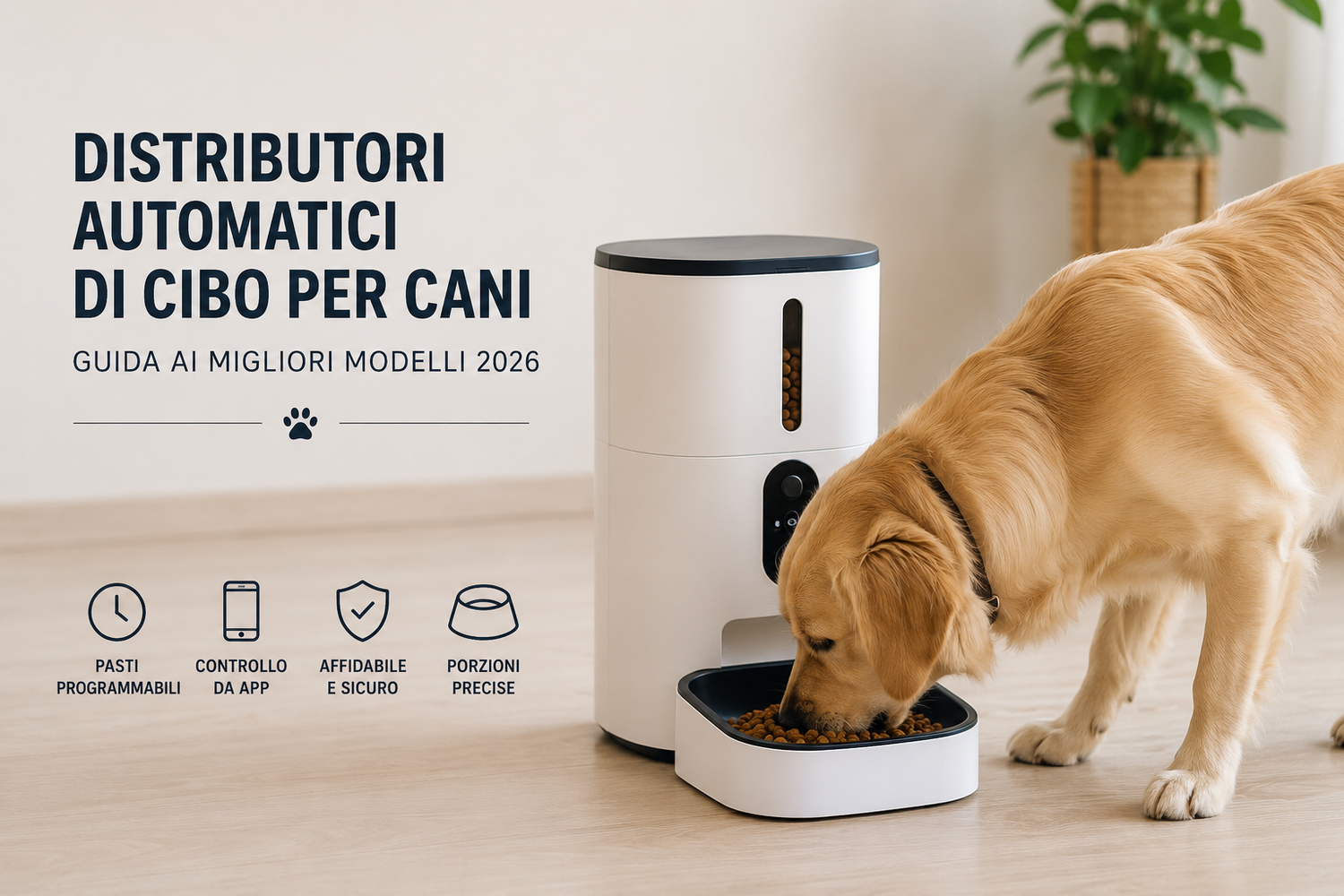
An automatic dog food dispenser is a device that dispenses portions of dry food at scheduled times, ensuring that the dog has regular meals even when the owner is away from home. In 2026, the available models differ mainly in tank capacity, dosing accuracy, food preservation system, and level of connectivity—factors that determine how well the device truly fits the habits of the dog and the family.
How an automatic dog feeder works
The basic principle is common to all models: a sealed tank contains the dry food, an internal mechanism (auger or rotor) takes the set amount and dispenses it into the bowl at the scheduled time. The difference between a reliable device and a mediocre one comes down to three factors: dosing consistency over time, the airtightness of the container, and the mechanism's resistance to jams caused by irregularly shaped or dusty kibble.
Essential features to evaluate
Tank capacity. This should be matched to the number of dogs, their size, and the desired refill frequency. For a medium-sized dog, a 3–4 kg tank generally provides one to two weeks of autonomy, while families with multiple dogs or large dogs should consider capacities above 6 kg.
Dosing accuracy. This is the most critical parameter for the animal's health: a consistent, even small, difference between the set portion and the portion dispensed can lead to overfeeding or underfeeding over time. The most reliable models specify a narrow dosing tolerance and allow programming in grams, not just in “scoops.”
Number of programmable meals. Most devices allow 4 to 6 meals per day with customizable times; for dogs with specific veterinary needs (diabetes, weight control), it is advisable to prioritize models that also allow a portion to be divided into several closely spaced servings.
Food preservation system. A tank with an airtight seal and an optional desiccant insert keeps kibble fresh for longer and reduces the risk of fats becoming rancid—an often underestimated factor that is nevertheless important for nutritional quality over time.
Power supply and backup autonomy in the event of a blackout. Models with dual power supplies (mains electricity plus backup batteries) prevent a power outage from leaving the dog without a meal, an important detail for anyone who is away for several days.
Connectivity and remote control. A dedicated app, notifications when food has or has not been dispensed, the ability to dispense an extra portion remotely, and, in more advanced models, an integrated camera with two-way audio for interacting with the dog from a distance.
Ease of cleaning. Removable, washable tanks and bowls are essential for hygiene, especially with wet or semi-moist food; components that come into direct contact with food should be removable without tools.
Mechanism noise. Some dogs are frightened by the sound of food being dispensed: auger systems tend to be quieter than free-fall systems with a rotor.
Compatibility with the type of food. Not all dispensers handle large or irregularly shaped kibble well; anyone using extra-large food or mixtures containing dehydrated pieces should check the maximum dimensions allowed by the dispensing chute.

How to choose based on your needs
- Short, daily absences (working away from home): a model with basic programming, a 3–4 kg tank, and a backup battery is sufficient.
- Extended absences (weekends, trips): it is better to choose large tanks, remote connectivity, and a camera for monitoring the dog.
- Dogs with medical needs (controlled diets, obesity, diabetes): prioritize clearly stated dosing accuracy and the ability to divide portions.
- Multiple dogs in the home: consider whether a single-bowl dispenser with controlled access is needed (to prevent one dog from eating the other's portion), or whether multiple separate devices would be more suitable.
Common mistakes to avoid
A common mistake is choosing a dispenser solely based on tank capacity while overlooking dosing accuracy: a large but imprecise container can still alter the dog's feeding over time. Another mistake is failing to check compatibility with the format of the kibble normally used, which is a frequent cause of jams. Finally, maintenance should be considered: a device that is difficult to disassemble and clean tends to be used less carefully, resulting in hygiene problems.
Frequently asked questions
Is an automatic dispenser suitable for dogs of all sizes? Yes, provided that you choose a tank capacity and dispensing chute dimensions suited to the dog's size and daily portion.
How long does the backup battery charge last? It varies by model, but the backup function is mainly intended to cover brief power outages, not to replace the electrical supply for extended periods.
Is it possible to program different meals for multiple dogs? Only multi-bowl dispensers or those designed for a single animal with controlled access (for example, through recognition technology) make it possible to manage different diets in the same household.
Does the dispenser replace owner supervision? No: it automates meal dispensing but does not replace regular monitoring of the dog's appetite, behavior, and health.

Leave a comment
All comments are moderated before being published.
This site is protected by hCaptcha and the hCaptcha Privacy Policy and Terms of Service apply.