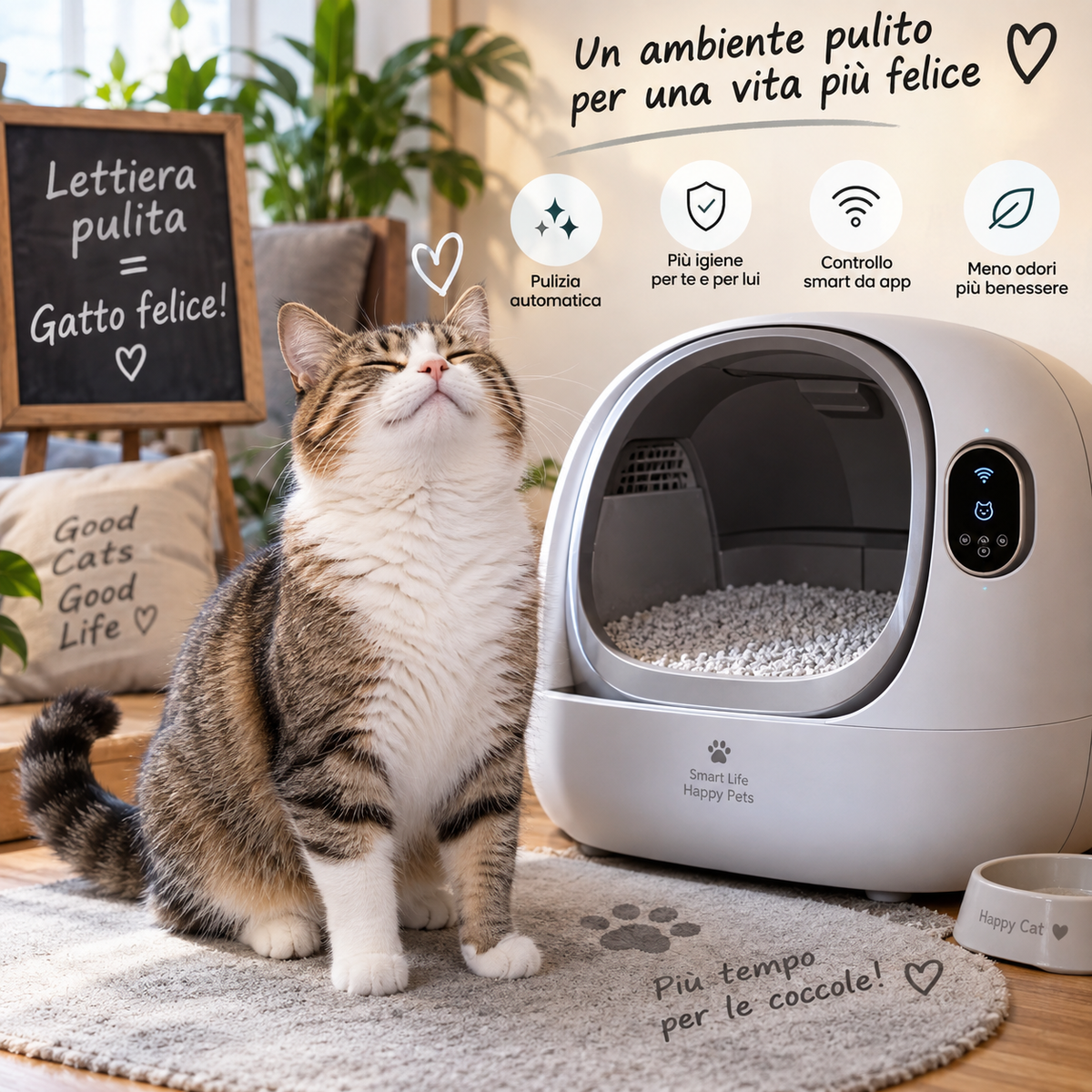
Litter box odors are one of the most common problems for people living with a cat in an apartment. The main cause is not the feces themselves, but the ammonia released from urine when it remains in contact with the litter for several hours. Self-cleaning litter boxes are designed specifically to address this mechanism, drastically reducing the time waste is exposed to the air.
Why traditional litter boxes smell
When a cat urinates, bacteria in the litter begin breaking down urea into ammonia after just 2-4 hours. The longer waste remains in the litter box, the stronger the odor becomes. With a manual litter box, even when cleaned "once a day," waste still remains in contact with the litter for hours, allowing bacteria to act undisturbed.
How a self-cleaning litter box works
Automatic models (with a rotating rake or sieve) detect the cat's presence using weight or infrared sensors and, after waiting a few minutes, separate solid waste from clean litter, depositing it in a sealed compartment. The practical result:
- Removal within 5-20 minutes of use, compared with hours for manual cleaning
- Sealed waste compartment, often with a bag and sometimes with a carbon filter
- Always-clean, dry litter, which also reduces the formation of hard clumps
Real effectiveness against odors: what the data says
Effectiveness is not "magic" but measurable, and depends on three factors:
- Removal time: the sooner waste is isolated, the less time bacteria have to produce ammonia. This is the factor with the greatest real-world impact.
- Type of litter: self-cleaning litter boxes deliver better results with high-quality clumping litter (fine bentonite), which compacts well and is thoroughly sifted. Low-quality litter reduces the system's effectiveness.
- Capacity and frequency of waste drawer emptying: even the best automatic system loses effectiveness if the sealed container is not emptied regularly (generally every 1-2 weeks for one cat).

Self-cleaning litter box vs manual litter box: a practical comparison
| Appearance | Manual litter box | Self-cleaning litter box |
|---|---|---|
| Waste removal | 1-2 times a day | Automatic, within a few minutes |
| Odor control | Depends on the user's consistency | Constant, independent of the user |
| Initial cost | Low (€10-30) | Medium-high (€150-500) |
| Maintenance | Daily manual cleaning | Waste drawer emptying every 1-2 weeks |
| Ideal for | One cat, limited budget | Multiple cats, frequent absences, odor control as a priority |
Limitations to be aware of
Self-cleaning litter boxes do not completely eliminate odor; they significantly reduce it. They should still be supplemented with:
- Weekly cleaning of the waste drawer, even if sealed
- Periodic litter replacement (every 2-4 weeks, not just "topping it up")
- Cleaning the mechanical compartment, where urine residue can accumulate
In addition, some cats are wary of the mechanism's noises, which can lead to irregular use of the device and partially negate its benefits.
Frequently asked questions
Do self-cleaning litter boxes really eliminate ammonia odor?
They significantly reduce it because they remove waste before bacteria produce significant amounts of ammonia, but they do not eliminate it completely: the litter still needs to be replaced periodically.
How often should the waste drawer be emptied?
On average, every 7-14 days for one adult cat, with variations depending on the model's capacity and the number of cats in the home.
Is it worthwhile for a home with one cat?
It depends on the budget and priorities: for one cat, a well-maintained manual litter box may be sufficient, but people who have little time or are sensitive to odors still notice a marked difference.
FAQ – Self-cleaning litter boxes and odor control
1. Do self-cleaning litter boxes completely eliminate litter box odor?
No, they significantly reduce it by removing waste within a few minutes of use, before bacteria turn urine into ammonia. The litter still needs to be replaced periodically, and the waste drawer emptied every 1-2 weeks to maintain the result.
2. How long does a self-cleaning litter box take to remove waste?
Generally between 5 and 20 minutes after the cat has used the litter box, thanks to weight or infrared sensors that start the automatic cleaning cycle without disturbing the animal.
3. What type of litter is needed for the best odor-control results?
A high-quality clumping litter, typically fine-grain bentonite, because it clumps well and is completely sifted by the mechanism. Low-quality litter reduces the system's effectiveness and can cause jams.
4. Is a self-cleaning litter box worthwhile if I have only one cat?
It depends on your priorities: with one cat, a manually cleaned litter box maintained consistently may be sufficient, but people who have little time, are often away from home, or are particularly sensitive to odors still notice a marked improvement compared with manual cleaning.

Leave a comment
All comments are moderated before being published.
This site is protected by hCaptcha and the hCaptcha Privacy Policy and Terms of Service apply.