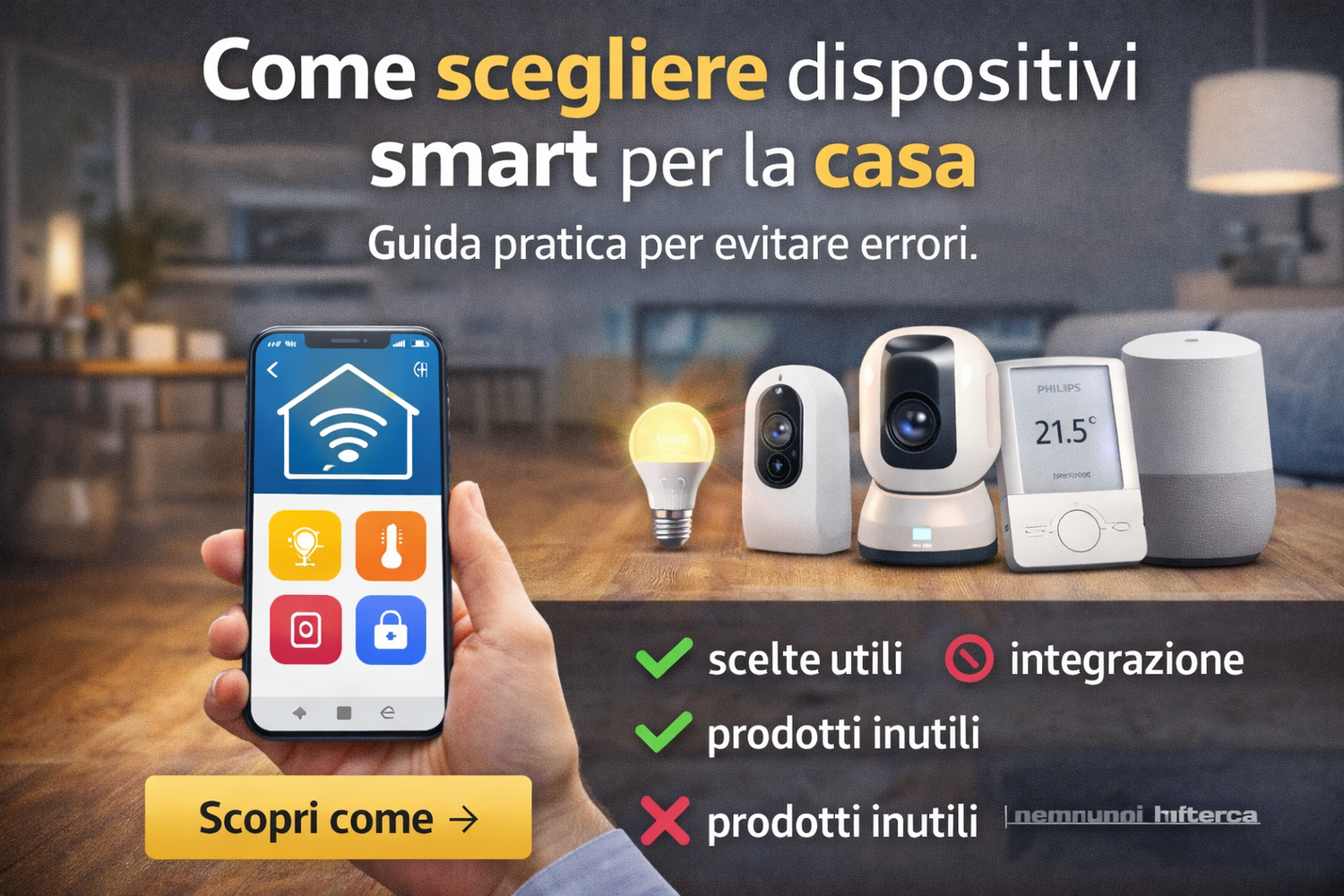
How to truly choose smart home devices without making mistakes?
The answer is simple: don't start with technology, but with what you truly need.
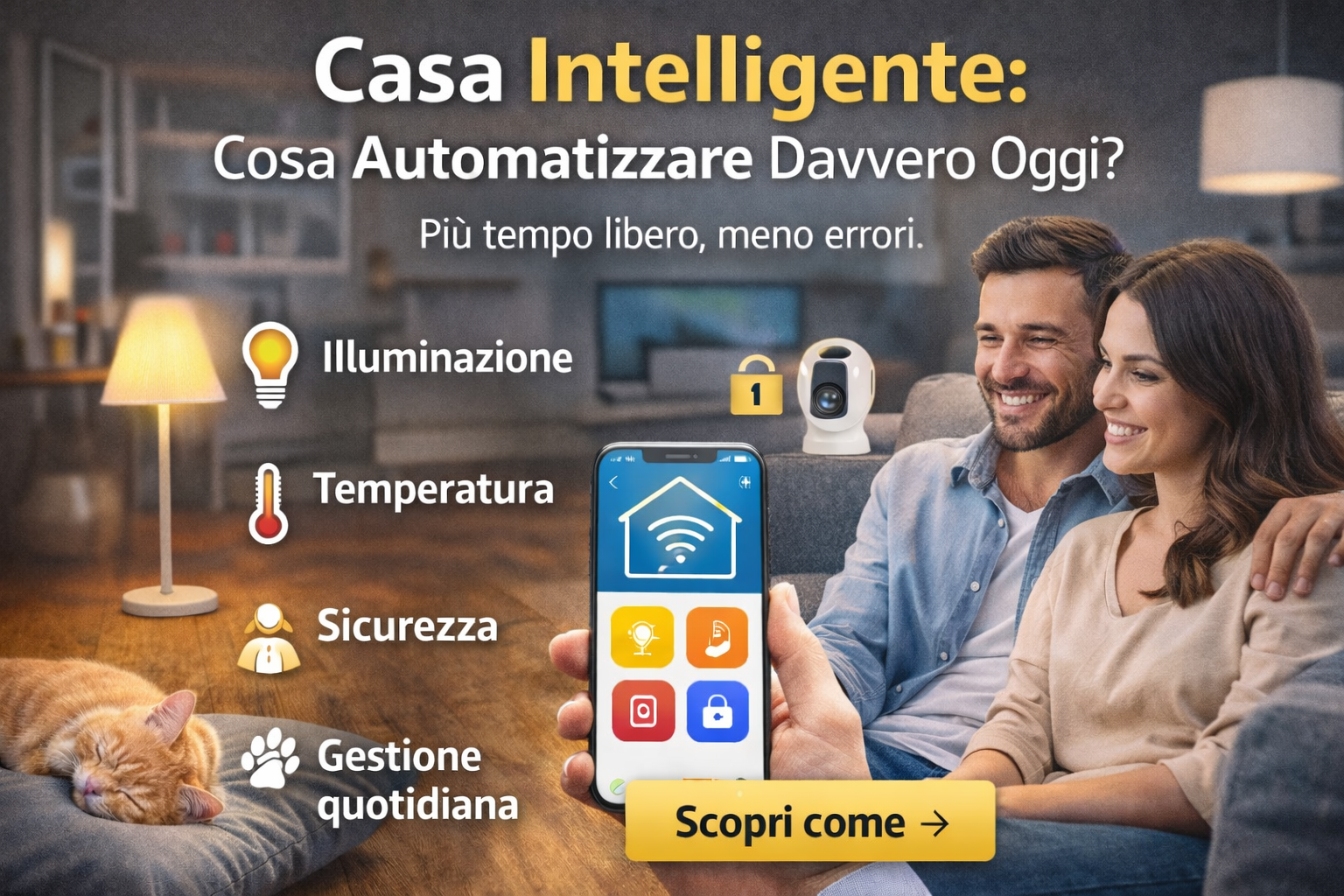
After seeing what you can automate in a smart home, there's only one biggest risk:
👉 buying useless devices that don't truly change your life.
🧠 The problem isn't technology, it's the choice
Today the market is full of smart solutions.
The result? Confusion.
Many people:
- buy products that are disconnected from each other
- complicate their lives instead of simplifying them
- stop using them after a short while
👉 The problem isn't the smart home.
👉 It's choosing without criteria.
🔎 What choices has Rustilia made?
⚙️ The basic rule: start with a concrete need
Before choosing any device, stop and ask yourself:
👉 what do you truly want to improve?
Not "what can I automate", but:
- what I often forget
- what makes me waste time
- what causes me stress
Concrete examples:
- forgetting to turn off lights
- suboptimal temperature
- unattended home
👉 This is where an intelligent choice begins.
💡 Devices that make sense (almost always)
Some categories work well because they solve real problems.
Smart lighting
Perfect for improving comfort and reducing waste.
Easy to install, immediate to understand.
Smart thermostats
Manage temperature automatically.
👉 Savings + real comfort.
Security and control
Cameras, sensors, and notifications help reduce uncertainty when you're not home.
Daily automations
Everything related to managing repetitive tasks.
👉 This is where the real difference lies.
⚠️ Devices to avoid (at least initially)
Many people make mistakes here.
Not everything that's "smart" is useful.
Avoid:
- overly complex products
- disconnected devices
- solutions that don't solve a real problem
👉 If you don't use it every day, you don't need it.
🔗 Integration: the game-changer
One of the most underestimated aspects is this:
👉 devices must communicate with each other
If each product works alone:
- you waste time
- you increase complexity
- you reduce real value
When everything is integrated instead:
👉 the house truly becomes "smart"
📊 What changes when you choose well
When you start from a real need and choose consistently:
- you simplify daily management
- you reduce errors and oversights
- you improve comfort
But most importantly:
👉 you truly start to use technology
👉 you don't suffer from it
📌 In summary
Choosing smart devices doesn't mean buying more.
It means choosing better.
👉 Start with the problem
👉 choose simple solutions
👉 focus on integration
❓ FAQ – Frequently asked questions
What is the first smart device to buy?
The one that solves the most frequent problem in your daily life, often lighting or temperature.
Is a complete system needed right away?
No. It's better to start with one or two devices and then expand.
Are smart devices difficult to use?
No, modern ones are designed to be simple and intuitive.
Can I use devices from different brands?
Yes, but it's important to check that they are compatible with each other.
How much can you save with a smart home?
It depends on usage, but often energy waste and inefficient management are reduced.

Leave a comment
This site is protected by hCaptcha and the hCaptcha Privacy Policy and Terms of Service apply.