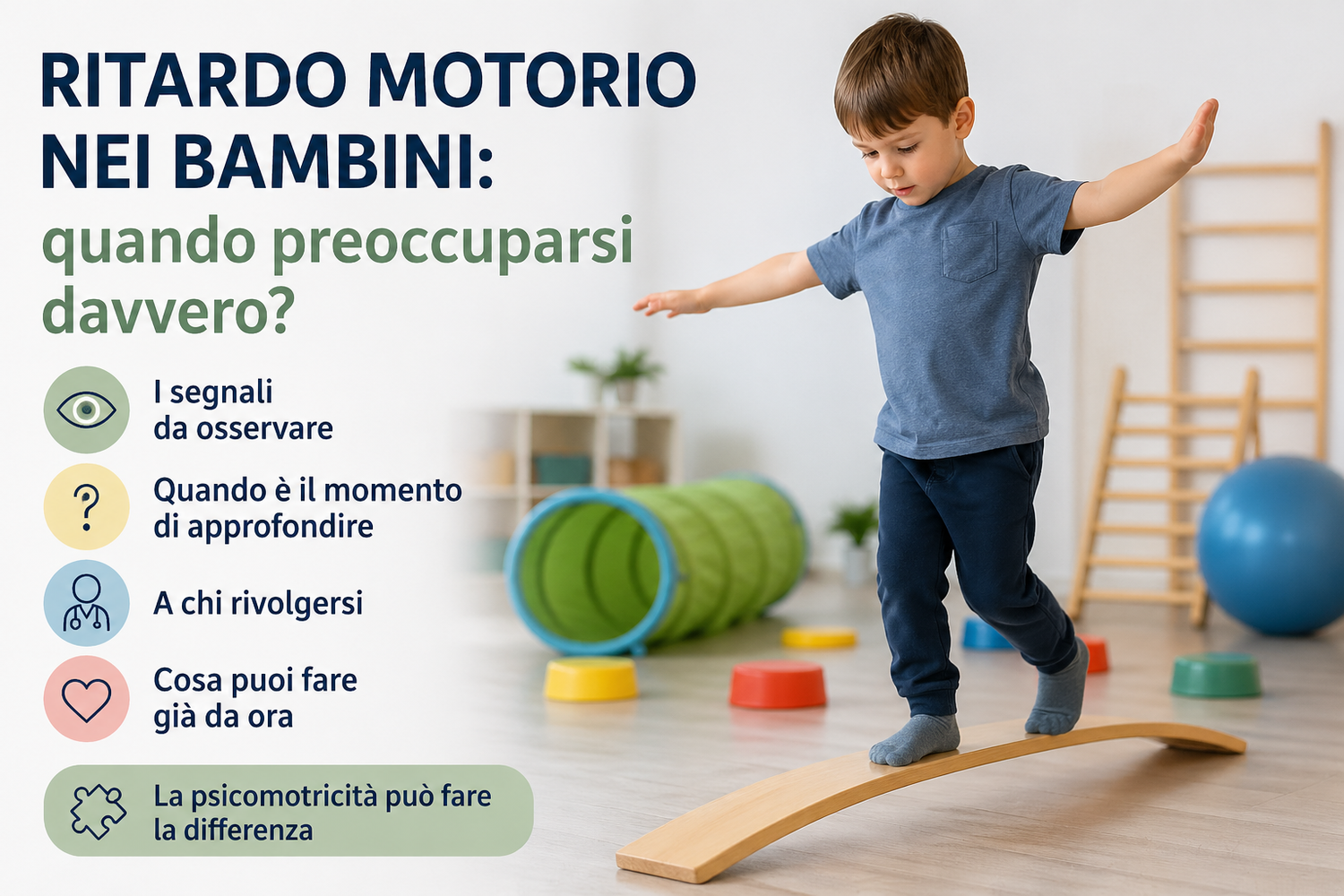
What is motor delay in children?
Motor delay is a difficulty in developing movement skills compared to the child's age. It can involve balance, coordination, posture, or fine motor skills (like using hands).
It is not always a serious problem: many children develop these skills at different rates.
What signs should you watch for?
Here are the most common signs not to ignore:
👶 2–3 years
-
- Walks unsteadily or often falls
- Struggles to climb up or down small steps
- Avoids movement games
🧒 4–5 years
-
- Is very clumsy in movements
- Cannot jump or balance
- Has difficulty using scissors or pencils
👦 6+ years
-
- Poor coordination in games (ball, running)
- Difficult or poorly controlled handwriting
- Gets tired quickly during physical activities
👉 A single sign is not enough: frequency and persistence over time matter .
When to really worry?
This is the key point.
You should investigate further if:
-
- Difficulties persist for several months
- The child systematically avoids motor activities
- There is a worsening instead of an improvement
- Difficulties impact daily life (school, play, independence)
👉 In these cases, it is helpful to consult a professional.
Motor delay or just a growth phase?
Many parents confuse two situations:
✔️ Normal variability
-
- The child is just a little slower
- Improves gradually
- Still participates in activities
⚠️ Possible real difficulty
-
- Avoids movement
- Easily frustrated
- Does not improve over time
The difference lies in the progression: if there is no development, it needs to be investigated.
What can it depend on?
The causes can be different:
-
- Poor motor stimulation
- Excessive use of digital devices
- Insecurity or fear of making mistakes
- Minor neuromotor difficulties
In most cases, these are recoverable situations with the right support.
What to do immediately (even without alarm)
Even before consulting a specialist, you can start like this:
-
- Encourage active play (running, jumping, climbing)
- Reduce time on tablets and video games
- Offer simple and fun activities
- Avoid criticizing or comparing with other children
👉 Movement should be experienced as pleasure, not performance.
When to consult an expert?
Consider professional support if:
-
- The signs are obvious and constant
- The child shows discomfort or frustration
- You have persistent doubts as a parent
The reference figures can be:
-
- psychomotrician
- pediatrician
- child neuropsychiatrist
Can psychomotricity help?
Yes, and it is often the first step.
Psychomotricity helps the child to:
-
- improve coordination and balance
- gain confidence in movement
- develop autonomy and confidence
Through play, the child works on body and mind together.
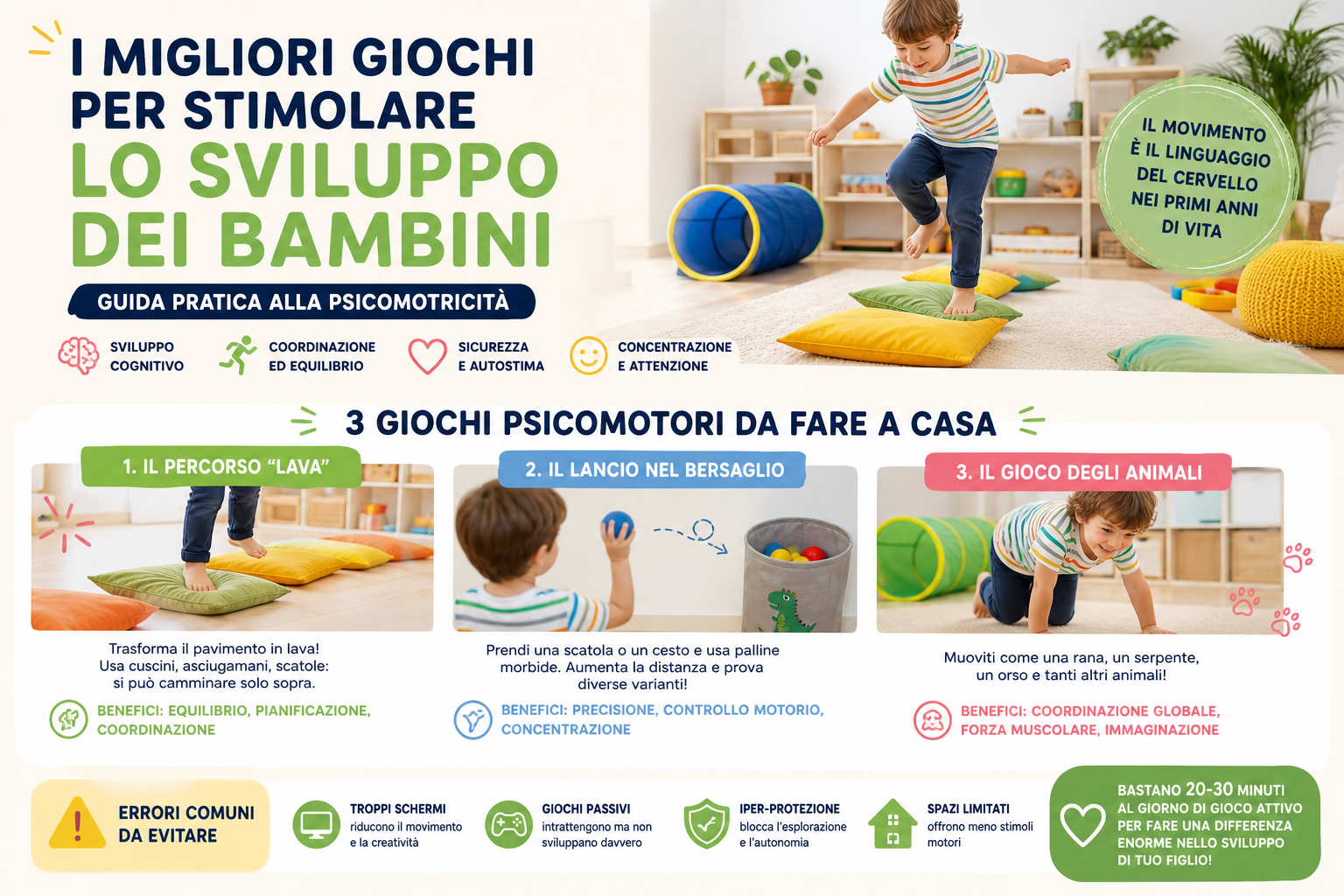
🔎Discover what psychomotor games are
Conclusion
Not all clumsy children have a problem.
But ignoring persistent signs is a mistake.
👉 Observe, without anxiety but with attention.
👉 Act early, without waiting for it to "pass on its own".


Leave a comment
All comments are moderated before being published.
This site is protected by hCaptcha and the hCaptcha Privacy Policy and Terms of Service apply.