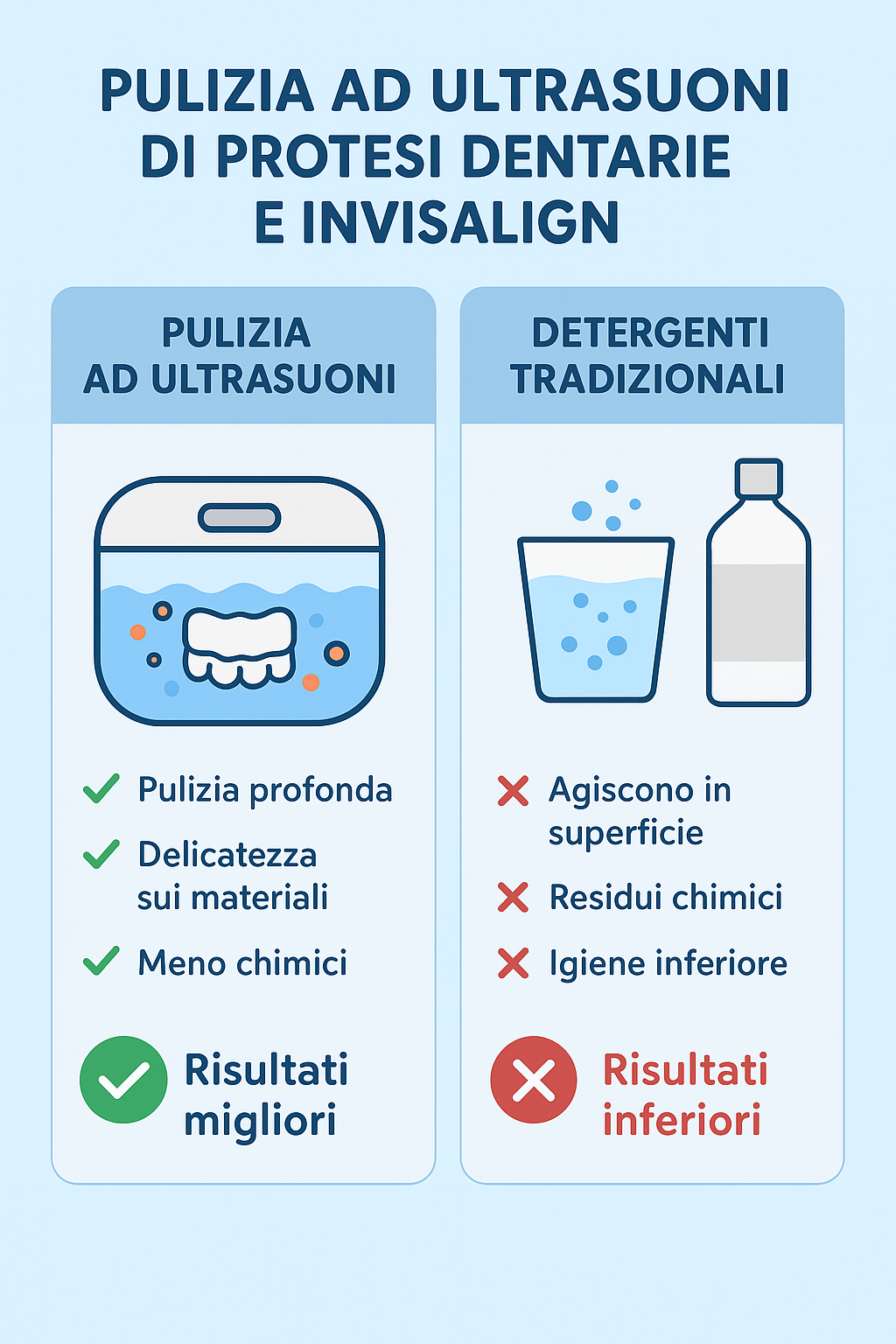
Oral hygiene care isn't just about natural teeth: those who wear dentures, splints, or invisible braces like Invisalign must also pay attention to their daily cleaning. Ultrasonic cleaning has become increasingly popular in recent years, a technology that promises deeper and safer results than traditional cleaning tablets or liquid solutions.
But what are the real differences between these methods? And which is the most effective solution?
How traditional detergents work
The most common products for cleaning dentures and clear masks are:
-
Effervescent tablets : dissolved in water, they release active oxygen and chemical agents that remove surface stains and bacteria.
-
Liquid disinfectant solutions : used by immersion, they help reduce bad odors and keep the appliance sanitized.
-
Specific toothbrushes and toothpastes : recommended especially for rigid dentures, they allow for direct mechanical action.
👉 Advantages: practicality, low cost, easy availability.
👉 Limitations: they act mainly on the surface, can leave chemical residues, do not always completely eliminate plaque and bacterial biofilm.
🔎Find out the rules for perfect home hygiene.
Ultrasonic cleaning: the technology
Ultrasonic cleaning uses high-frequency vibrations that, when immersed in water (often with a small amount of neutral detergent), generate microbubbles capable of removing dirt, bacteria, and residue even in the most difficult-to-reach places.
👉 Main advantages:
-
Deep Removal : Eliminates food debris, plaque and invisible biofilm.
-
Gentle : Does not scratch or damage clear materials like Invisalign.
-
Speed : a complete cleaning takes just a few minutes.
-
Fewer chemicals : Water or a neutral detergent is often sufficient, thus reducing exposure to harsh substances.
👉 Limitations: Requires the purchase of a dedicated device (higher initial cost than tablets).
Denture Cleaning vs. Invisalign
-
Dentures : These tend to retain more debris and stains. Ultrasound removes initial tartar and biofilm better than tablets.
-
Invisalign aligners : Since they're transparent and more delicate, they can become discolored or cloudy with harsh detergents. Ultrasound is less abrasive and maintains their clarity longer.
What is the best choice?
-
If you're looking for simplicity and low cost , cleaning tablets are still a valid solution for quick daily hygiene.
-
If you want a more thorough, safe and long-lasting cleaning , especially for Invisalign and clear appliances, ultrasonic cleaning is the optimal choice.
Many dentists today recommend alternating the two methods: daily use of traditional detergents + ultrasonic cleaning 2-3 times a week for complete protection.
Conclusions
The difference between the two methods lies in the depth and gentleness of the cleaning: detergents work on the surface, while ultrasound reaches even the most difficult areas. For those who wear dentures or invisible braces, incorporating ultrasound technology into your routine can make a difference in terms of hygiene, aesthetics, and the longevity of the device.
🔎 FAQ
-
Will ultrasound damage Invisalign? → No, it's gentler than harsh detergents.
-
Can I use only effervescent tablets? → Yes, but they don't guarantee a deep clean.
-
How often should you use ultrasound? → Recommended 2-3 times a week, or as directed by your dentist.
-
Do you need a special cleaner for ultrasound? → Water is enough, preferably with a neutral, non-abrasive detergent.

Leave a comment
All comments are moderated before being published.
This site is protected by hCaptcha and the hCaptcha Privacy Policy and Terms of Service apply.