The litter box is essential for your cat's well-being and daily household management. There are different types of litter, each with specific advantages and characteristics. In this article, we analyze the types of litter available, which ones are suitable for electronic litter boxes, how to dispose of them correctly, and how often to replace them.
Types of cat litter
1. Natural litter
-
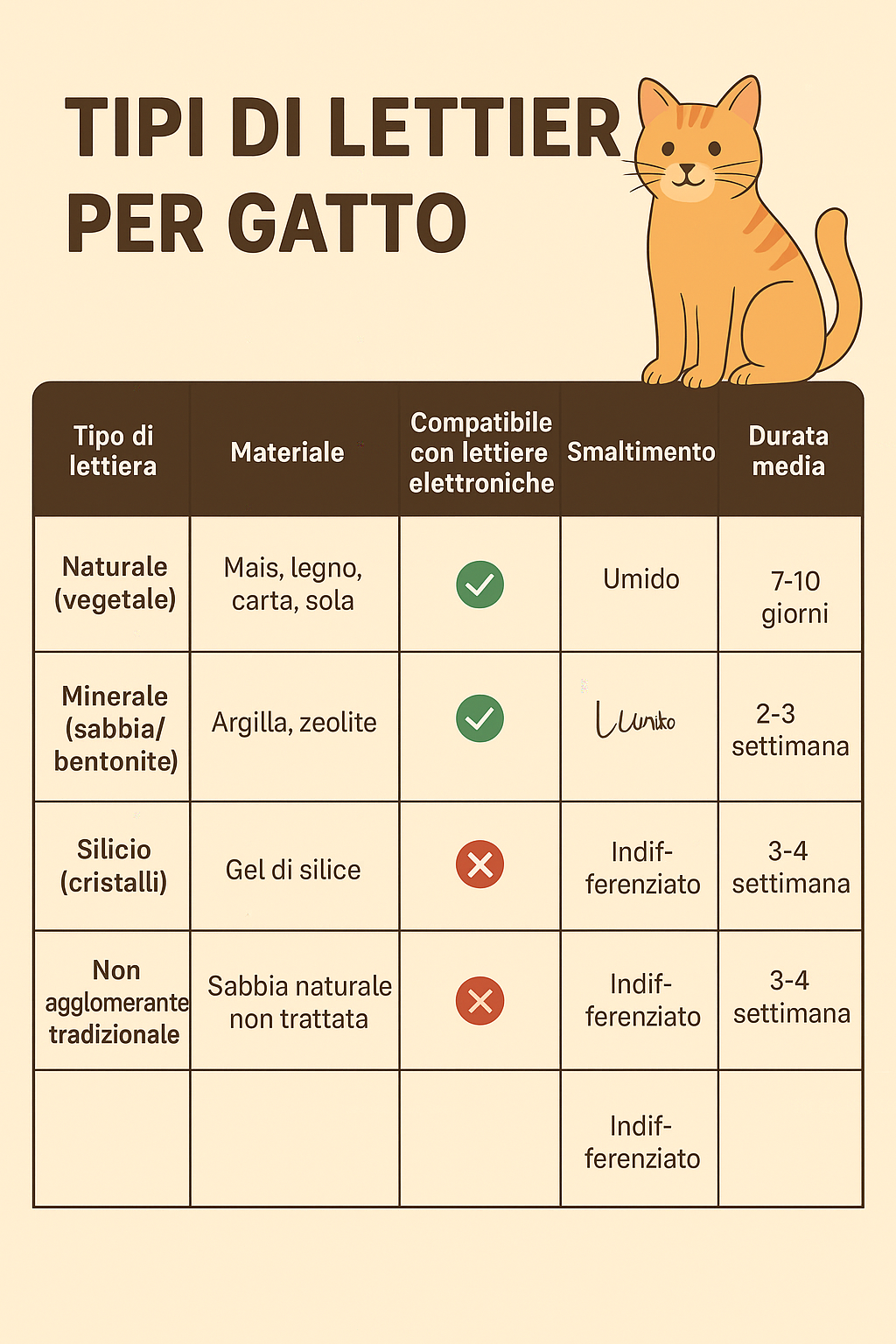
Materials : plant fibers (corn, wood, recycled paper, soy waste).
-
Advantages : biodegradable, compostable in some cases, more eco-friendly.
-
Disadvantages : May last less than mineral litters, smells quicker if not cleaned.
2. Sand litter (mineral)
-
Materials : bentonite or zeolite.
-
Advantages : highly absorbent, high clumping capacity, retains odors well.
-
Disadvantages : heavier, not compostable, less environmentally friendly disposal.
3. Silicon litter (crystals)
-
Materials : silica gel.
-
Advantages : high absorbency, longer lasting than other litters.
-
Disadvantages : higher cost, not always liked by cats.
🔎Discover the litter boxes we've chosen and why!
What types can be used with an electronic litter box?
Self-cleaning electronic litter boxes require compatible types:
-
✅ Fine clumping litter (bentonite/mineral sand) → the most suitable because it forms clumps that are easy to remove.
-
✅ Some clumping plant-based litters → only if the electronic litter manufacturer allows them.
-
❌ Silicon crystals → generally not recommended, not always compatible with the mechanical system.
-
❌ Non-clumping litter → ineffective for electronic operation.
Where to throw away used litter
-
Natural plant-based litter : can be disposed of in the wet/organic waste only if indicated by the manufacturer . Alternatively, it can be disposed of in the unsorted waste bin.
-
Mineral sand litter : always in the unsorted waste.
-
Silicon litter : also in the undifferentiated waste.
⚠️ Cat waste should never be flushed down the toilet unless specifically directed by the manufacturer.
How often should the litter box be changed?
-
Natural vegetable : approximately once a week, with daily cleansing.
-
Clumping sand : total replacement every 2–3 weeks, daily addition of the removed material.
-
Silicon : every 3–4 weeks, turning the crystals regularly.
Electronic litter box: does it last longer?
Yes ✅. Self-cleaning litter boxes immediately separate clumps and soiled particles, leaving the remaining litter clean.
-
Total replacement is reduced: with fine bentonite it can even take 4–5 weeks .
-
However, it requires periodic inspection of the waste collection compartment.
🔎Find out what electronic litter boxes are
FAQ – Frequently Asked Questions
1. Can natural litter be thrown into the home compost?
Only if declared compostable by the manufacturer. Otherwise, it goes in the unsorted waste.
2. How much product should I put in the tray of an electronic litter box?
On average 4–5 cm thick, but it depends on the model.
3. Is natural or mineral litter better?
It depends: natural is more eco-friendly, mineral clumping is more practical and long-lasting.
4. Does an electronic litter box completely eliminate odors?
It greatly reduces bad odors, but the waste bin still needs to be emptied regularly.
5. Can I mix different types of litter?
Better to avoid: different mixtures can compromise performance, especially in electronic litter boxes.

Leave a comment
All comments are moderated before being published.
This site is protected by hCaptcha and the hCaptcha Privacy Policy and Terms of Service apply.