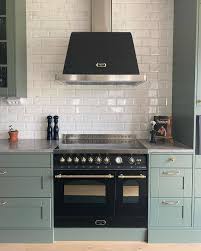
Les technologies de cuisson à comparer
Before choosing between gas, induction or hybrid stoves, it is useful to understand the strengths and weaknesses of each technology.
| Type | Advantages | Limites / contraintes |
|---|---|---|
| Gas (flame) | instantly check the flame; compatibility with all types of casseroles; cuisson souvent moindre (selon tarif du gaz) | heat loss, energy efficiency levels, internal pollution (NOx, CO₂, residual gas) |
| Induction | très haute efficiency (la chaleur est générée dans la casserole); quick assembly and adjustment; cuisson surface plus sure; ambient chauffage moins | no need for compatible tools (fond ferromagnétique); coût initial plus élevé ; electrical requirement (puissance, cable) |
| Hybrid / Dual fuel (gas + induction / electric) | combine the advantages of two worlds: flame for the wok and double boiler for precise cooking | coût plus élevé ; complexity of fabrication; exigeant dimensions (gas + electricity supply) |
When comparing models such as Bosch induction or Beko induction , among the "high mass technology" universe, the priority is often given to effectiveness, with numerous functions (sensors, tactile commands, control, modular electrical modules). This brand applies an optimized production chain, souvent externalisée partiellement, in the optique de coût, standard reliability and evolution.
More about Lofra , within a different logic — design, personnalisation, artisanal or semi-artisanal identity, the same luxury as the manager.
🔎Discover the range of kitchens chosen by Rustilia.
Could you choose a Lofra cooker (gaz / induction / mixte)?
2. History, identity and fabrication
-
Origins and continuity : Lofra is an Italian company founded in 1956 by the Lovato brothers, in the province of Padoue. You are encouraged to make casseroles and poles to start with war recovery materials, before progressively specializing in camping poles, gas stoves and household appliances
-
Made in Italy and local components : Lofra insists on the Italian nature of its ranges, in choosing quality components, in ensuring an internal or local fabrication for strategic elements, and in careful aesthetic and technical control (surfaces, finishes, grilles in source, finishes of boutons).
-
Personalization aesthetically and precisely : One of the forces of Lofra is to propose customizable finishes (chrome, laiton, bronze, black mat, ivory, etc.), of the poignées and boutons of style of retro or contemporary inspiration. Lofra conçoit ses produits “level by level, detail by detail” to integrate harmoniously into the cuisines with an elegant decorative project.
All these elements give Lofra a more « premium » aura or “haute cuisson design”, distinct from the industrial ranges of mass general brands.
3. Performance techniques and choice of technologies
Lofra a su évoluer avec le temps et proposer des ranges qui couvrent tous les usages:
-
Gas range / gas hobs : The DolceVita series includes high-performance burners, including “triple crown” burners with strong power, safety devices (Gas-Stop, automatic shut-off valve), robust grills, and precise operation via mechanical buttons.
-
Induction range : Lofra offers integrated induction plates, with booster, multiple zones, modern commands, always in a soigné Italian design.
-
Hybrid / dual fuel models (gaz + induction / electric) : Certain stoves combine gas + four electric/induction in one appliance. It allows you to use the flame for certain cuissons and the induction for others.
-
Power Management & Security : For example, on certain Lofra models, each area of operation benefits from a booster to increase power instantly, also that internal Power Management here divides power between zones so as not to exceed the electrical installation capabilities.
-
Finish and durability : The finishing touches (easy to clean fabric, resistant materials, integrated work plan) contribute to a longer lifespan and greater aesthetic satisfaction over the long term. 4. Comparison with Bosch induction or Beko induction: approche et compromis
To differentiate the approaches, here are some typical comparison points:
| Critère / media | Approche Bosch / Beko (induction) | Approche Lofra |
|---|---|---|
| Production / industrialisation | large size, automation, standard and modular components | mixte: certain modules automatisés, mais contrôle artisanal strong sur le design, finishes, final assemblage |
| Technological innovation | put in front of the numerical functions: connectivity, detection of casseroles, automatic modes, sensors | integration of technology (boost, security, detection) without sacrificing aesthetics, often with visible manual control (buttons, cadrans) |
| Economies d'échelle / coût | reduction of parts thanks to the optimized production chain, often externalized or relocated | higher body structure, car plus internal control, personalization and finishes |
| Aesthetics and design | souvent lignes modernis, minimalistes, surfaces vitrées, commandes tactiles — uniformité de style | large aesthetic palette, personalisation, retro style or “characteristic cuisine” possible |
| Service & brand image | large brands with international after-sales service, strong reliability (Bosch reputation for reliability) | plus “niche”, but offers a prestige, a symbolic value, and a premium positioning often appreciated by a public / gastronomique design |
| Limites technologiques | compatibility constraints of tools, wear of electronic components over time | same induction constraints, but the choice of materials and the assembly soigné can improve the robustness in the times |
In summary: choosing Lofra, you only have to choose a specific technology, you have adopted a philosophie of object — a vehicle that has a style, a history, a right thing in every detail.
Practical tips for choosing (induction, gas or mix)
-
Analyze the electrical and gas environment
-
Check that your electrical installation can support the power required for induction (souvent 32A higher if the model is used).
-
Make sure that the gas supply is compliant (type of gas, pressure), and that any safety precautions are present.
-
-
Type de cuisson majoritaire
-
If you cook often in a wok, on a large flame or with an immediate control of the flame, the gas is irreplaceable.
-
If you prefer the precise cuissons, lenses, mijotages, the induction offers a great finesse of control.
-
The hybrid choice allows you to garde two worlds (most often in a premium quality and with installation restrictions).
-
-
Compatibilité des ustensiles
-
For induction, make sure that your pans and pots are magnetic (ferromagnetic stainless steel melter or source).
-
For gas, you have more freedom to choose.
-
-
Maintenance, cleaning and duration of life
-
The induction has the advantage of a smooth surface easy to clean (for projections, frozen areas).
-
The gas requires grills, brûleurs, jets to clean frequently.
-
But the quality of the materials (particularly the pieces in direct contact) plays an essential role in durability — this is what Lofra puts the emphasis on robustness (grilles in source, resistant finishes).
-
-
Budget et valeur perçue
-
The “large public” induction models from Bosch or Beko can become more accessible, but you can also pay attention to automation, electronics and mass reliability.
-
Avec Lofra, a part of the story goes into the design, the personalization, the high-end assembly — which certain users value as an aesthetic investment autant that technique.
-
-
Impact esthétique dans la cuisine
-
If the kitchen is a central element of the cuisine (open cuisine, îlot, pièce de caractère), the visual aspect, the finishes and the identity of the object deviennent a strong criterion: there, Lofra offers a distinct advantage.
-
Questions and Answers (FAQ)
Q1. Is this the induction heater plus the gas?
Now - the induction is faster and the energy is transferred directly into the saucepan via magnetic magnet, without passing through the surface. Cela réduit les temps de chauffe et les termiques.
Q2. Can I use these actual casseroles with induction?
This depends on: you should have a ferromagnétique fund (aimantable). If a casserole is not detected, the induction does not heat.
Q3. What is the function between gas and induction?
There is a variable depending on the power of gas and electricity, but induction is often more efficient (moins de pertes). Le gaz peut être avantageux si votre tarif est très bas.
Q4. Is it that Bosch or Beko stovetops are such fairy tales as Lofra?
Pas necessity. Bosch benefits from an excellent reputation for reliability in the induction ranges (failable service). Toutefois, la comparaison n'est pas directe : Lofra offers a “prémium / design” positionnement with detailed control over the product.
Q5. Is Lofra's initial cost justifiable?
You value the aesthetics, the prestige, the personnalisation, an “object” appareil, above all. If your priority is only the performance at the best price, the industrial models may be more economical to purchase.
Q6. How long can I wait for a Lofra cuisinière?
With a correct preparation, parts to replace, and a robust fabrication (source grills, quality components), you can reasonably see a few years or more, depending on the use and the way it is worn.
Q7. Can you combine gas and induction effectively?
Here, the compromises required are: a well-thought-out installation, an electrically sized panel, an adapted ventilation, and a higher fit. Lofra's dual fuel models are the perfect thing to look at as the “best of two worlds”.

Leave a comment
All comments are moderated before being published.
This site is protected by hCaptcha and the hCaptcha Privacy Policy and Terms of Service apply.