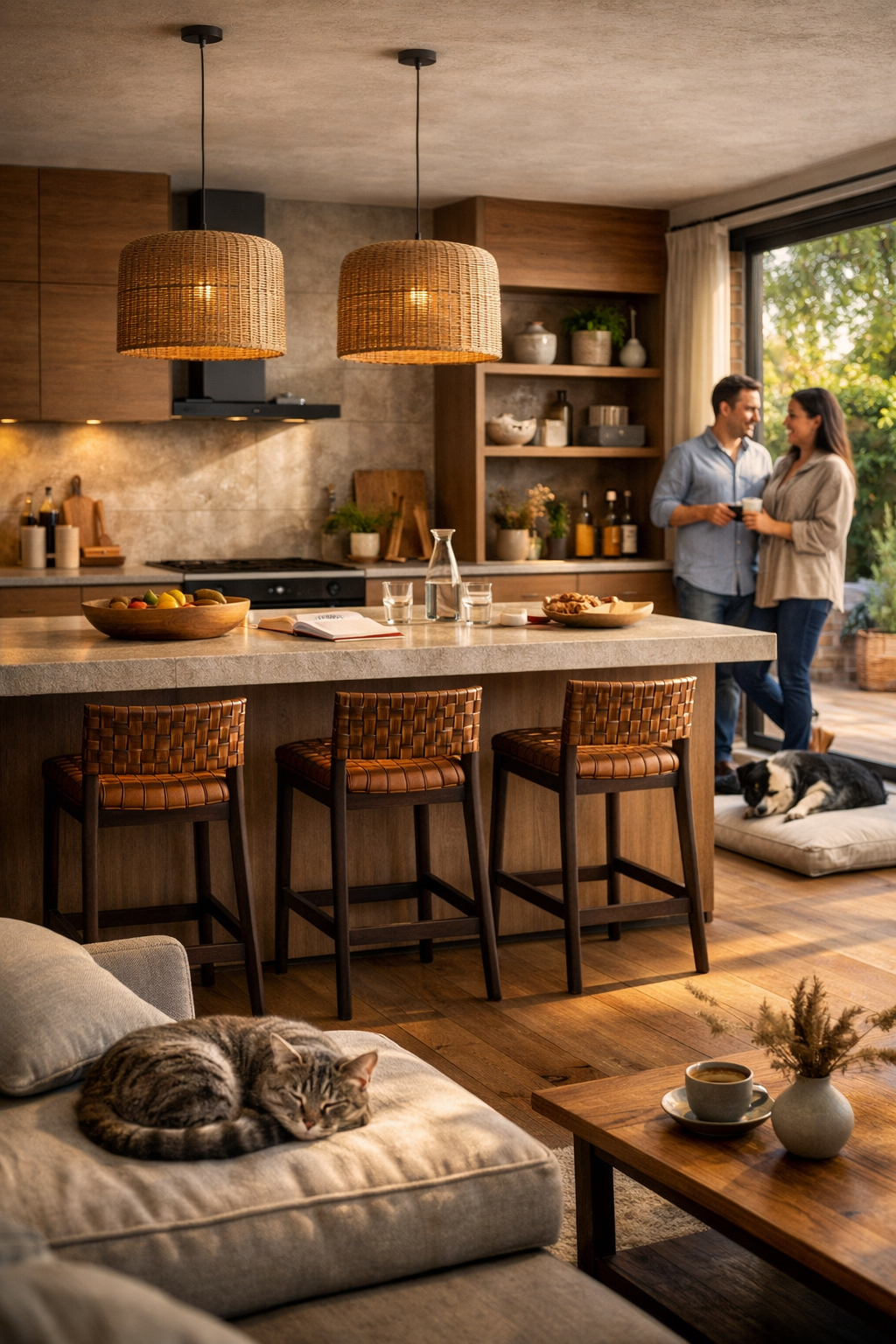
A smart living space is an environment designed to actually improve the quality of life , not to showcase technology.
It is the result of a balance between design, functionality, materials, objects and smart solutions , designed to adapt to people, their daily rhythms and changes over time.
True intelligence is not connection, but coherence .


What is meant by “smart living space” today?
In common parlance, “smart” is often associated with:
- Wi-Fi
- app
- automations
- remote control
In reality, a smart living space is one that:
- reduces unnecessary decisions
- simplifies daily actions
- does not require constant attention
- It also works without active technology
👉 The intelligence of a space is measured by how well it supports real life , not by the quantity of functions available.
The kitchen as the center of space (even when you're not cooking)
In the contemporary home, the kitchen has become:
- point of connection between people
- passage space between different activities
- a place of relationship, not just preparation
Designing a kitchen intelligently means:
- think about movement flows
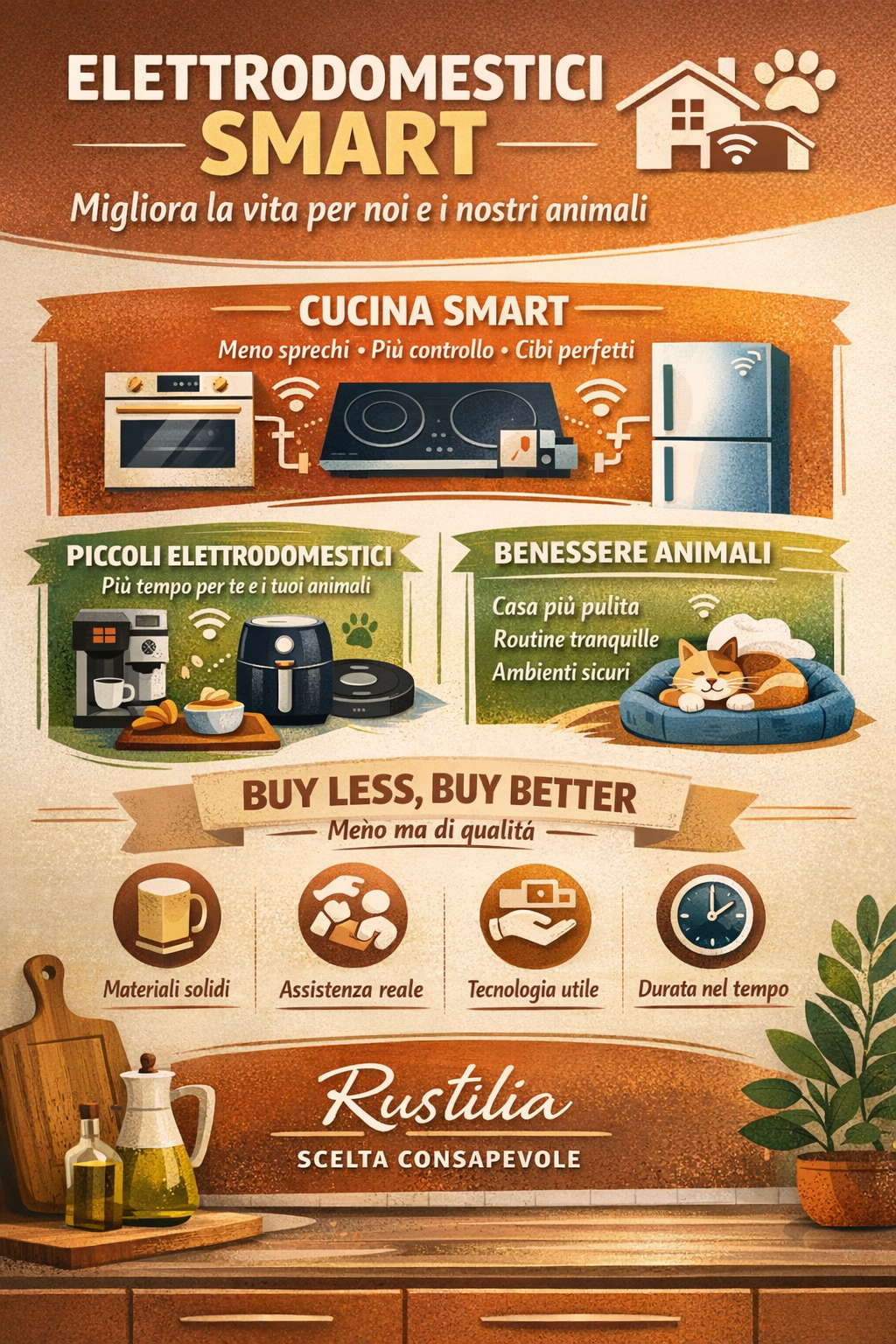
- integrate appliances and technology without making them dominant
- choose materials that retain value over time
A well-designed kitchen organizes your day , even when it's not in use.
Design and technology: when they really work together
Technology is a value only when:
- does not impose a behavior
- does not fragment the experience
- it doesn't become obsolete quickly
In smart living spaces:
- the technology is integrated , not overlapping
- Smart objects respond to clear needs (security, management, care)
- design remains the main language
If the technology is more noticeable than the space, the project has failed.
🔎 Learn more about design solutions
Living better: people, relationships, animals
A well-designed space takes into account:
- different family rhythms
- moments of sharing and privacy
- presence of pets as part of daily life
Smart solutions serve to:
- monitor without controlling
- take care without complicating
- maintain balance even at a distance
👉 Technology only makes sense if it enhances relationships, not if it replaces them.
Objects, materials and choices that make the difference
Not everything has to be technological.
Not everything has to be connected.
- In a smart living space:
- each object has a clear function
- the materials convey solidity and continuity
- design does not follow trends, but a vision
Well-chosen objects, quality craftsmanship and natural materials:
- make the space recognizable
- increase comfort over time
- create a lasting emotional bond
A space works when nothing is random .
Designing today with tomorrow in mind
Needs change:
- people change
- technologies evolve
- spaces are transformed
A smartly designed space:
- it does not depend on a single technology
- can be updated without being distorted
- remains valid even after years
Durability today means adaptability , not rigidity.
How to recognize a truly smart living space
A space is smart if:
- simplify everyday life
- does not require continuous instructions
- remains pleasant over time
- works with and without technology
- puts life at the center, not the object
FAQ – Frequently Asked Questions about Smart Living Spaces
What is a smart living space?
It is an environment designed to improve daily well-being through conscious choices of design, materials, technology, and spatial organization.
Does a smart space have to be completely smart?
No. A smart space can include technology, but it doesn't depend on it. The goal is ease of use, not constant connectivity.
What is the role of the kitchen in a smart living space?
The kitchen is the functional and relational hub of the home. Intelligent design improves flow, relationships, and daily organization.
Is smart technology also useful for pets?
Yes, if used for care, monitoring and safety, without complicating daily management.
How do you design a space that lasts over time?
By choosing adaptable solutions, quality materials, non-invasive technology and a design that does not follow temporary trends.
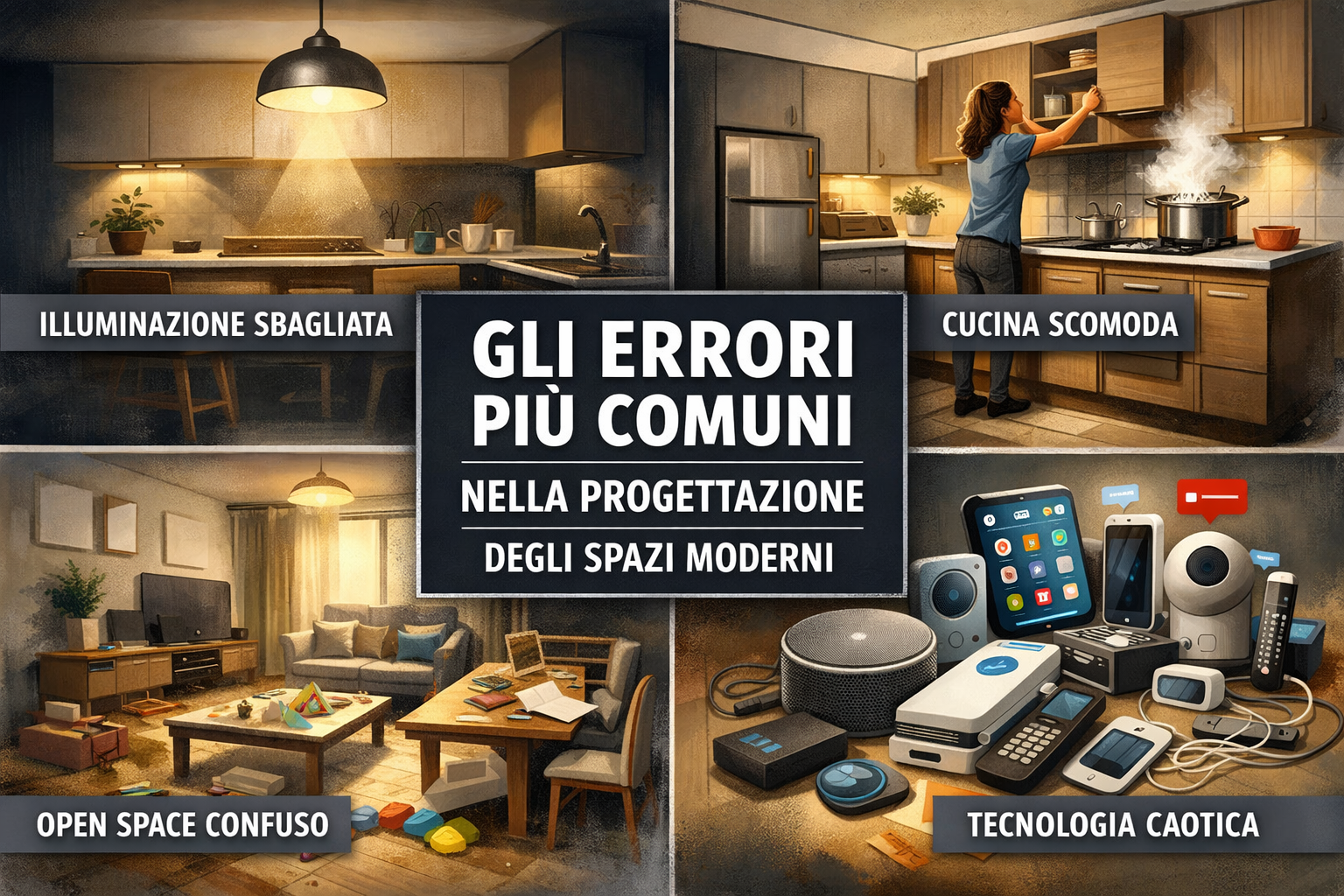
What is the most common mistake in designing modern spaces?
Including too much technology without real integration with daily life and the overall design of the space.

Leave a comment
This site is protected by hCaptcha and the hCaptcha Privacy Policy and Terms of Service apply.