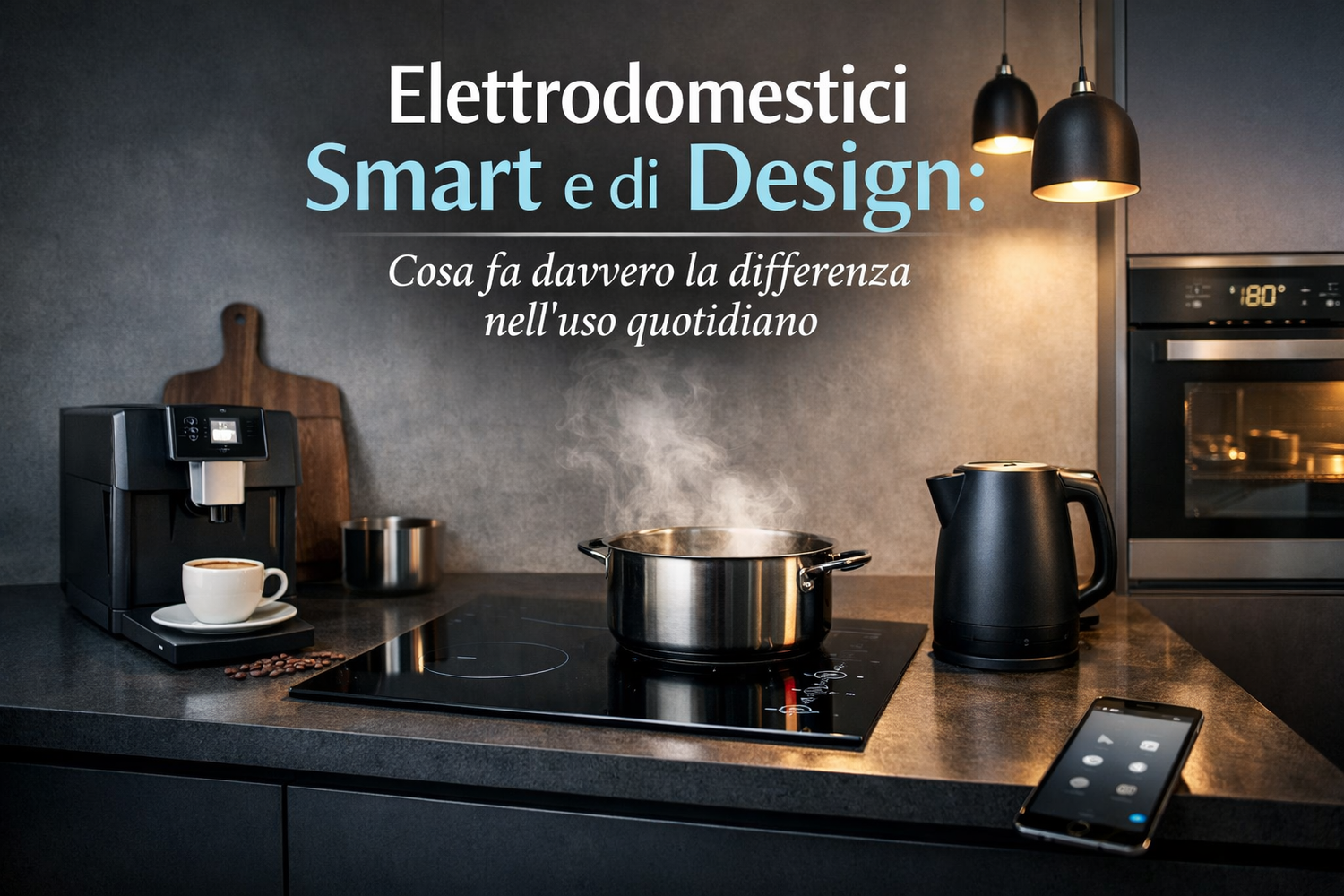
In recent years, the word smart has ended up everywhere.
Connected appliances, ever-larger displays, apps for every function. And then there's the design : clean lines, black glass, brushed steel, surfaces that promise elegance and modernity.
Yet, in everyday life, these promises don't always translate into a better experience. In fact, sometimes technology, instead of simplifying, complicates .
The truth is that it is not the quantity of functions that makes the difference , but the way in which an appliance fits into our daily routine.


When “smart” becomes a problem
One of the most common misconceptions is that a smart device needs to be noticed. In reality, the opposite often happens: the more well-designed an appliance is, the less attention it requires.
A truly smart product:
· it doesn't ask you to stop and figure out what to do
· does not interrupt a natural gesture
· It doesn't force you to use an app for simple actions
If every use requires concentration, menus, notifications or useless confirmations, then we are not talking about intelligence, but complexity disguised as innovation .
Experience counts more than power
Many focus on the technical specifications: wattage, programs, advanced modes. All important elements, of course.
But what really impacts day-to-day use is the interface .
A good appliance communicates clearly:
· you immediately understand what he is doing
· you always know where you stand
· you don't need the manual after the first few times
Design, here, isn't decoration. It's visual clarity , order, coherence. It's the feeling of effortless control. And that's what, over time, makes the difference between a product you love using and one you avoid.
True luxury is comfort (even mental)
When we talk about quality, we often think of aesthetics. But in real life, luxury is above all the absence of disturbance .
A well-designed appliance:
· it's silent
· it does not vibrate unnecessarily
· does not invade the space with unnecessary noises or signals
This type of comfort isn't immediately noticeable, but it's appreciated every day. It's what makes the environment more relaxing, more livable, more human. And it's one of the most underrated aspects when choosing a smart product.
Design that communicates, not that tires
A designer appliance doesn't have to disappear, but it doesn't have to dominate the space either. It should interact with its surroundings , fitting in naturally.
The best choices are those that stand the test of time:
· consistent materials
· balanced colors
· shapes designed to last, not to amaze
Good design isn't about following trends. It's about what still feels right to you, even after years. And this is even more true for objects you use every day.
Automation: Only useful if it truly improves your life
Sensors, automatic programs, adaptive intelligence: all interesting. But only when it solves a real problem.
The most popular automations are those that:
-
reduce errors
-
they anticipate common needs
-
eliminate unnecessary steps
The less successful ones, however, are often designed for demos, not for everyday use. They work well in the showroom, but end up forgotten after a few weeks.
The right question isn’t “is there any left?” but “does it really make my day easier?”
The durability you can't see
There is one aspect that is rarely talked about: mental fatigue .
An appliance can be beautiful and technologically advanced, but become tiring over time if it requires too much attention.
The best products are those that:
· reduce errors
· they anticipate common needs
· eliminate unnecessary steps
This is true quality: the kind that doesn't fade with initial enthusiasm, but grows with habit.
How to choose wisely (without being fooled)
Before getting carried away by promises and slogans, it's worth stopping for a moment and asking yourself:
· they become almost invisible in use
· they always work the same way
· they make you feel at ease, not under scrutiny
If the answer is yes, then you are probably not just buying a beautiful or smart appliance, but a tool designed to truly improve your daily life .
In short
True design is not what strikes you at first glance, but what works every day.
The best technology is that which integrates, accompanies, and doesn't demand attention. And it's precisely there, in everyday use, that you recognize a quality appliance.

Leave a comment
This site is protected by hCaptcha and the hCaptcha Privacy Policy and Terms of Service apply.