
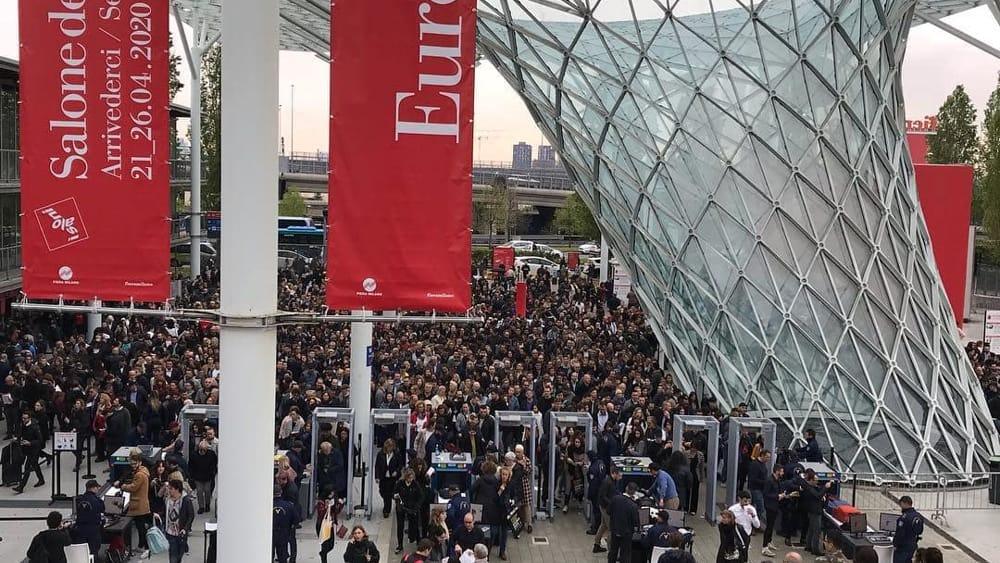
At the Salone del Mobile, a complete closure on gas cooking
At the Salone Internazionale del Mobile 2024, the end of gas cooking has been decreed. All the major brands have presented their induction cooking solutions, including glossy and row hobs, and with or without integrated hoods.
Simplicity, linearity of shapes and the ease of use associated with induction cooking are the key factors chosen as the future protagonists of Italian homes and beyond.
The two household appliance giants Beko and Haier are clearly moving towards induction cooking, while Smeg itself is presenting its own freestanding solutions with a particular eye for design.
There are millions of gas stoves in the market that need to be renovated in the coming years. What happened in the early 2000s, with different concepts, when we switched from filament lighting to LEDs, now present in all our daily lives, is happening again, with a different logic.
But why is induction so interesting for the consumer?
Greater energy efficiency: Induction cooktops are much more efficient than gas cooktops, with efficiency levels of up to 90%. This means that almost all the electrical energy used is converted into heat to cook food, resulting in savings on energy costs. Furthermore, faster cooking times further reduce energy consumption.
Greater safety: Induction cooktops are safer than gas cooktops because there are no open flames or risk of gas leaks. The cooktop surface heats up only when a pan is placed on it and cools quickly when the pan is removed. This reduces the risk of burns and fires.
Greater cooking precision: Induction cooktops offer precise temperature control, allowing you to cook food more evenly and precisely. This is especially useful for delicate cooking techniques like simmering or making sauces.
Easier to clean: Induction cooktops have a smooth, flat surface that's easy to clean. There are no burners or grates to disassemble and clean, and because the surface doesn't get very hot, burnt food stains are less likely to form.
Cooler Environment: Induction cooktops do not generate excess heat in the kitchen, which can help maintain a cooler and more comfortable environment, especially during the summer months.
Reduced CO2 emissions: Induction cooktops are more environmentally friendly than gas cooktops because they produce fewer CO2 emissions. This is because electricity can be generated from a variety of sources, including renewables like solar and wind energy, while natural gas is a fossil fuel.