A healthy and happy dog starts with proper nutrition . Whether it's a pedigree dog, a mixed breed, or a senior dog, diet plays a fundamental role in maintaining energy, balance, and well-being.
But how do you choose the right type of food? And what are the differences between different dog types and physical conditions?
Let's take a look at it together, with the help of general rules suggested by veterinarians and new technological solutions for meal management.
General rules for good canine nutrition
Veterinarians recommend following some basic principles to ensure a balanced and complete diet:
-
Nutrient Balance – Your dog should receive the right balance of proteins, carbohydrates, fats, vitamins, and minerals.
-
Portion Control – Avoid Excess Calories: Obesity is a major cause of disease in domestic dogs.
-
Regular routine – Eating meals at the same times every day helps with digestion and reduces anxiety.
-
Fresh water always available.
-
Avoid foods that are toxic to dogs such as chocolate, grapes, onions, sweets, fried foods, or spicy foods.
Feeding a pedigree dog
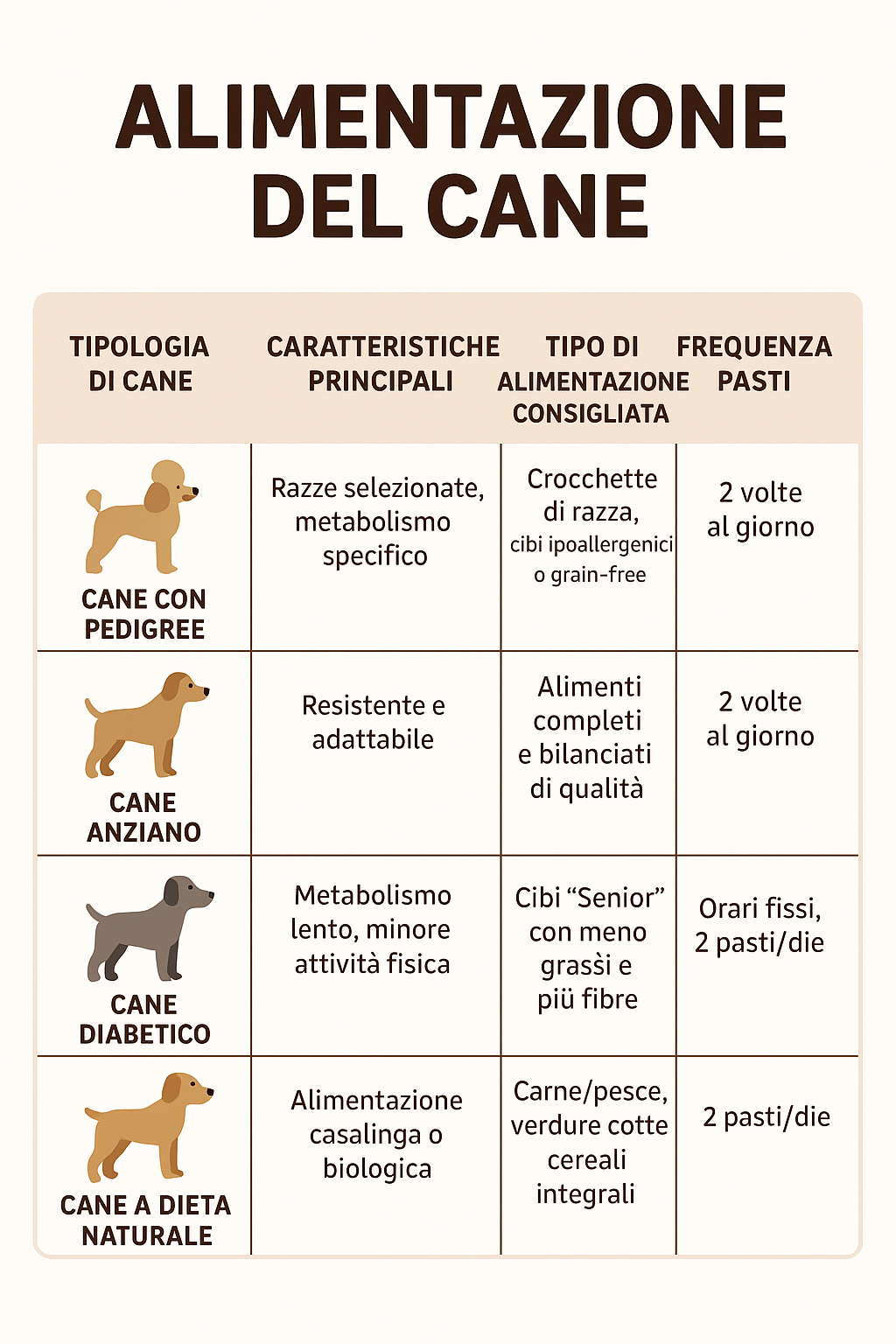
Purebred dogs, often selected for specific genetic characteristics, may have particular nutritional needs :
-
Large breeds (such as Labradors, Golden Retrievers, Great Danes) require foods rich in protein and balanced minerals , to support muscles and joints.
-
Small breeds (such as Chihuahua, Poodle, Maltese) require smaller kibble sizes and more frequent meals.
-
Some breeds such as Bulldogs or Boxers are predisposed to food intolerances : in these cases it is better to choose hypoallergenic or grain-free foods .
A proper diet, combined with regular veterinary check-ups, helps prevent digestive, dermatological, and joint disorders typical of some breeds.
Feeding a non-pedigree dog (crossbreed)
Mixed-breed dogs, thanks to their genetic variability , tend to be more hardy and adaptable. However, don't think they can "eat anything": the same quality and control rules apply to them too.
It is important:
-
choose complete and balanced foods;
-
monitor weight and digestion;
-
avoid sudden diet changes, which can cause diarrhea or loss of appetite.
Every dog has a unique metabolism , so observing how he reacts to different foods is always key to an ideal diet.
Feeding the senior dog
As dogs age, their metabolism slows down and they need fewer calories but more nutrients .
The elderly dog's diet should be:
-
Light and digestible , with high quality proteins;
-
Rich in omega-3 and antioxidants , which help keep joints supple and support memory;
-
With lower sodium and saturated fat content , to protect the heart and kidneys.
Many companies produce senior foods specifically formulated for dogs over 7 years old. It's also recommended to have a veterinary check-up every 6-12 months to monitor weight and liver and kidney function.
Feeding a diabetic dog
A diabetic dog needs a controlled diet with a low glycemic index , in order to keep blood sugar levels stable.
The fundamental principles are:
-
Food rich in fiber to slow down the absorption of glucose;
-
Regular meals and fixed times , preferably twice a day;
-
Avoid snacks and biscuits containing simple carbohydrates or sugars;
-
Rely on specific veterinary feeds or a balanced home-made diet under the supervision of a veterinary nutritionist.
For diabetic dogs, using a Smart automatic feeder is particularly useful, as it allows you to precisely program the quantities and times of meals , avoiding glycemic swings.
🔎Find out what a smart pet feeder is and how it works.
Natural nutrition for dogs
More and more owners are choosing a “natural” approach, based on fresh, minimally processed ingredients , cooked at home or purchased from brands that offer natural or organic lines.
A natural dog diet may include:
-
Quality meat or fish,
-
Cooked vegetables (zucchini, carrots, sweet potatoes),
-
Whole grains or rice,
-
Vegetable oils for essential fatty acids.
However, it is essential that the diet be nutritionally complete . A veterinarian or nutritionist must establish the correct proportions of macronutrients and micronutrients to avoid calcium, iron, or vitamin deficiencies.
Manage your diet with a smart automatic food dispenser
In the modern world, technology also comes to the rescue in the daily care of dogs.
A Smart food vending machine allows you to:
-
Schedule specific times and portions ;
-
Check remotely via app if your dog has eaten;
-
Record food data to monitor appetite changes;
-
In some models, you can talk to the dog or observe it with a built-in camera .
This device is useful not only for those who work long hours away from home, but also for diabetic or elderly dogs who require regular, precisely controlled meals.
🔎Find out which smart vending machines have been selected by Rustilia
FAQ – Frequently Asked Questions About Dog Nutrition
1. How many times a day should an adult dog eat?
Typically, two meals a day (morning and evening). Puppies up to 6 months old require 3-4.
2. Is dry or wet food better?
Both are good. Dry food keeps teeth clean and regulates satiety; wet food is more palatable and hydrating. A balanced combination is ideal.
3. How to understand if the dog is overweight?
The ribs should be palpable but not visible. If in doubt, your veterinarian can calculate a Body Condition Score .
4. Can I give my dog food scraps?
Best to avoid. Many human foods contain fats, salt, or sugars that are harmful to dogs.
5. What to do if the dog refuses food?
If it lasts more than 24 hours, consult your veterinarian. It could be a digestive, dental, or metabolic problem.

Leave a comment
All comments are moderated before being published.
This site is protected by hCaptcha and the hCaptcha Privacy Policy and Terms of Service apply.