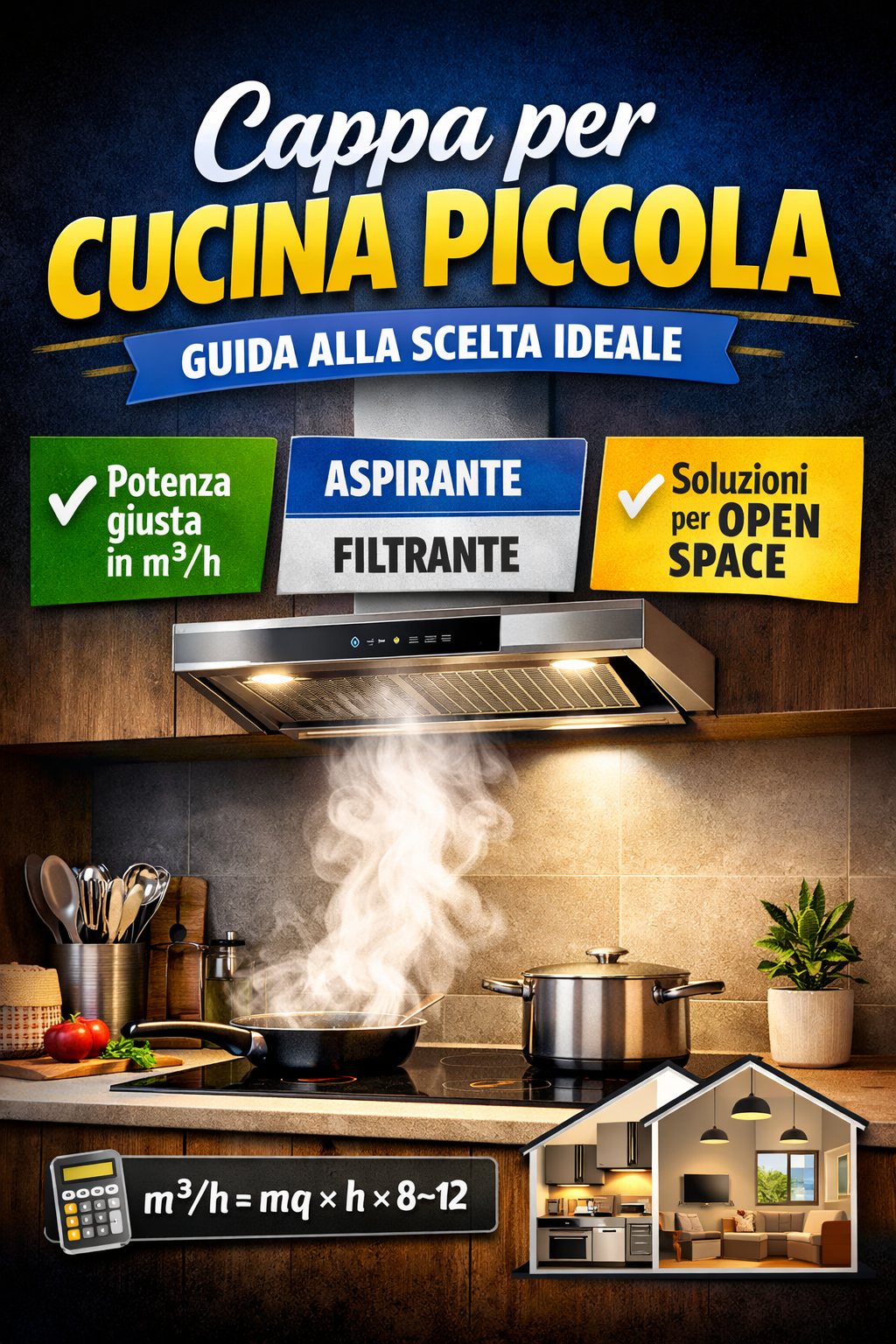
A practical guide to suction power for small, large, and open-plan kitchens.


Choosing the right hood is not a question of aesthetics.
It is a technical choice that affects:
-
air quality
-
humidity management
-
durability of furniture
-
acoustic comfort
In a small kitchen, mistakes are more costly: persistent odors, condensation, annoying noise.
Let's see how to choose correctly, starting from the most important parameter.
1️⃣ Suction power: the real selection criterion
The power of a hood is measured in m³/h (cubic meters/hour) .
The technical rule is simple:
A good hood must guarantee at least 8–12 air changes per hour .
How to calculate ideal power
Formula:
Kitchen volume (m2 × height) × 8–12
Example:
-
Kitchen 10 m2
-
Height 2.7 m
→ Volume = 27 m³
→ 27 × 10 = 270 m³/h minimum recommended
Note: This is the theoretical minimum. In practice, it's best to go slightly higher.
2️⃣ Recommended power based on the type of cooking
🟢 Small kitchen (up to 12 m2)

Recommended power:
👉 300 – 450 m³/h
If you often cook fried foods, meat or fish, it is better to stay around 400–450 m³/h.
If you use an induction hob, you can stay in the lowest range:
-
less heat wasted
-
less humidity
-
no combustion
In a small kitchen, avoiding excesses is important:
too much power = more unnecessary noise.
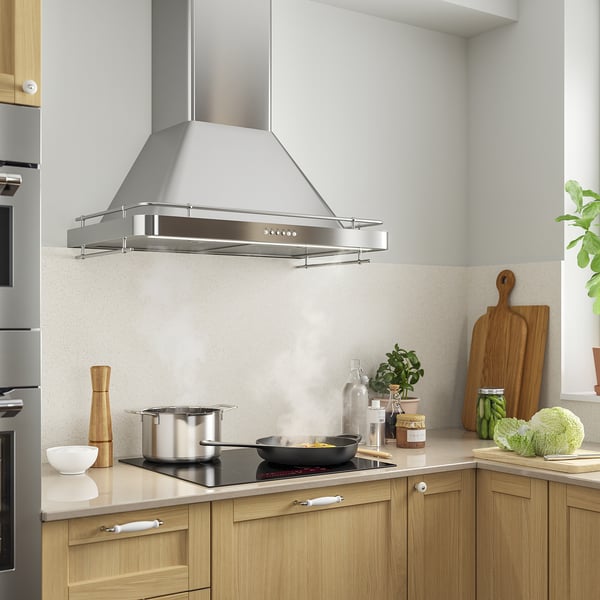
🟡 Medium kitchen (12–20 m²)
Recommended power:
👉 450 – 650 m³/h
Here the hood has to work harder, especially if:
-
you cook every day
-
you use the oven and the hob together
-
do you have a gas hob
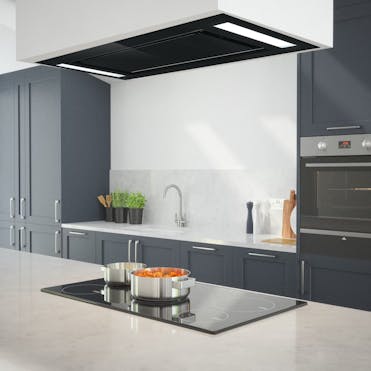
🔵 Large or open-plan kitchen
Recommended power:
👉 650 – 900+ m³/h
In open spaces, odors spread quickly towards the living room.
If the room is larger than 30 m², a 1000 m³/h hood may also be necessary, especially with gas hobs or intense cooking.
Saving on power is a mistake here.
3️⃣ Extractor hood or filter hood?
✔ Extractor hood (external exhaust)
-
It really expels fumes and humidity
-
More effective
-
Fewer residual odors
It is always the best choice if the system allows it.
✔ Filter hood (recirculation)
-
No external hole required
-
Easier to install
-
Requires periodic replacement of carbon filters
In a small kitchen it may work, but it does not eliminate humidity.
If you cook a lot, the extractor version is superior.
4️⃣ Which model should I choose for a small kitchen?
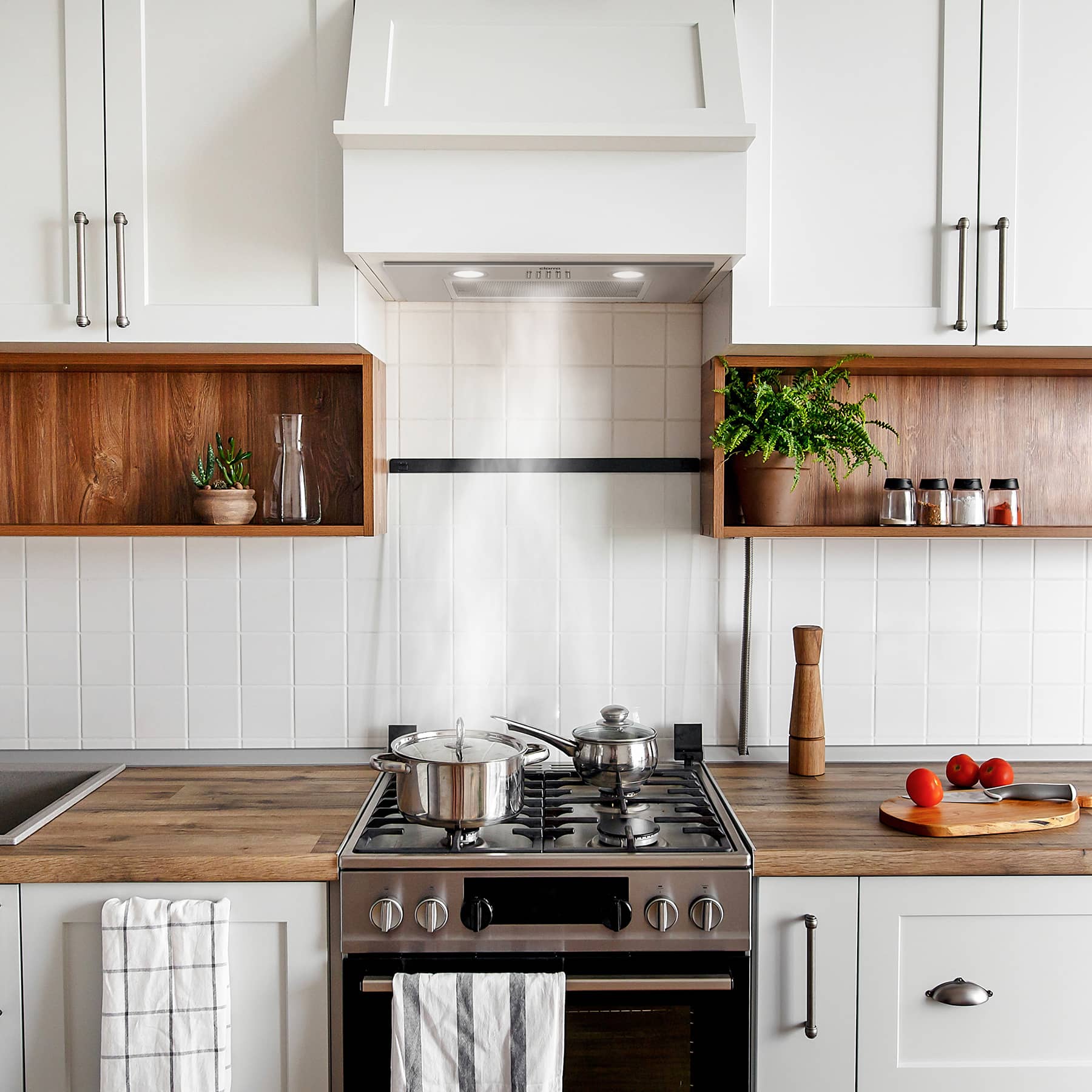
🔹 Under-cabinet hood
-
Compact
-
Economical
-
Ideal for small apartments
🔹 Built-in hood
-
Fully integrated into the cabinet
-
Clean aesthetics
-
Perfect for modern kitchens
🔹 Compact inclined hood

-
It takes up less space in depth
-
Ergonomic
-
Modern design
Excellent when space above the counter is limited.
5️⃣ Noise: an often underestimated detail
In a small kitchen, noise is noticeable much more.
Recommended values:
-
55–65 dB at medium speed
-
at least 3 suction levels
A hood that is too noisy becomes unbearable in everyday life.
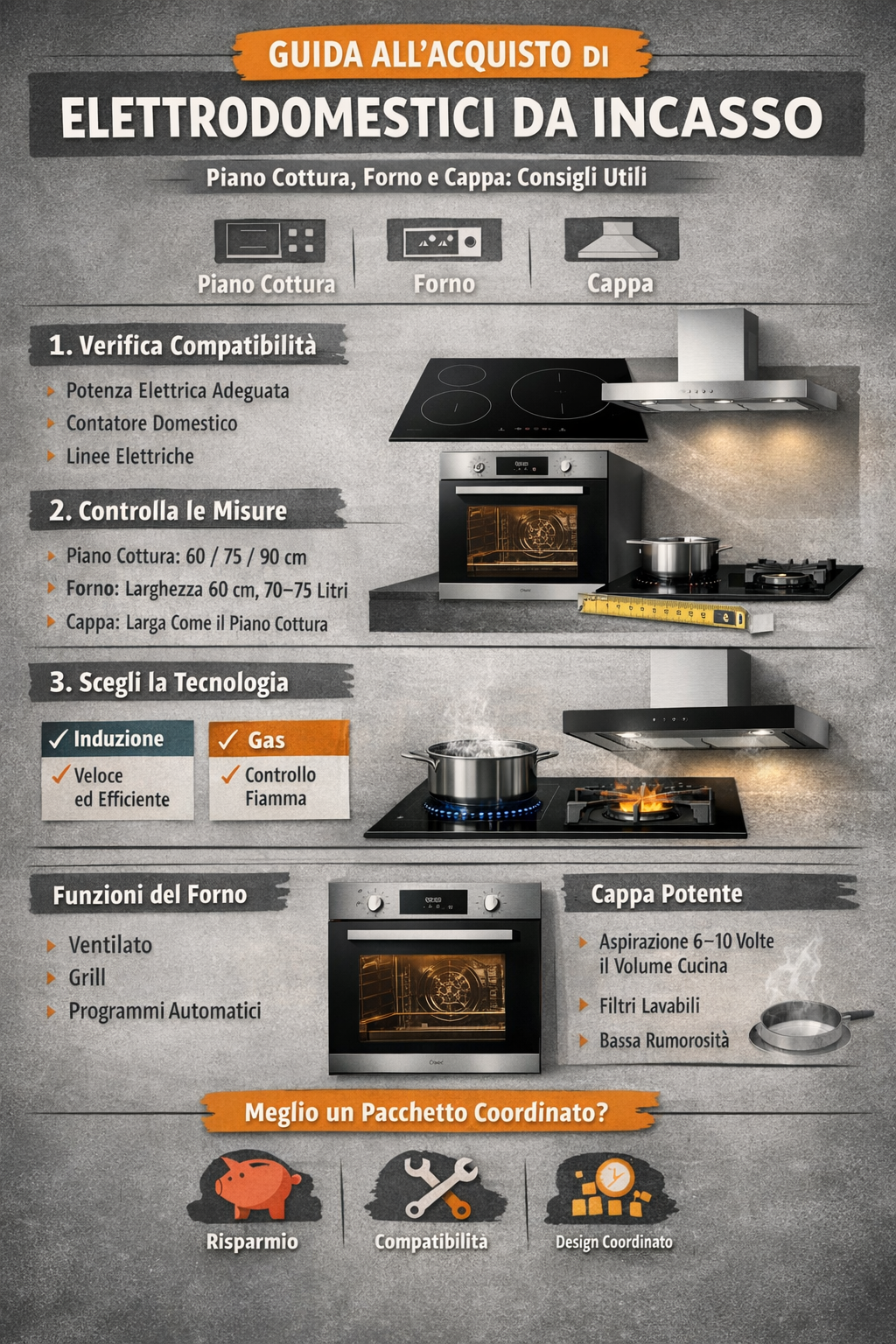
6️⃣ Width of the hood
Simple rule:
-
at least as much as the hob
-
better 5 cm more
60 cm hob → 60 or 70 cm hood.
Conclusion
Choosing the right hood means finding a balance between:
-
adequate power
-
low noise level
-
correct installation
-
type of environment
Saving on power is one of the most common mistakes.
Better to invest a little more today than live with odors and humidity for years.
FAQ – Frequently asked questions about choosing a hood
🔹 How many m³/h do you need for a 10 m² kitchen?
On average, between 300 and 400 m³/h are sufficient, considering a standard height of 2.7 m.
🔹 Is an extractor hood or a filter hood better for a small kitchen?
If possible, opt for an aspirated one: it truly eliminates fumes and humidity. A filtered one is a practical but less effective solution.
🔹 Should the hood be larger than the hob?
Yes, ideally it should be the same width or slightly wider to improve smoke capture.
🔹 Do I need a more powerful hood for an open space?
Absolutely. In open spaces, at least 650–900 m³/h is recommended to prevent odors from spreading into the living room.
🔹 Can an induction cooker hood be less powerful?
Yes, induction produces less heat loss and no combustion. However, if you frequently fry or cook intensely, it's still best not to go below 350–400 m³/h.


Leave a comment
All comments are moderated before being published.
This site is protected by hCaptcha and the hCaptcha Privacy Policy and Terms of Service apply.