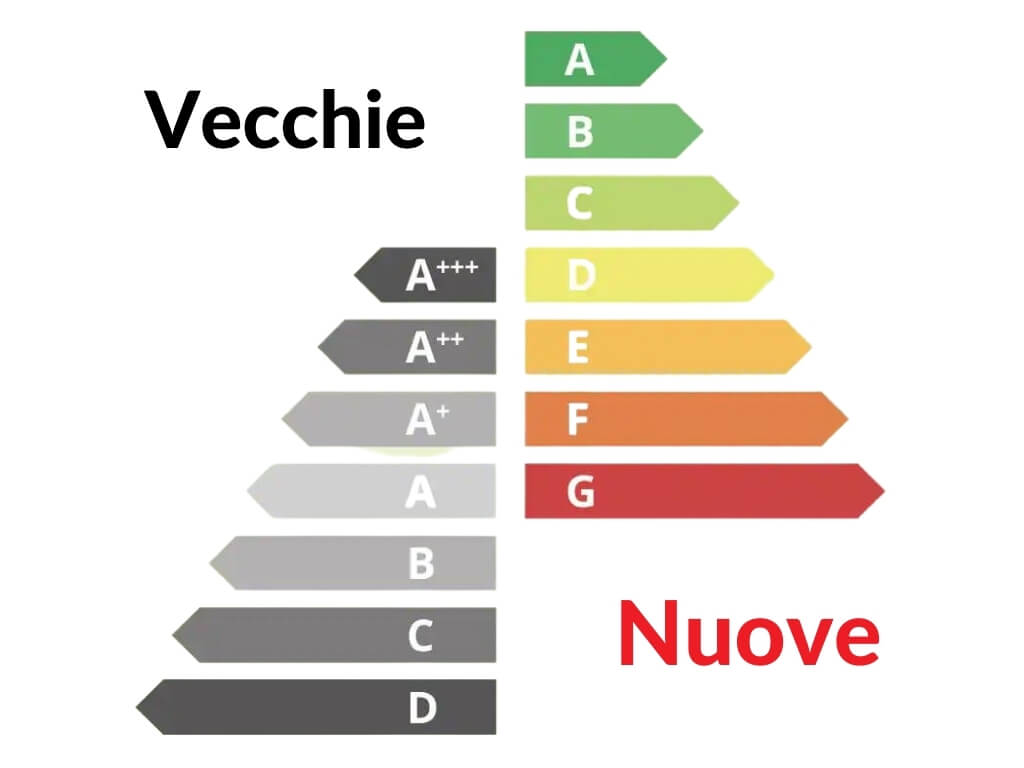
When purchasing a new appliance, the energy class is one of the most important factors to consider. Since 2021, the European Union has introduced a new energy label , making it easier to compare the efficiency of appliances and estimate their impact on your bill.
✅ What is the Energy Class?
The energy class is an indicator of an appliance's efficiency, that is, how much energy it consumes to operate. It is shown on a colored label ranging from class A (most efficient) to class G (least efficient) .
Until a few years ago, there were classes A+, A++ and A+++, but from 1 March 2021 a new, simpler scale was introduced: only letters from A to G , without “+” symbols.
This new classification allows greater clarity for the consumer and encourages manufacturers to create even more efficient devices.
🔎 How to Read the Energy Label
Each label contains several useful pieces of information:
-
Energy class (from A to G)
-
Annual energy consumption expressed in kWh
-
Specific data for each appliance type (e.g. capacity, noise, water consumption)
For example:
-
A class A refrigerator can consume less than 100 kWh/year.
-
A class F unit can exceed 300 kWh/year, with a greater impact on the bill.
💡 Why is Energy Class Important?
-
Savings on your bill : an efficient appliance can save you hundreds of euros over time.
-
Reduced environmental impact : lower consumption = lower CO₂ emissions.
-
Greater value over time : Efficient appliances tend to last longer and retain their value.
🛒 How to Choose a Low-Energy Appliance
-
Check the new energy label : aim for classes A, B or C for reduced consumption.
-
Evaluate your annual consumption in kWh : essential for understanding the real impact on your bill.
-
Consider daily use : for a frequently used appliance (like a washing machine or refrigerator), the difference is noticeable.
📌 Practical Examples: How Much Does Energy Consumption Affect?
| Household appliance | Class A | Class F | Annual savings (estimated) |
|---|---|---|---|
| Refrigerator | 90 kWh | 300 kWh | Around €60–80 per year |
| Washing machine | 130 kWh | 250 kWh | Around €30–40 per year |
| Dishwasher | 70 kWh | 220 kWh | Around €40–50 per year |
Conclusion
Choosing an appliance with a good energy rating is a smart investment. Not only will you help the environment, but you'll also save on your bill in the long run. Before purchasing, always read the energy label and compare the annual consumption in kWh : small details that make a big difference.
Visit our store and choose your appliance. Contact us with this article and we'll give you a discount on your first purchase.

Leave a comment
All comments are moderated before being published.
This site is protected by hCaptcha and the hCaptcha Privacy Policy and Terms of Service apply.