Comparison table of consumption
| Cooking type | Efficiency (approx.) | Average consumption per cycle | Approximate cost per cycle | Main advantages | Main disadvantages |
|---|---|---|---|---|---|
| Steam (electric) | 60% – 70% | 0.6 – 1.5 kWh (30 – 45 minutes) | €0.15 – €0.40 (at €0.25/kWh) | Healthy cooking; preserves nutrients and colors | Longer times; requires dedicated equipment |
| Induction (electric) | 75% – 85% | 0.5 – 0.8 kWh (mixed cooking, 30 minutes) | €0.12 – €0.20 (at €0.25/kWh) | Speed; precise adjustment; easy cleaning | Requires ferromagnetic pans; initial cost |
| Gas (methane) | 40% – 55% | 0.6 – 0.8 m³ (approx. 5–6 kWh heat, 30 minutes) | ~ €0.56 + fixed charges (methane €0.80/m³) | Visual flame control; total compatibility | Low efficiency; heat dispersion; ventilation |
1. Steam cooking
1.1 How steam cooking works
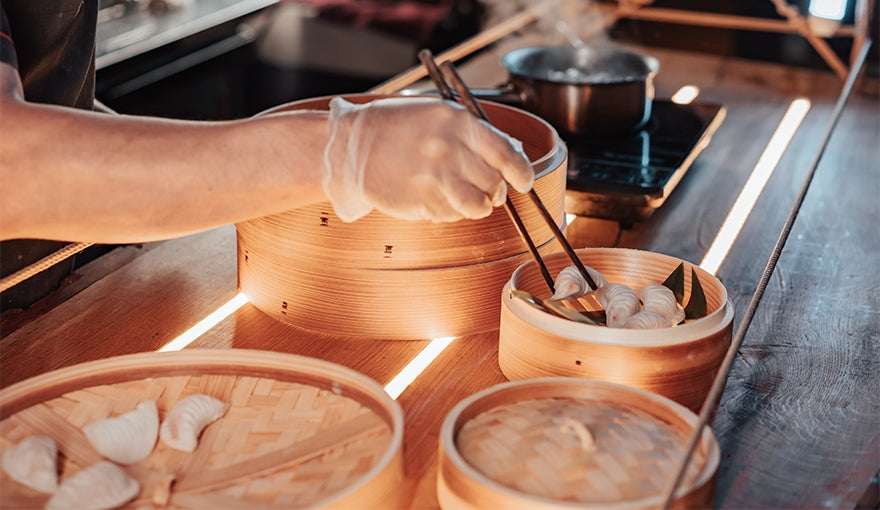
Steaming involves cooking food using the heat of boiling water: the steam, trapped in a pot with perforated baskets or in a special electric steamer, envelops the food, allowing for gentle and even cooking. This method is particularly suitable for vegetables, fish, and white meats, and for those following healthy diets, as it preserves vitamins and nutrients.
1.2 Efficiency and consumption
-
Energy efficiency: Steam cooking has an average heat transfer efficiency of 60% to 70%, depending on the type of device (electric steamer, steamer integrated into ovens or hobs).
-
Average consumption (kWh/cycle):
-
Standard household electric steamers: approximately 0.6–1.0 kWh for 30–45 minutes of cooking.
-
Integrated steam hobs (on high-end appliances): approximately 1.2–1.5 kWh for 30 minutes of use.
-
-
Approximate cost: with an average electricity cost of €0.25 per kWh (Europe), a steam cooking cycle cost of between €0.15 and €0.40 is calculated.
1.3 Advantages and disadvantages
Advantages:
-
Healthy cooking, with minimal use of fat.
-
Preserves color and nutrients.
-
Suitable for healthy diets (no added oils).
Disadvantages:
-
Longer cooking times than gas or induction.
-
Requires dedicated appliances (electric steamer or hob/oven with steam function).
-
Higher electricity consumption than a traditional pot on gas, unless you already have an efficient steam appliance.
2. Induction cooking
2.1 How induction cooking works
Induction cooking relies on a very intense electromagnetic current that generates an induced field in the base of induction cookware (with a ferromagnetic base). The Joule effect directly heats the pan, making the hob extremely responsive and precise in regulating temperatures.
2.2 Efficiency and consumption
-
Energy efficiency: between 75% and 85%, since the heat is generated directly at the bottom of the pan and is not dispersed into the environment.
-
Average consumption (kWh/cycle):
-
Cooking on medium heat (e.g. boiling 1.5 L of water): approximately 0.15–0.20 kWh for 5–7 minutes of use.
-
Complete cooking of a dish (30 minutes including boiling and various cooking phases): approximately 0.5–0.8 kWh.
-
-
Approximate cost: with an electricity rate of €0.25/kWh, an average cooking cycle (30 minutes) costs between €0.12 and €0.20.
2.3 Advantages and disadvantages
Advantages:
-
Extremely fast and controllable heating (immediate power variation).
-
Very high efficiency, reduces waste.
-
Easy to clean plates, cool surface around the pan.
Disadvantages:
-
Dedicated pans (ferromagnetic bottoms) required.
-
Higher initial cost of the hob.
-
Electricity consumption (depending on the tariff) potentially more expensive than gas if the energy is not purchased at discounted rates.
3. Gas cooking
3.1 How gas cooking works
Gas cooking relies on the combustion of methane or LPG (liquefied petroleum gas), with a direct flame heating the bottom of the pan. It is the most traditional system in Italian home kitchens.
3.2 Efficiency and consumption
-
Energy efficiency: on average between 40% and 55%, since part of the heat produced by combustion is lost to the sides or upwards.
-
Average consumption (m³/cycle):
-
Boiling 1.5 L of water over medium heat: approx. 0.1–0.12 m³ for 5–7 minutes (approx. 0.8–1.0 kWh energy value).
-
Complete cooking of a dish (30 minutes between boiling and various cooking stages): approximately 0.6–0.8 m³ (equivalent to 5–6 kWh of heat), but with an actual useful absorption of 2.5–3.5 kWh.
-
-
Approximate cost: with an average natural gas price of €0.80 per m³ (variable depending on region and supplier), an average cooking cycle (0.7 m³) costs approximately €0.56; to this must be added the fixed cost of the meter and the distribution cost, which in any case remains less than €0.10 per cycle.
3.3 Advantages and disadvantages
Advantages:
-
Immediate visual control of the flame and intuitive adjustment.
-
Cost per hour of use often lower than that of electric (with the same output).
-
Compatibility with any type of pan.
Disadvantages:
-
Lower energy efficiency (a lot of lateral heat waste).
-
Risk of CO₂/CO dispersion into the environment if there is no good ventilation.
-
Difficulty cleaning burners and flues; technical risk to pipes.
5. Factors to consider when choosing
-
Initial budget:
-
An induction hob requires a higher investment (hob + compatible pans), but ensures low long-term running costs.
-
Gas has a lower initial cost (economical hob), but higher unit running costs than induction (per effective kWh).
-
-
Cooking habits:
-
If you prefer quick cooking, stir-frying or frequent boiling, induction is ideal thanks to its reduced heating times.
-
If you steam frequently (for a healthy diet or for specific dishes), an electric steamer or a multifunction oven with steam may be convenient.
-
-
Environmental aspects:
-
Induction , especially if powered by renewable energy, is the greenest choice, thanks to its high efficiency and the absence of emissions into the environment.
-
Gas produces CO₂ and CO2 emissions; the impact depends on the national energy mix: in Italy, methane is less polluting than coal, but it remains a fossil fuel.
-
-
Space and installation:
-
Induction requires a specific electrical installation (driving force 3 kW or multiple), while gas requires connection to the pipework or LPG cylinders.
-
Electric steamers take up space and should be stored or always left on display in the kitchen cabinet.
-
-
Maintenance and safety:
-
Gas requires periodic checks of pipes and burners and good ventilation for safety.
-
Induction is safe (no flame, low-temperature residual surface) and easy to clean; however, any repairs or replacements of the induction module are more expensive.
-
Steam cooking is essentially low risk, but you need to be careful of burns and limescale buildup on the heating elements.
-
Conclusions: It is important to offer the reader complete, clear, and structured content, answering the main questions about "steam vs. induction vs. gas cooking consumption." From our analysis:
-
Induction cooking is the most efficient: it consumes fewer kWh per minute of useful heat, guarantees lower overall costs (in terms of €/useful kWh), quick times and savings on the bill.
-
Gas cooking remains popular due to its low initial investment and ease of use, but it is less efficient and environmentally friendly.
-
Steam cooking has a health and nutritional focus: it is recommended for those who prefer light recipes, but it has on average higher electricity costs than a traditional cycle (especially if the cycle exceeds 30–45 minutes).


Leave a comment
All comments are moderated before being published.
This site is protected by hCaptcha and the hCaptcha Privacy Policy and Terms of Service apply.