Gas cookers with cylinders remain one of the most popular and economical solutions in Italy, especially in areas without natural gas. In recent years, the evolution of models has led to increasingly safe and functional variants, such as the gas cooker with cylinder holder , which integrates the space dedicated to the tank. But how does it actually work? What type of gas is used, and what are the rules to follow?
How a gas stove with a cylinder works
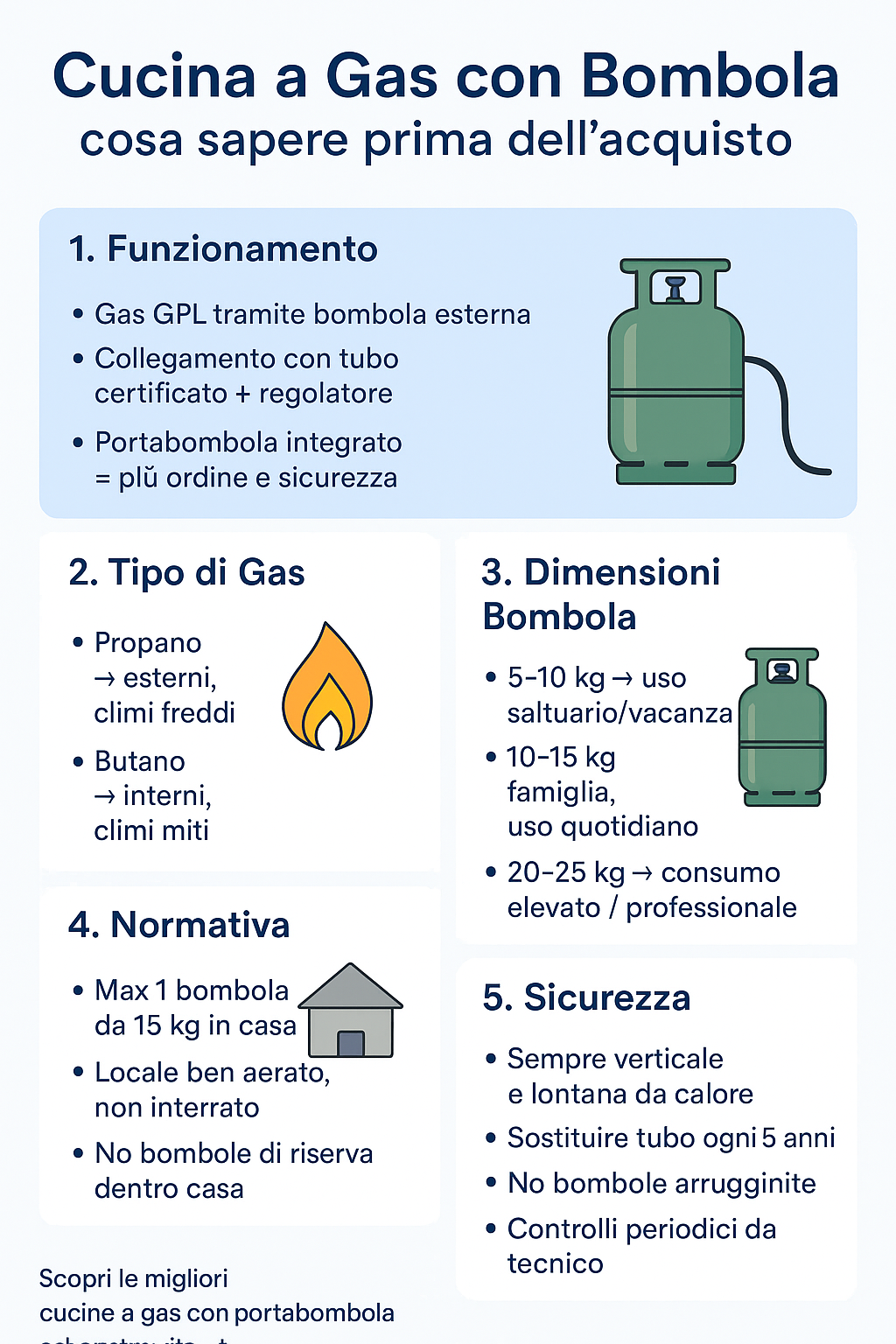
A gas stove powered by a cylinder works similarly to one connected to the natural gas mains. The difference is that the gas doesn't come from a centralized system, but from an external cylinder connected via:
-
certified flexible hose , which transports the gas to the hob;
-
pressure regulator , which reduces the gas pressure and keeps it constant;
-
possible gas cylinder holder integrated into the kitchen, useful for storing the tank in an orderly and safe manner.
What gas does a cooking cylinder contain?
Domestic cylinders usually contain LPG (Liquefied Petroleum Gas) , a mixture of:
-
propane (best suited for outdoor environments and cold climates);
-
butane (more common for internal use, in mild climates).
Dimensions and capacity of a cylinder
The cylinders have different capacities, to adapt to various domestic needs:
-
Small 5-10kg cylinder : suitable for holiday homes or occasional use.
-
Standard 10-15 kg cylinder : the most common for domestic gas stoves.
-
Large 20-25 kg cylinder : used in professional kitchens or homes with high consumption.
A 15 kg LPG cylinder, for example, can guarantee 3-6 months of autonomy in a family that uses gas only for cooking.
👉 Discover the kitchens that have an integrated gas cylinder compartment
Precautions when using a cylinder
For safe use it is important:
-
Keep the cylinder upright and away from heat sources.
-
Check the hose and pressure regulator regularly.
-
Replace expired or damaged components.
-
Avoid unventilated rooms.
Regulations on gas cylinders at home
Italian law (Ministerial Decree 23/01/1971 and subsequent updates) establishes that:
-
It is permitted to keep only one LPG cylinder connected to the kitchen in the house .
-
The cylinder must have a maximum capacity of 15 kg for domestic use.
-
It is not permitted to keep multiple spare cylinders in the same apartment.
-
It must be installed in well-ventilated rooms, not underground or hermetically sealed.
Connecting a gas cooker without a gas cylinder holder
It is possible to connect a gas stove to the cylinder even without a cylinder holder, as long as some rules are respected:
-
Use a UNI 7140 certified or stainless steel flexible hose .
-
Connect an approved pressure regulator .
-
Make sure the cylinder is in a safe, stable and easily accessible place.
However, the gas cylinder holder integrated into the kitchen is recommended, because it reduces risks and makes the environment tidier.
👉 Here you can find kitchens that can be connected externally
FAQ – Gas Stove with Cylinder
1. How long does a gas cylinder last when connected to a gas stove?
It depends on usage: an average family can use up a 15kg cylinder in 3-6 months.
2. Can I keep the cylinder on the balcony?
Yes, it's the safest option. In this case, you'll need a certified pipe that reaches the kitchen.
3. What signs indicate a gas leak?
Strong gas odor, venting noises from the regulator or valve. If this occurs: immediately close the cylinder, ventilate the room, and do not turn on flames or switches.
4. Is it mandatory to have a gas cylinder holder?
No, it is not mandatory, but it is highly recommended for order and safety.
5. What are the main safety rules?
-
Never install the cylinder in closed, unventilated rooms.
-
Replace the hose every 5 years or at the indicated expiration date.
-
Do not use rusty or damaged cylinders.
-
Have the system checked periodically by a qualified technician.
👉 A gas stove with a cylinder remains a reliable and versatile solution, as long as it complies with regulations and safety standards. The version with an integrated cylinder holder is currently the most practical choice for those who want to cook with peace of mind, order, and fewer risks.


Leave a comment
All comments are moderated before being published.
This site is protected by hCaptcha and the hCaptcha Privacy Policy and Terms of Service apply.