The cold season of 2025 brings with it a new wave of seasonal influenza , caused by variants of the classic influenza A and B viruses (strains H1N1 and H3N2).
Nothing alarming, but experts' forecasts indicate an increase in the number of cases compared to the previous year.
The key to dealing with it in the best way is not just to "cure" it, but to prevent it through hygiene, conscious behavior and cleaner air, also thanks to air purifiers .
What is Influenza 2025 in brief?
Influenza 2025 is an acute form of respiratory infection caused by viruses that change slightly each year.
It manifests itself with fever, dry cough, sore throat, muscle pain and tiredness , and in some cases with gastrointestinal symptoms.
The average duration is 5-7 days and contagiousness is maximum in the first 48 hours.
But rather than focusing on the virus itself—which is no different from those of previous seasons—the focus must be on active prevention : what everyone can do to limit the spread.
Preventive behaviors and personal hygiene
Basic rules remain the foundation for reducing the spread of influenza. However, in 2025, a broader awareness emerged: the environment around us plays just as crucial a role as personal care.
1. Hand hygiene
-
Wash your hands often with soap and water for at least 40 seconds , or use alcohol-based gel.
-
Avoid touching your face, mouth, or nose unless you have washed your hands.
2. Respiratory label
-
Cough or sneeze into the crook of your elbow or into a disposable tissue and throw it away immediately.
-
If you are symptomatic, wear a mask in shared or crowded environments. 3. Maintain social distancing and respect for others.
-
Stay home if you have a fever or flu-like symptoms.
-
Avoid close contact with children, the elderly, or vulnerable people during the first few days of illness.
4. Strengthen the immune system
-
Get enough sleep and eat a diet rich in fruits, vegetables, fiber, and vitamins (C, D, zinc).
-
Drink plenty of water and limit alcohol and refined sugars.
Air purifiers: the new ally against the flu at home and in the office
The air we breathe indoors can become a real vector of contagion.
According to international studies, most respiratory infections spread through aerosols and suspended micro-droplets , especially in poorly ventilated closed spaces.
This is why air purifiers are becoming an increasingly recommended tool by doctors and hygienists.
How an air purifier works
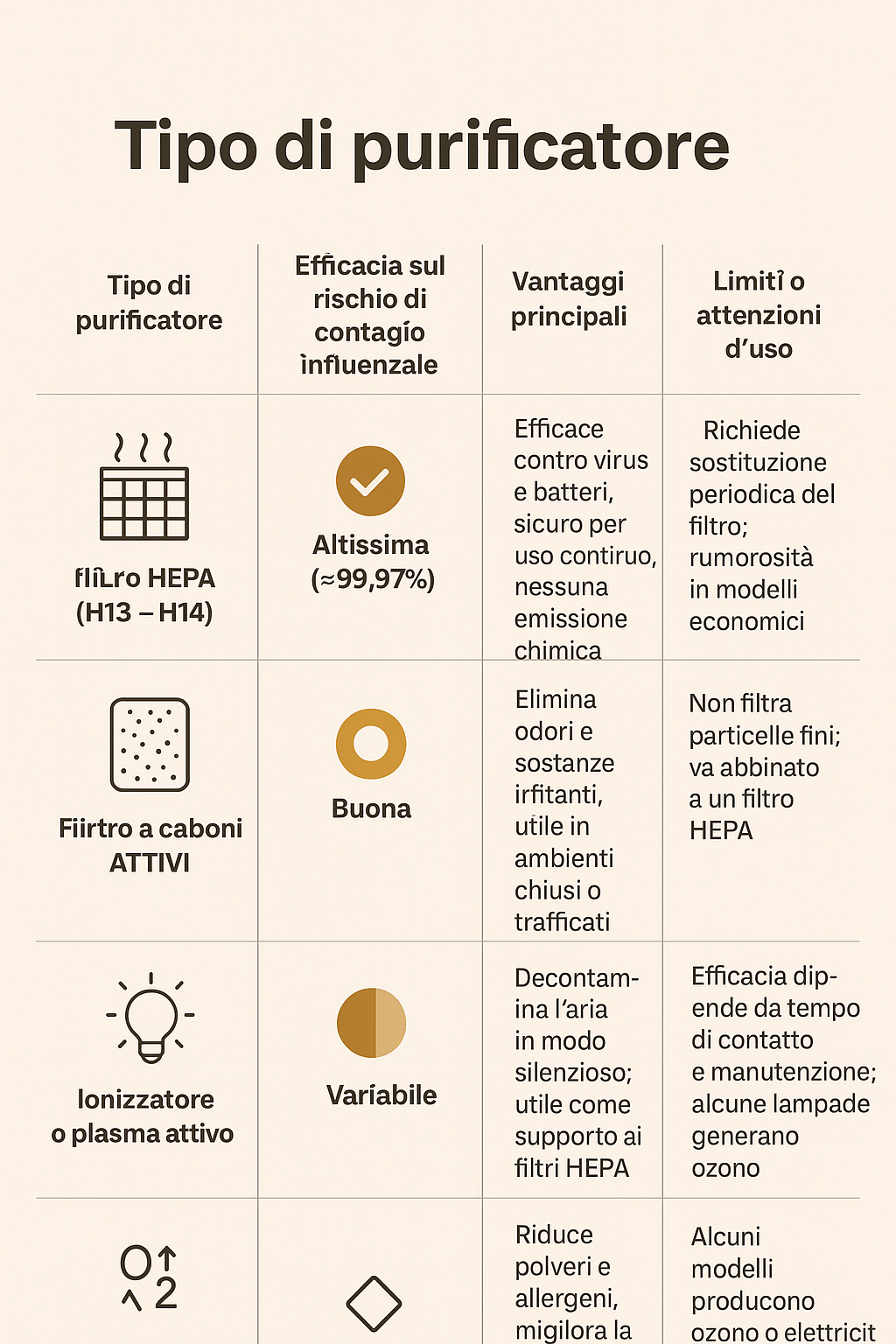
Devices equipped with HEPA filters of class H13 or H14 are able to:
-
Capture up to 99.97% of suspended particles (viruses, bacteria, fine dust, pollen, allergens);
-
Reduce the microbial load in the air, reducing the risk of indirect viral transmission;
-
Maintain a cleaner environment even in the presence of people with the flu;
-
Improve air quality in environments with limited ventilation, such as open-plan offices or modern homes.
🔎Find out how an air purifier works
In the office
In a closed work environment, the virus can remain suspended in microdroplets for up to 3 hours .
An air purifier with the correct hourly exchange rate (CADR appropriate to the square meters) can significantly reduce viral density in the environment , especially in shared areas (meeting rooms, open spaces, reception).
At home
In the domestic context, the constant use of an air purifier:
-
Protects the most vulnerable members of the family;
-
Improves breathing during sleep;
-
It helps maintain healthier air in bedrooms, living rooms and poorly ventilated rooms.
⚙️ Practical tips for use
-
Place the purifier in the center of the room, away from walls or curtains.
-
Keep windows closed during operation, but ventilate briefly 2-3 times a day .
-
Clean and replace filters following the manufacturer's instructions.
-
Avoid models with active ionizers if you have children or asthmatics.
🔎Discover the line chosen by Rustilia guaranteed for 5 years
Warnings and integrative behaviors
The purifier is not a “cure,” but an additional barrier within a broader strategy.
To maximize protection:
-
Make sure the device is HEPA certified and sized correctly for the room volume;
-
Maintain personal and environmental hygiene : clean handles, remote controls, keyboards and frequently touched surfaces;
-
Ventilate daily, even in winter, to renew the oxygen.
-
Get vaccinated if you fall into one of the risk categories or on medical advice.
In summary
Influenza 2025 is not so much distinguished by the virus itself, but by the need for a smarter approach to prevention .
Today we know that hygiene, responsible behavior, and air quality have a real impact on collective health.
👉 Washing your hands, covering your mouth, ventilating, sleeping well, and purifying the air are the new “daily medicines” that everyone can adopt to reduce the spread of the flu—at home, at school, or in the office.
❓ FAQ – Influenza 2025: Frequently Asked Questions
1. What are the typical symptoms of influenza 2025?
The most common symptoms include fever, muscle aches, sore throat, dry cough, and fatigue. Nasal congestion and mild gastrointestinal symptoms are also observed in some cases.
2. How can I reduce the risk of infection at home or in the office?
Practice good hand hygiene, ventilate your rooms regularly, avoid touching your face, and use air purifiers with HEPA filters to reduce airborne particles that can carry viruses.
3. Does an air purifier really protect against the flu?
Yes, if equipped with a HEPA H13 or H14 filter : these devices trap up to 99.97% of particles similar in size to viruses. They do not replace natural ventilation, but they enhance its preventive effectiveness .
4. How often should I change the purifier filters?
On average, every 6–12 months , but the frequency depends on usage and indoor air pollution levels. Always follow the manufacturer's instructions to maintain maximum effectiveness.
5. What hygiene practices are most effective against infection?
-
Wash your hands often with soap and water.
-
Disinfect surfaces and handles several times a day.
-
Cover your nose and mouth when coughing or sneezing.
-
Avoid sharing glasses or cutlery.
-
Stay home at the first symptoms.
6. Is it useful to use the purifier even in winter?
Absolutely yes: during the cold months, rooms are often closed and ventilation is reduced . An air purifier helps keep the air clean and limit viral circulation .

Leave a comment
All comments are moderated before being published.
This site is protected by hCaptcha and the hCaptcha Privacy Policy and Terms of Service apply.