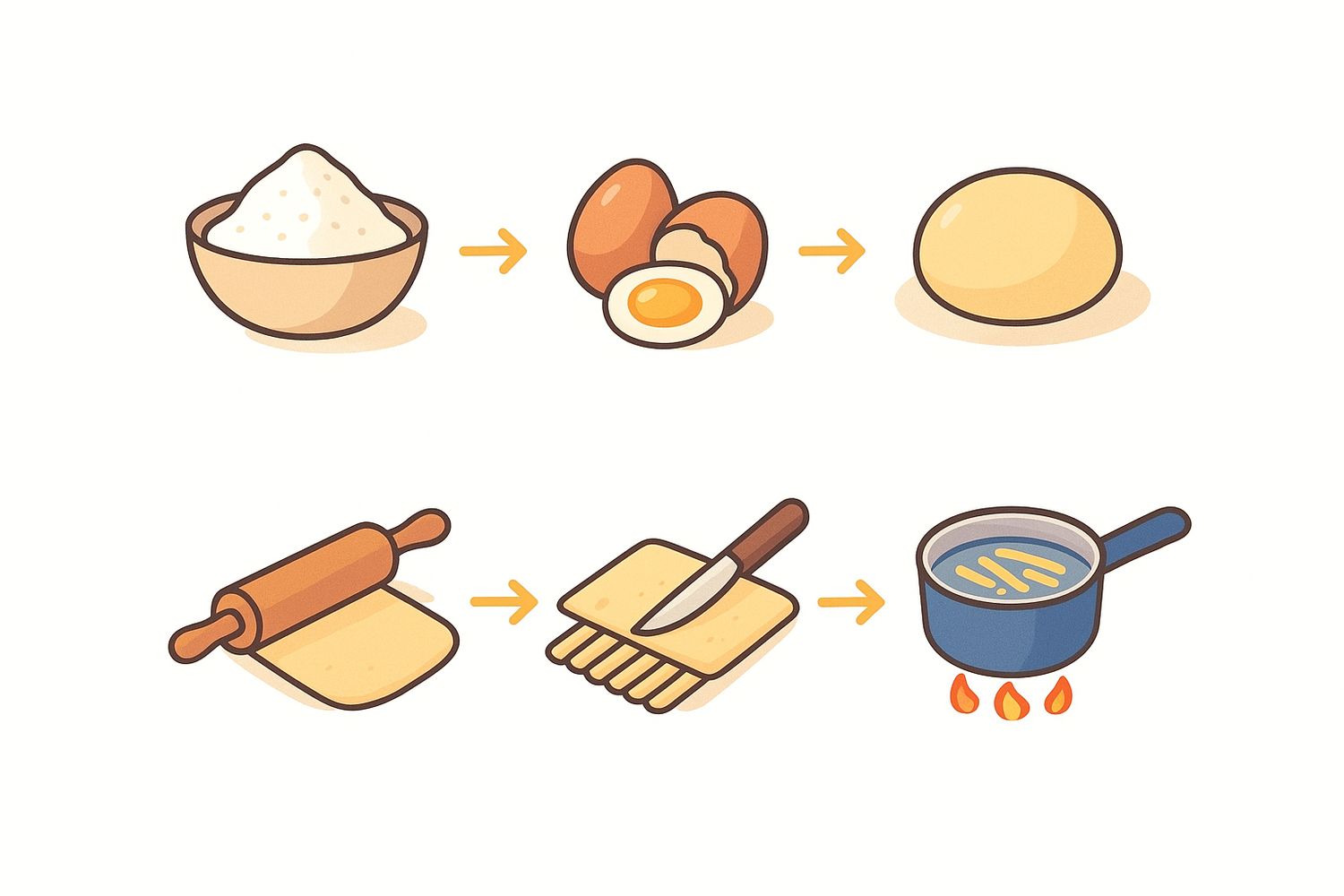
Homemade pasta is one of the most authentic traditions of Italian cuisine. Preparing it yourself isn't just a culinary gesture, but a true ritual that combines creativity, skill, and flavor. You don't need to be a professional chef: with just a few ingredients and a little practice, anyone can bring a genuine and personalized dish to the table.
In recent years, homemade pasta has evolved to meet the needs of those seeking lighter, healthier alternatives, or ones suited to specific lifestyles. It's no longer just the classic version made with flour and eggs, but a universe of variations that make this recipe accessible to everyone.
Homemade eggless pasta
Making pasta without eggs is possible and very popular, especially in southern Italy. This version, often made with durum wheat semolina and water, is lighter yet full-bodied, ideal for pasta shapes like orecchiette, trofie, or strozzapreti. It's the perfect choice for those with egg intolerances or who want a simple, easily digestible dough without sacrificing the pleasure of fresh pasta.
Homemade gluten-free pasta
With the growing number of people following a gluten-free diet, homemade pasta has also found new avenues. Using gluten-free flour mixes, such as rice, corn, or legume flours, you can create a supple and flavorful dough. It requires a little extra care, as these flours have different characteristics than wheat flour, but the result can be surprising: a soft pasta, suitable for everyone, that preserves the pleasure of tradition.
Homemade pasta without a machine
Many people think that making pasta at home requires a pasta machine, but that's not the case. With a simple rolling pin, a well-floured surface, and a little patience, you can achieve a thin, even sheet of pasta. Kneading the dough by hand is not only a practical solution for those without tools, but it also offers a relaxing and creative opportunity to rediscover the ancient techniques of our grandmothers.
Why choose homemade pasta?
Whether traditional or more modern, homemade pasta offers numerous advantages: it allows you to control the ingredients, experiment with different flours, adapt to intolerances or personal preferences, and above all, rediscover the pleasure of carefully prepared food. It's a way to bring not only a quality dish to the table, but also a piece of Italian history and culture.
FAQ about homemade pasta
1. How long does it take to make homemade pasta?
It depends on the shape you choose, but on average it takes 15-20 minutes to knead and about 30 minutes to rest before rolling out the dough.
2. Is pasta without eggs less tasty?
Not necessarily: it has a different, more neutral taste, which pairs very well with rich sauces or traditional Mediterranean dishes.
3. Is it difficult to make gluten-free pasta?
It requires a bit of experience because gluten-free flours are more crumbly, but with the ready-made mixes available today, you can easily obtain an elastic dough.
4. Can I make fresh pasta without a machine?
Yes. With a rolling pin you can roll out the dough evenly, although it takes more time and skill.
5. How to store homemade pasta?
It can be eaten immediately, frozen on a well-floured tray, or left to dry for a few hours and then stored in the pantry in an airtight container.

Leave a comment
All comments are moderated before being published.
This site is protected by hCaptcha and the hCaptcha Privacy Policy and Terms of Service apply.