Cleaning your teeth at home is the first and most important step in maintaining a healthy smile and preventing cavities, gingivitis, and bad breath. With the advances in technology and oral hygiene devices, it's now possible to achieve results very similar to those at the dentist, even in the comfort of your own bathroom.
In this guide you will discover how to properly clean your teeth at home , which tools to use and how to manage oral hygiene in particular situations , such as pregnancy or the presence of dentures .
1. How to brush your teeth properly at home
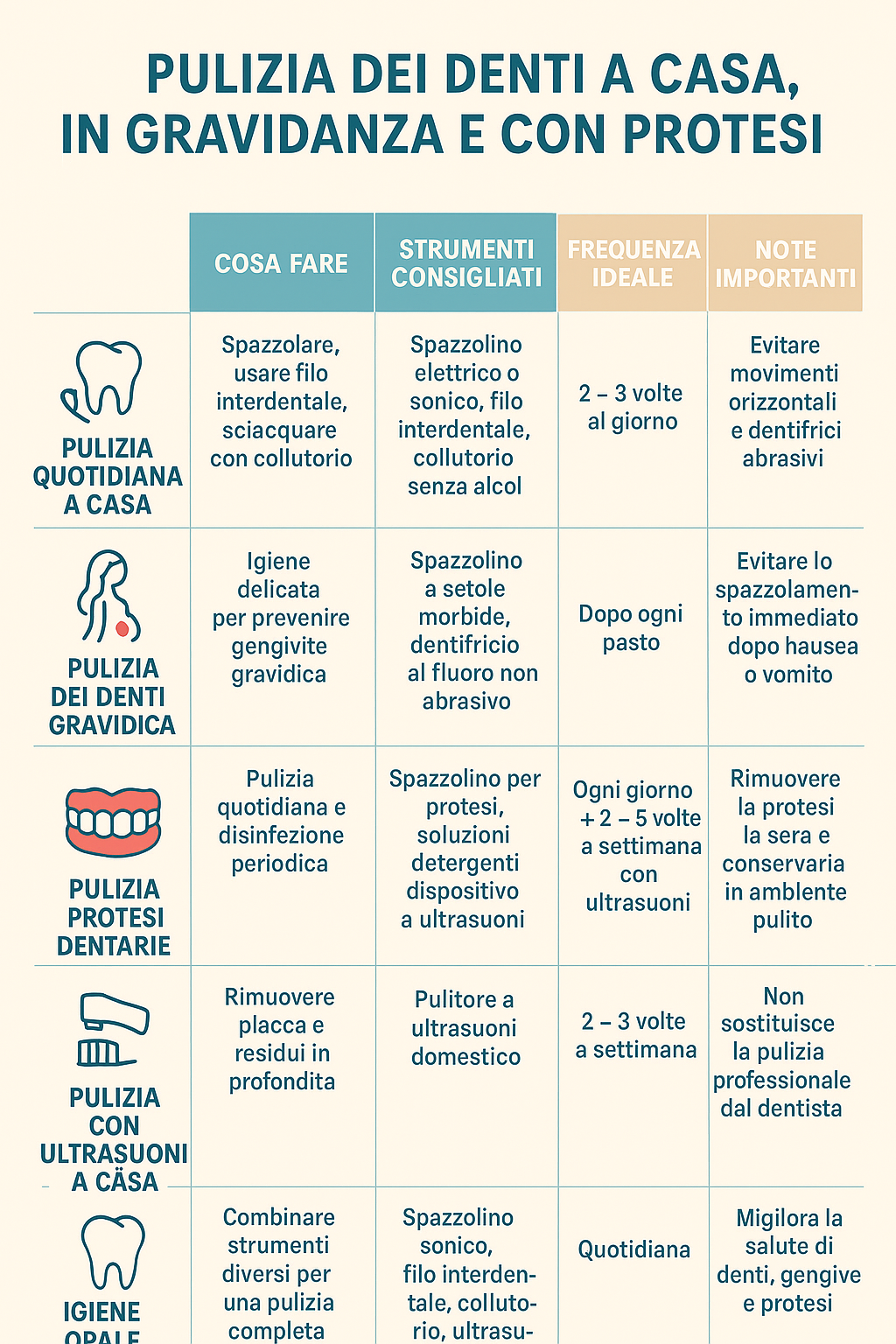
Your daily oral hygiene routine should include three essential steps :
-
Brushing
Use an electric or manual toothbrush with soft bristles. Use vertical (never horizontal) strokes and spend at least 2 minutes for a thorough cleaning.
➜ SGE Tip: Sonic toothbrushes with ultrasonic technology can improve plaque removal by up to 30% compared to traditional ones. -
Use of dental floss or interdental brushes
It removes food debris and plaque where your toothbrush can't reach. It's recommended every night before bed. -
Rinse with antibacterial mouthwash
It helps reduce bacteria and keep breath fresher longer. Choose alcohol-free solutions, which are gentler on sensitive gums.
2. Teeth cleaning during pregnancy: attention and prevention
During pregnancy, hormonal changes can make the gums more sensitive and prone to inflammation (called pregnancy gingivitis ).
For this reason, it is important to maintain thorough and constant, but also delicate, cleaning.
Helpful tips:
-
Use soft-bristled toothbrushes.
-
Choose a toothpaste that contains fluoride, but is not abrasive.
-
Visit your dentist regularly, even in your second trimester.
-
If you experience nausea, wait at least 30 minutes after vomiting before brushing your teeth (the acidity can damage the enamel).
3. Cleaning teeth with dentures: the help of ultrasound
Those who wear removable or fixed dentures must pay particular attention to daily cleaning. Denture surfaces can retain food debris and bacteria more easily than natural teeth.
Today it is also possible to use ultrasonic devices at home, similar to those used in dental offices, which emit microvibrations capable of effectively removing tartar and plaque even in the most difficult areas.
💡 Advantages of the home ultrasound system:
-
Removes residues deeply without scratching the dentures.
-
It reaches areas where the toothbrush can't reach.
-
Maintains healthier gums with gentle yet thorough cleaning.
4. Complete oral hygiene: recommended tools
For truly effective teeth cleaning at home, here's what you shouldn't miss:
| Instrument | Function | Frequency of use |
|---|---|---|
| Sonic electric toothbrush | Plaque removal and gum massage | 2-3 times a day |
| Dental floss or interdental brushes | Cleaning between the teeth | 1 time per day |
| Antibacterial mouthwash | Protection from bacteria and bad breath | After brushing |
| Ultrasonic cleaner for dentures | Deep cleansing | 2-3 times a week |
FAQ – Frequently Asked Questions About Teeth and Denture Cleaning
1. How often should I brush my teeth?
At least twice a day , ideally after each main meal.
2. Can I use baking soda to whiten my teeth?
Better not. It's abrasive and can damage enamel. Opt for whitening toothpastes with gentle active ingredients.
3. Can pregnant women use mouthwash?
Yes, but only if alcohol-free and under the advice of a dentist or gynecologist.
4. How to clean a removable denture?
Remove it every night, brush it with a special toothbrush, and soak it in an ultrasonic cleaner or a specific solution twice a week.
5. Can tartar be removed at home?
Partially yes, with sonic or ultrasonic toothbrushes, but for complete removal, the intervention of a dentist is always necessary.

Leave a comment
All comments are moderated before being published.
This site is protected by hCaptcha and the hCaptcha Privacy Policy and Terms of Service apply.