Cleaning the oven is essential for maintaining hygiene in the kitchen and ensuring consistently delicious and safe dishes.
A dirty oven not only alters flavors, but can also generate unpleasant odors, smoke, and reduce the appliance's efficiency.
In this guide we will see how to clean a gas oven , the differences compared to the electric one and the innovative treatments of the brands that simplify maintenance.
👉 Cooking differences between gas and electric
Why it is important to clean your gas oven regularly
Gas ovens tend to accumulate:
-
Combustion residues due to the flame.
-
Fat and encrustations during cooking.
Without regular cleaning, you risk compromising the quality of the food and the safety of the appliance.
How to clean a gas oven step by step
1. Preparation
-
Turn off the oven and let it cool.
-
Remove grills, drip pans, and accessories.
2. Internal cleaning
-
Make a paste with baking soda and water or use a specific cleaner.
-
Spread it on the inside walls, carefully avoiding the gas vents and the burner.
-
Leave it on for 30–40 minutes.
3. Removing encrustations
-
Use a soft sponge or plastic spatula to remove any residue.
-
Finally, wipe with a cloth with water and vinegar to neutralize odors and grease residue.
4. Grills and accessories
-
Soak them in hot water with baking soda or degreasing soap.
-
Scrub with a scouring pad if necessary.
5. Finishing
-
Dry with a microfiber cloth.
-
Reassemble the accessories.
👉 Discover the range of built-in gas ovens
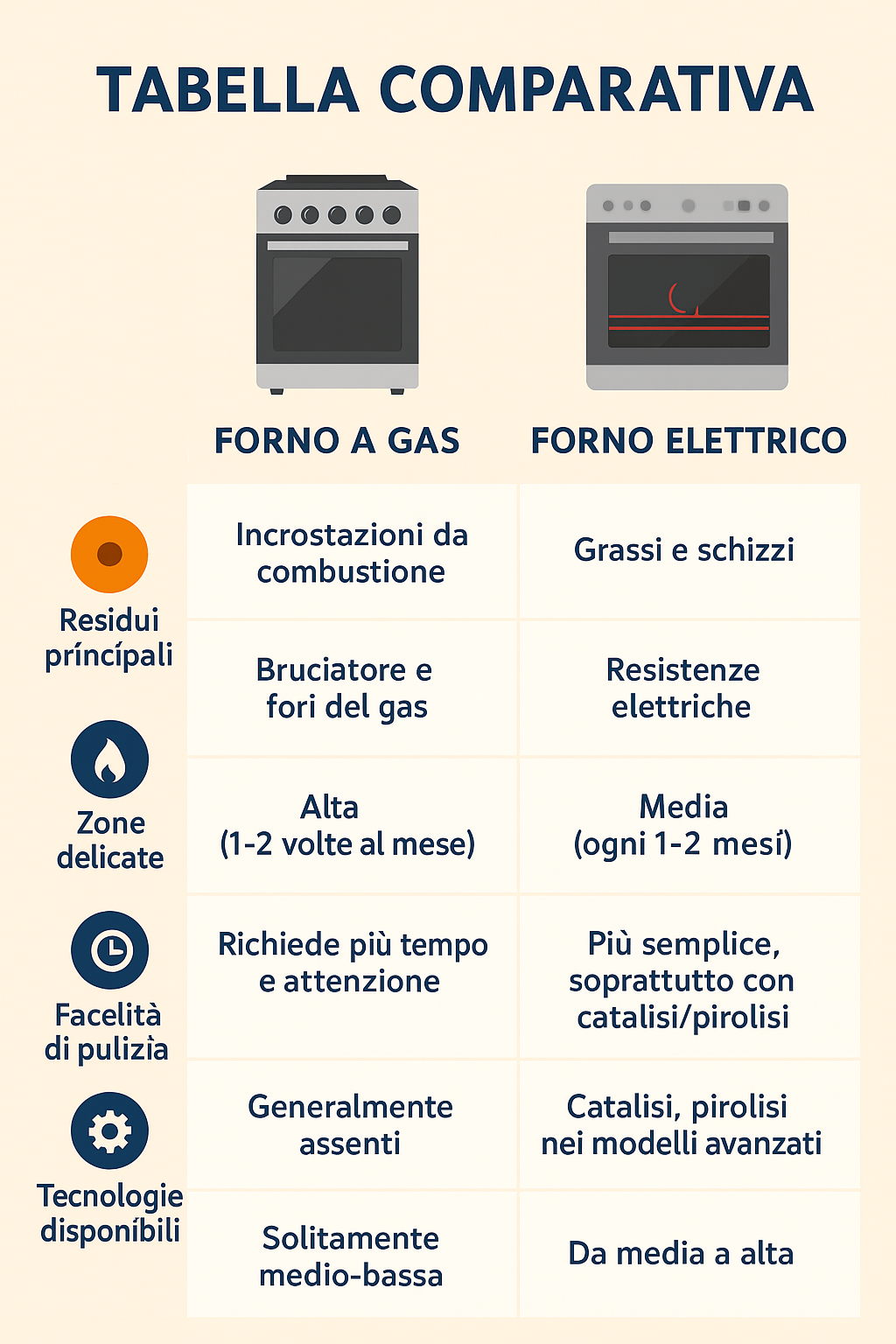
Differences between cleaning a gas oven and an electric oven
-
Different residues : gas ovens produce more dirt with combustion encrustations; electric ovens accumulate mainly grease and spatter.
-
Delicate areas : In gas ovens, the burner and vents must be protected; in electric ovens, the heating elements must not be wet.
-
Self-cleaning : many latest-generation electric ovens include pyrolytic or catalytic systems that reduce manual effort.
-
Frequency : the gas oven requires more regular maintenance, while the electric one can count on automatic functions.
Technologies that simplify cleaning
Some brands have introduced solutions that significantly reduce cleaning times:
-
Easy to Clean special enamels (Lofra, Silverline and others) :
These are smooth, durable internal linings that prevent grease from adhering and make it easier to remove dirt.
All it takes is a damp cloth or neutral detergent to restore your oven to its original splendor. -
Pyrolysis process (high-end electric ovens) :
The oven reaches very high temperatures (around 500°C), carbonizing the dirt into fine ash that can be removed with a simple cloth.
It is a typical function of high-end electric ovens and represents the most practical solution for those who want an appliance that is always clean without effort.
These technologies drastically reduce the need for frequent cleaning and keep the oven more hygienic over time.
FAQs about cleaning your gas oven
1. How often should I clean a gas oven?
At least once a month, more often if you cook fatty dishes.
2. Can I use strong chemicals?
Yes, but be careful: they shouldn't get into the burner holes. Natural remedies (baking soda, vinegar, lemon) remain the safest.
3. How to eliminate bad odors?
Heat a bowl of water and lemon for 10 minutes: it will absorb odors and leave a fresh scent.
4. Are ovens with Easy to Clean enamel really easier to clean?
Yes: the coating reduces dirt adhesion, making cleaning faster and less aggressive.
5. How does pyrolysis differ from manual cleaning?
Pyrolysis almost completely eliminates manual labor, turning grease and residue into ash. However, it is only available in high-end electric ovens.


Leave a comment
All comments are moderated before being published.
This site is protected by hCaptcha and the hCaptcha Privacy Policy and Terms of Service apply.