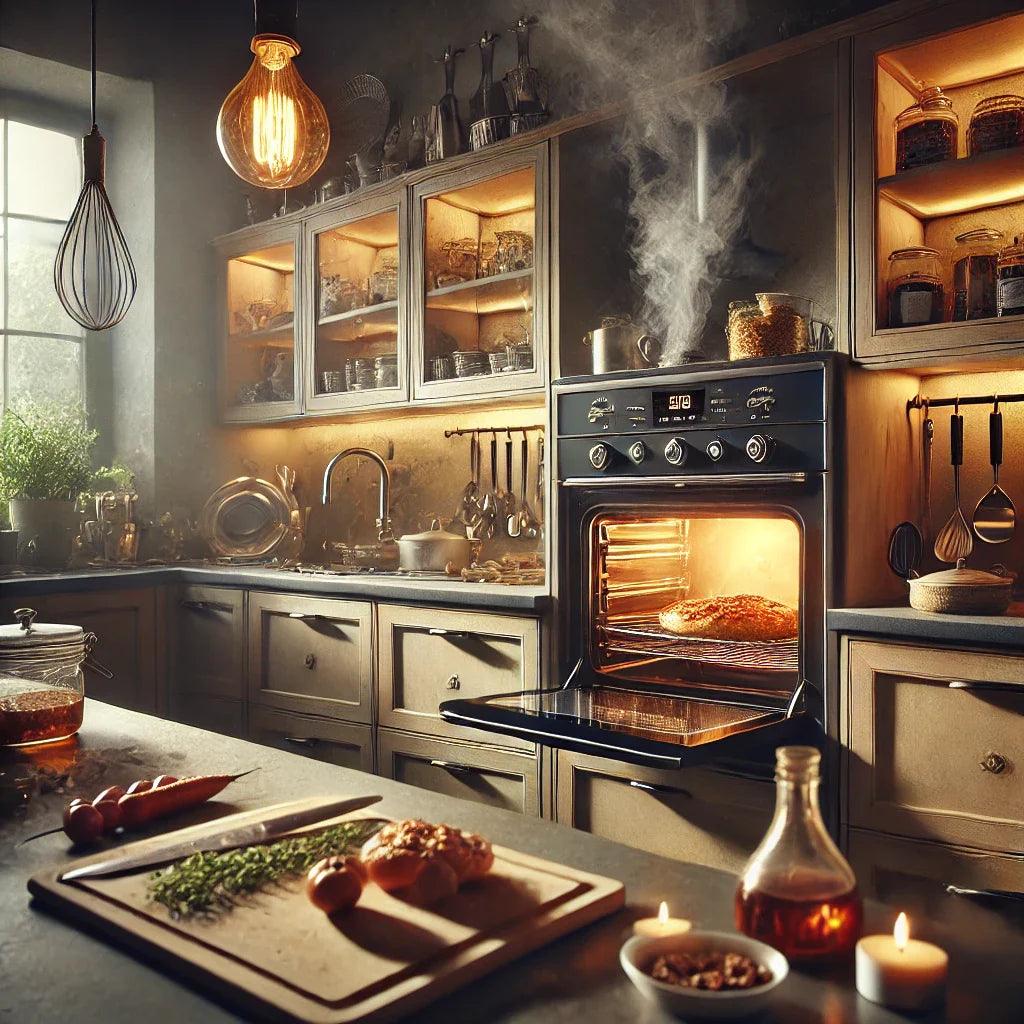
When and how to use oven ventilation: a practical guide for perfect results.
The oven's convection function is one of the most useful features for modern cooking, but it's not always necessary or advisable. Knowing when to activate it and when to prefer conventional cooking is essential for obtaining well-cooked, tasty dishes. In this article, we explore the pros and cons of convection, providing practical advice for every situation.
What is oven ventilation and how does it work?
Convection, or fan-assisted cooking, uses a built-in fan to evenly distribute heat throughout the oven. This system ensures faster and more even cooking than conventional cooking, where heat comes only from the top and bottom. Convection is ideal for some dishes, but it's not always the best choice.
When to use ventilation in the oven
Fan cooking is particularly effective in some situations, such as:
-
Fast and uniform cooking
Thanks to the uniform distribution of heat, ventilation is perfect for:- Biscuits and pastries: the constant heat ensures even browning.
- Roasts: The meat cooks evenly, maintaining a crispy crust on the outside.
- Vegetables: Ventilation helps caramelize vegetables without burning them.
-
Cooking multiple trays at the same time
If you need to prepare multiple batches (for example, cakes or pizzas), the ventilation ensures that each level receives the same amount of heat, preventing some foods from remaining raw or burnt. -
Crispy preparations
Convection is ideal for achieving a golden crust on dishes such as baked potatoes, lasagna, and gratins.
When NOT to use ventilation
Static cooking remains essential for some recipes that require gentler cooking or a more gentle, concentrated heat. Here are the cases in which it's best to turn off the fan:
-
Leavened sweets
- Soft cakes, such as sponge cakes, plum cakes, and ring cakes, require even, gentle heat to prevent the batter from drying out or rising unevenly. Convection could compromise the texture, making the cake too dry.
-
Bread and pizza
In the early stages of baking, bread and pizza benefit from static baking, which promotes even dough rise. Only in the final minutes can you activate the fan to brown the surface. -
Preparations with delicate sauces
Foods like crème caramel or soufflés require a constant, even temperature without drafts to prevent the surface from cracking or drying out.
Conclusion
Convection is a powerful tool that can improve cooking results, but it must be used wisely. Choose convection cooking for crispy roasts, baked desserts, and quick cooking. Opt for conventional cooking for soft, leavened desserts and delicate preparations.
Knowing the differences between the two modes will allow you to get the most out of your oven, ensuring perfect results every time. Experiment with both and find the perfect balance for every dish!


Leave a comment
All comments are moderated before being published.
This site is protected by hCaptcha and the hCaptcha Privacy Policy and Terms of Service apply.