

Acacia Honey: Properties, Benefits, and Contraindications
Acacia honey is one of the most popular honeys in Italy for its delicate flavor, fluid consistency, and high digestibility. It is derived primarily from the nectar of Robinia pseudoacacia , a tree commonly called "acacia," found in many Italian regions.
In this article you will find:
-
Nutritional properties
-
Benefits for the body
-
Possible contraindications
-
Differences from other honeys
-
Why Rustilia chooses 100% Italian organic acacia honey
What is acacia honey?
Acacia honey is obtained from the nectar of white black locust flowers, collected by bees in spring. It is distinguished by:
-
Very light color, almost transparent
-
Delicate and not very persistent flavour
-
High fructose content
-
Slow crystallization
It is precisely the high percentage of fructose that makes it more fluid than other honeys, such as chestnut or wildflower honey.
Nutritional properties of acacia honey
From a nutritional point of view, acacia honey contains:
-
Simple sugars (fructose and glucose)
-
Mineral salts (in small quantities)
-
Natural enzymes
-
Antioxidants
-
Traces of B vitamins
Average values per 100 g:
-
300–320 kcal
-
80 g of carbohydrates
-
0 g fat
-
0 g of significant protein
It is a quick energy food, ideal for those who need immediate support (athletes, students, times of stress).
Benefits of acacia honey
1. Natural sweetness with a low relative glycemic impact
Compared to other honeys, the high presence of fructose determines a slightly lower glycemic index (but it is not suitable for diabetics without medical supervision).
2. Soothing effect on throat and respiratory tract
Like all pure honeys, it can have a soothing effect on coughs and irritations.
3. Greater digestibility
It is considered one of the mildest and best tolerated honeys.
4. Ideal in the kitchen
The delicate taste makes it perfect for:
-
Herbal teas
-
Yogurt
-
Sweets
-
Fresh cheeses
-
Light recipes
If you work in food (and I know that for you, cooking is both content and business), this is one of those products that lends itself perfectly to storytelling and recipes with high perceived value.
Contraindications of acacia honey
It is not a “miracle” food and should be used with awareness.
❗ 1. Not suitable for children under 1 year
For risk of infant botulism.
❗ 2. Caution for diabetics
Although it has a slightly lower glycemic index than other honeys, it remains a simple sugar.
❗ 3. Excess calories
It's natural, but it's still sugar. Excessive consumption can contribute to obesity and blood sugar imbalances.
❗ 4. Possible allergies
Rarely, people sensitive to pollen may have reactions.
Organic Acacia Honey: Why It Really Matters
Let me be clear here: not all honey is created equal.
Certified organic honey guarantees:
-
Absence of pesticides and contaminants
-
Supply chain control
-
Respect for bees
-
Territorial traceability
And this makes the difference both on an ethical and qualitative level.
Rustilia's choice: 100% Italian organic acacia honey


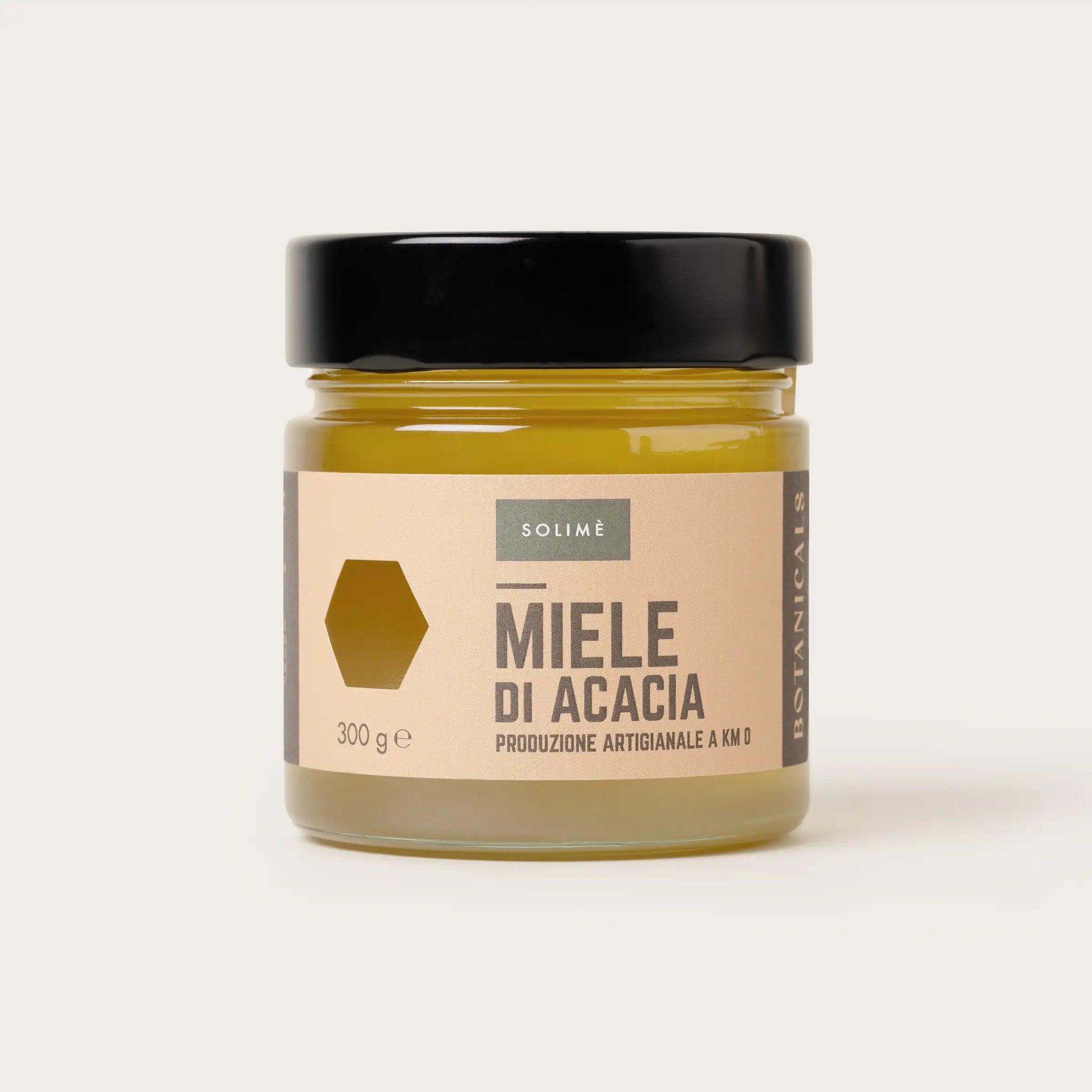
In the Rustilia project, the choice is not accidental.
Organic acacia honey produced entirely in Italy has been selected, with:
-
Controlled supply chain
-
Beekeeping that respects the natural cycle of bees
-
No aggressive treatment
-
Constant monitoring of the hives
Why?
Because quality and consistency matter. If you want to build a solid brand, you can't claim authenticity and then choose any raw materials.
In today's market, where low-cost imported honey is often adulterated or blended in a less transparent way, choosing certified Italian products is both a strategic and ethical choice.
And you know this well: perceived value comes from real quality.
Difference between acacia honey and other honeys
| Type of honey | Taste | Crystallization | Intensity |
|---|---|---|---|
| Acacia | Very delicate | Very slow | Light |
| Chestnut | Bitter | Slow | Strong |
| Wildflower | Variable | Average | Average |
| Eucalyptus | Intense | Average | Decided |
Acacia honey is the most versatile of all.
Conclusion
Acacia honey is:
✔ Natural
✔ Energetic
✔ Delicate
✔ Versatile in the kitchen
✔ More digestible than other honeys
But it must be consumed in balance.