A cat's diet is one of the most important aspects of ensuring a long and healthy life. But between dry and wet food, which should you choose? And how should you properly manage meals, especially if your cat is older or doesn't like dry food ?
Let's explore the differences, vet advice, and how automatic cat food dispensers can make life easier for you and your feline.
Dry or Wet Food: The Fundamental Differences
Dry food (kibble)
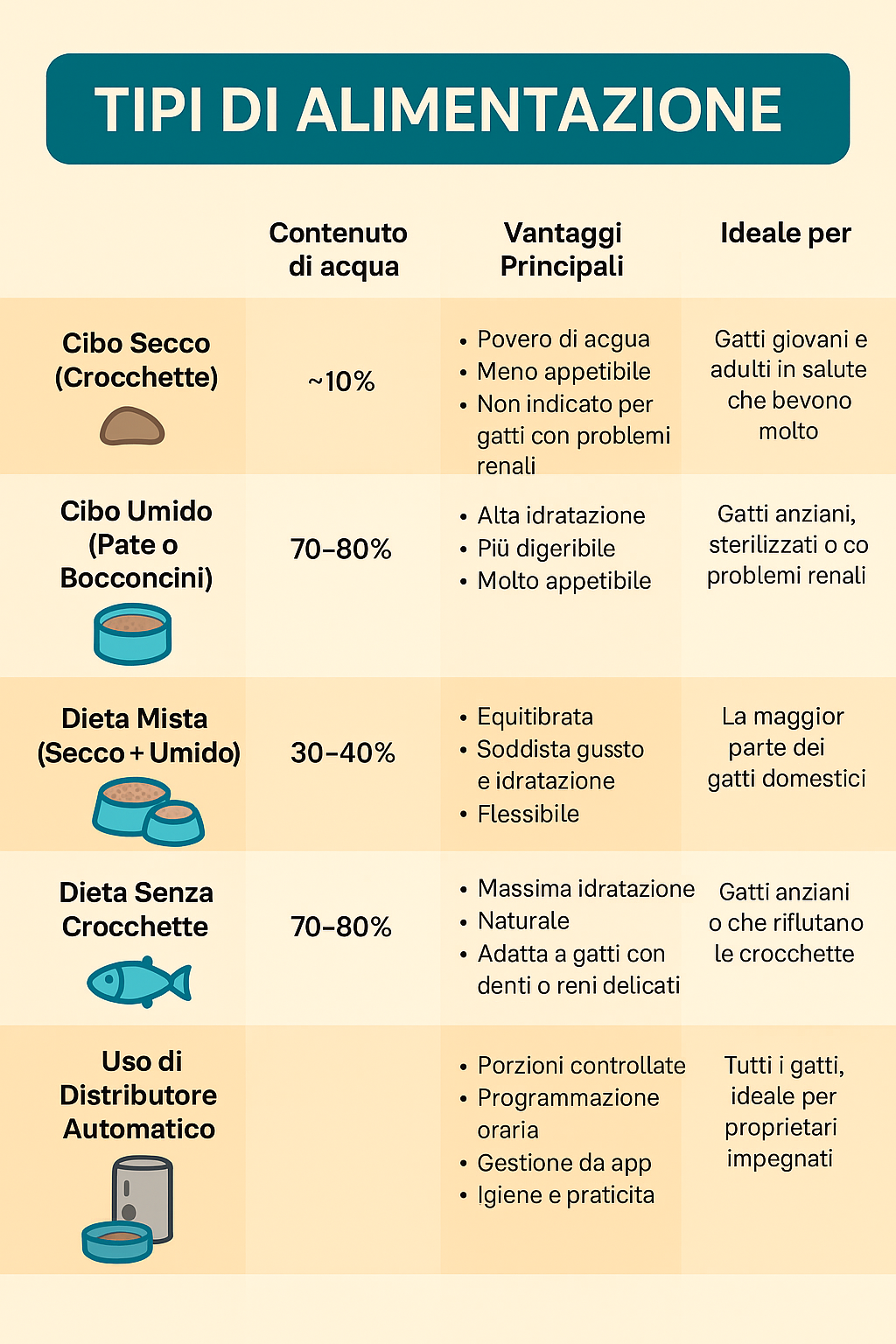
Dry food is convenient, long-lasting, and easy to portion. Kibble helps keep cats' teeth clean and encourages chewing. However, it contains less water (about 10%) and therefore may not be ideal for cats who drink little or have kidney problems.
Advantages:
-
Convenient to store
-
Keeps teeth clean
-
High concentration of nutrients
Disadvantages:
-
Poor in water
-
It may be less appetizing
Wet food
Wet food, such as pâté or treats, contains up to 80% water. It's highly palatable and ideal for promoting hydration, especially during warmer months or for cats with low thirst.
Advantages:
-
Rich in moisture
-
Highly palatable
-
More digestible
Disadvantages:
-
More expensive
-
Once opened, it should be consumed within a short time.
Feeding Your Senior Cat: Care and Gentleness
As a cat ages, its metabolism slows and its nutritional needs change. An older cat requires a more digestible diet, with high-quality proteins and low fat .
Many veterinarians recommend a mixed diet (wet + dry) or, in cases of chewing or kidney problems, a complete wet diet that aids digestion and maintains a good level of hydration.
Cats Without Kibble: An Increasingly Popular Option
Some owners choose to avoid kibble altogether, preferring a diet based only on wet food or balanced homemade diets (often formulated with the support of a veterinary nutritionist).
This choice can be valid, as long as the cat consumes all the essential nutrients , including taurine, fatty acids, vitamins and minerals.
Automatic Cat Food Dispensers: The Future of Home Feeding
Programmable cat food dispensers represent a modern and intelligent solution for managing daily feeding, both with dry and wet food (in refrigerated models).
They are perfect for those who work away from home or want to maintain a consistent feeding routine for their cat.
🔎Find out what it's all about!
⚙️ Main advantages:
-
Time scheduling: You can set specific portions and times
-
App control: manage everything from your smartphone, even remotely
-
Controlled portions: helps prevent overweight and obesity
-
Hygiene and freshness: some models keep moist food refrigerated
An example? The new models with built-in scales and voice recording functions , which allow your cat to hear your voice while eating—a detail that reduces stress and maintains the family routine.
🔎Discover the guaranteed products chosen by Rustilia
FAQ – Frequently Asked Questions About Cat Nutrition
1. Is it better to feed your cat only kibble or alternate with wet food?
Alternating feeding is the ideal solution: a wet meal to hydrate and kibble to supplement nutrients and care for the teeth.
2. How much water should a cat that eats only kibble drink?
At least 40–60 ml per kg of body weight per day. You can encourage this with drinking fountains or by adding natural (unsalted) meat broth to your food.
3. Can I leave dry food in the dispenser all day?
Yes, but it's best to plan your portions to avoid overeating. Modern vending machines help keep food fresh and portions balanced.
4. Can older cats eat wet kitten food?
Better not: kittens need more calories and protein. There are specific "senior" formulas with age-appropriate nutrients.
5. What is the best food for a cat that refuses kibble?
Opt for a quality wet food, or try rehydrated kibble with a little warm water or natural broth to soften it.

Leave a comment
All comments are moderated before being published.
This site is protected by hCaptcha and the hCaptcha Privacy Policy and Terms of Service apply.