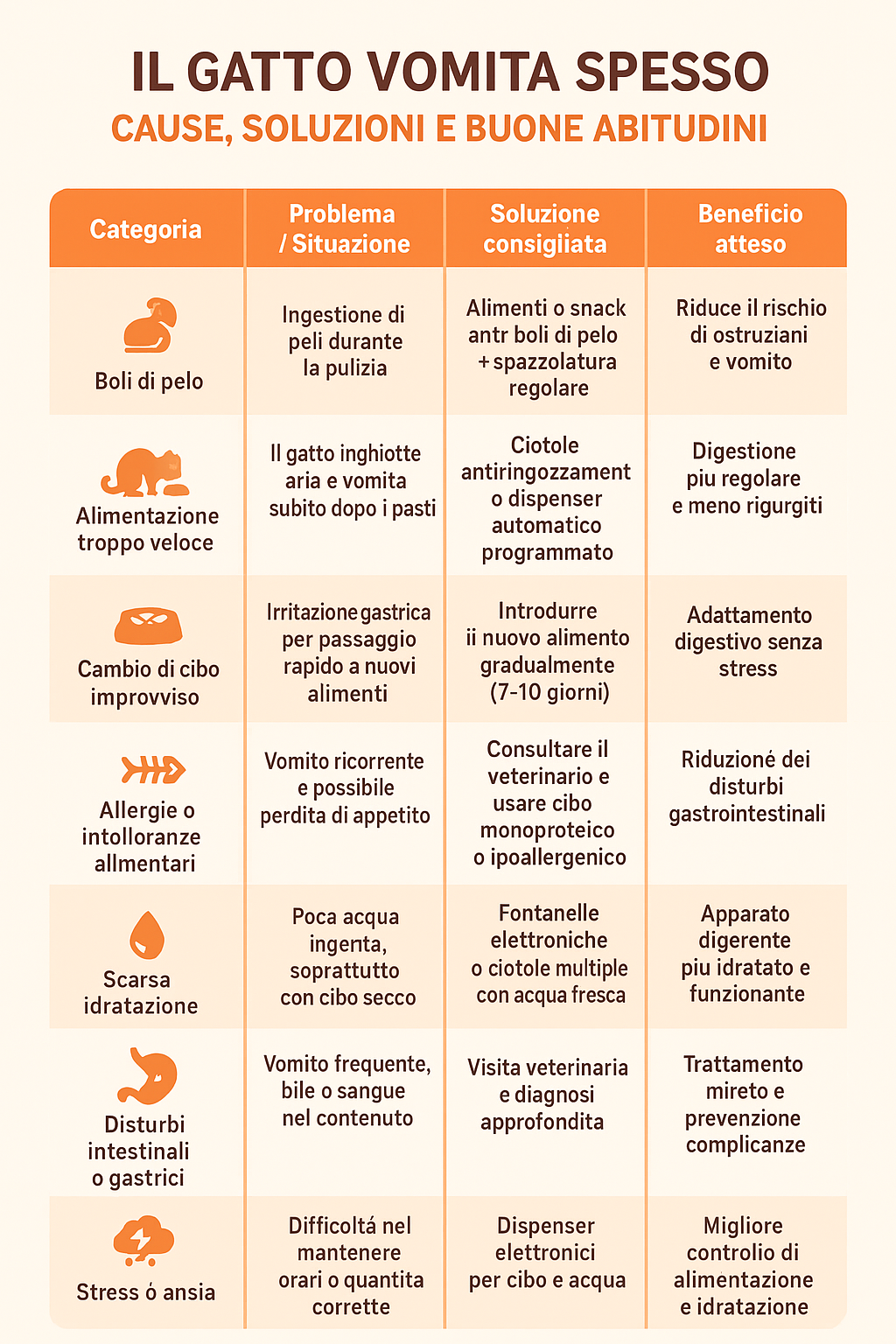
Seeing your cat vomiting frequently is always a cause for concern. While sometimes these episodes are temporary, recurrent vomiting may be a sign of health problems that need to be addressed promptly. In this article, we'll look at the main causes , how to improve the situation with a balanced diet and hydration , and how electronic food and water dispensers can help with daily management .
Why does my cat vomit often?
Vomiting in cats can be caused by a variety of factors, from simple gastrointestinal disorders to more complex conditions. Here are the most common causes:
-
Hairballs (trichobezoars) : Cats lick themselves frequently and ingest hair that can accumulate in their stomachs.
-
Feeding too quickly : Many cats eat too quickly, swallowing air and causing regurgitation.
-
Sudden change in diet : Introducing new foods too slowly can irritate your stomach.
-
Food allergies or intolerances : Some proteins or industrial ingredients can cause digestive reactions.
-
Chronic intestinal or gastric disorders : gastritis, parasites, infections or liver and kidney diseases.
-
Stress and anxiety : Cats are very sensitive to environmental changes and this can affect their digestion.
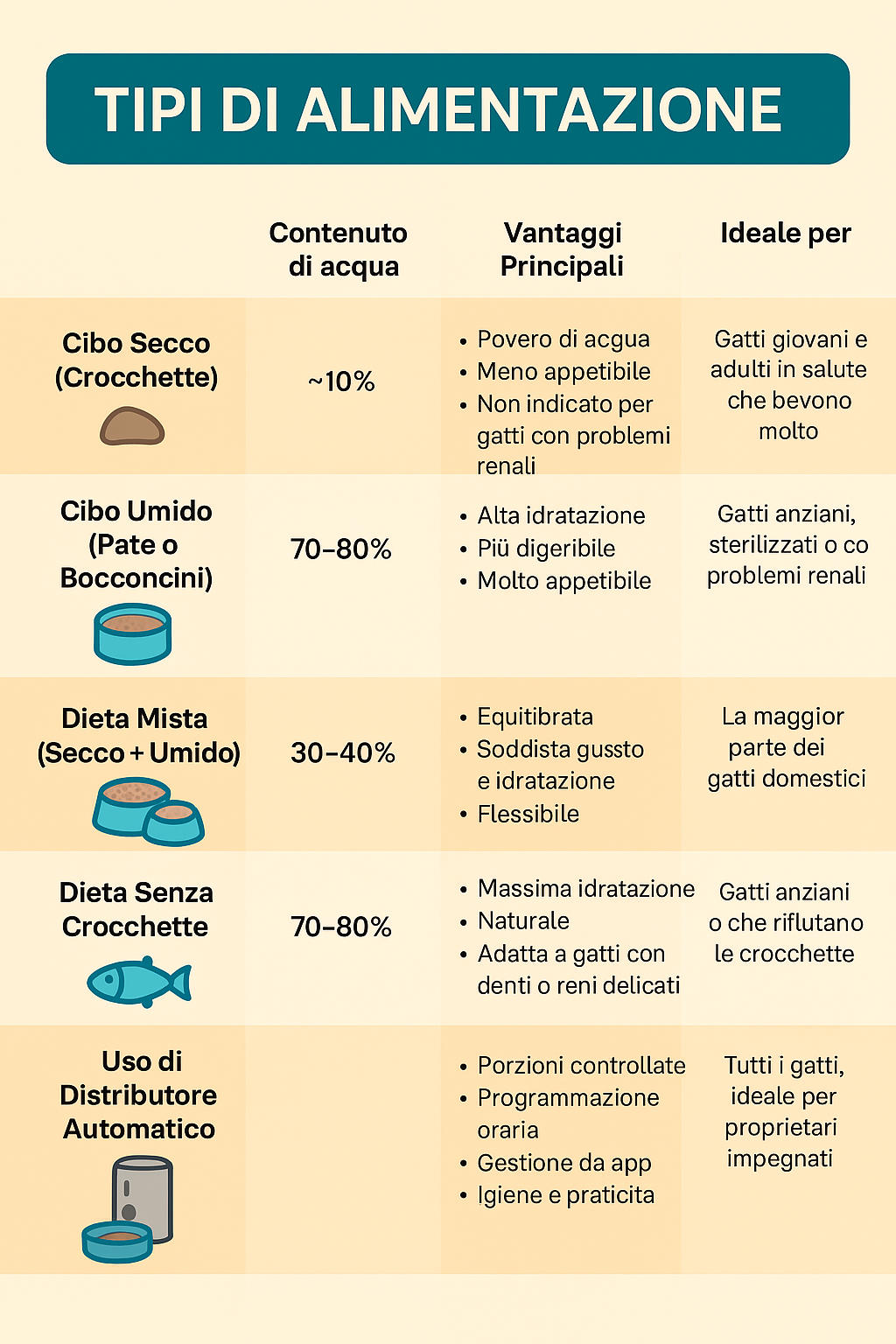
🔎Discover the difference between wet and dry food for cats!
👉 When to contact the vet:
If vomiting occurs several times a week, contains blood or bile, or the cat shows loss of appetite, apathy, or weight loss, it is essential to contact your veterinarian immediately.
The importance of a balanced diet
After ruling out or treating any medical causes, the next step is to optimize your cat's diet . A balanced diet helps reduce vomiting and maintain a healthy digestive system.
Practical advice:
-
High-quality food , preferring single-protein or hypoallergenic foods if recommended by the vet.
-
Small, frequent meals , so as not to overload the stomach.
-
Introduce new foods gradually (over 7-10 days) to avoid digestive reactions.
-
Specific anti-hairball snacks and biscuits , useful for long-haired cats.
A balanced diet , rich in fibre and low in fat, helps regulate digestion and limit the formation of hairballs.
Hydration: The Key to Healthy Digestion
Many cats drink little, especially if fed primarily kibble. However, insufficient hydration can worsen digestion and increase vomiting.
How to encourage your cat to drink more:
-
Use electronic fountains with moving water, which stimulate the cat's curiosity and natural instincts.
-
Add a little water or natural broth (without salt) to the wet food.
-
Distribute several bowls of water in different locations around the house.
A proper balance between nutrition and hydration improves your cat's digestive and general health.
Electronic dispensers: a practical aid in daily management
Once your veterinarian has identified the cause of the problem, management can be further improved with meal and hydration planning .
Electronic food dispensers allow you to:
-
Divide the food into controlled and regular portions , avoiding the cat eating too much or too quickly.
-
Set specific times , reducing stress and improving your eating routine.
-
Keep track of your daily calorie intake.
🔎Discover the range chosen by Rustilia for your cat
Automatic water dispensers or smart fountains , on the other hand, ensure a constant flow of clean, filtered water, maintaining ideal hydration even in the owner's absence.
These tools help your cat eat and drink regularly , preventing digestive disorders and supporting the recovery process.
FAQ – What to do when your cat vomits frequently
1. My cat is vomiting but keeps eating: is it serious?
Not always, but it's a good idea to monitor the frequency. If vomiting occurs several times a week, consult your veterinarian.
2. Can I change the food myself?
Better not. Any diet changes should be gradual and, if vomiting is frequent, discussed with your veterinarian.
3. Is it normal for a cat to vomit hair?
Yes, it's partly physiological, but if it happens frequently, there are specific foods and pastes to reduce hairballs.
4. Is yellow or bile-filled vomit a cause for concern?
Yes, it could indicate gastric or liver problems. A veterinary evaluation is necessary.
5. How can I help my cat stop eating too fast?
Use anti-gulping bowls or programmable electronic dispensers : they slow down food intake and improve digestion.

Leave a comment
All comments are moderated before being published.
This site is protected by hCaptcha and the hCaptcha Privacy Policy and Terms of Service apply.