-
-
Immediate response
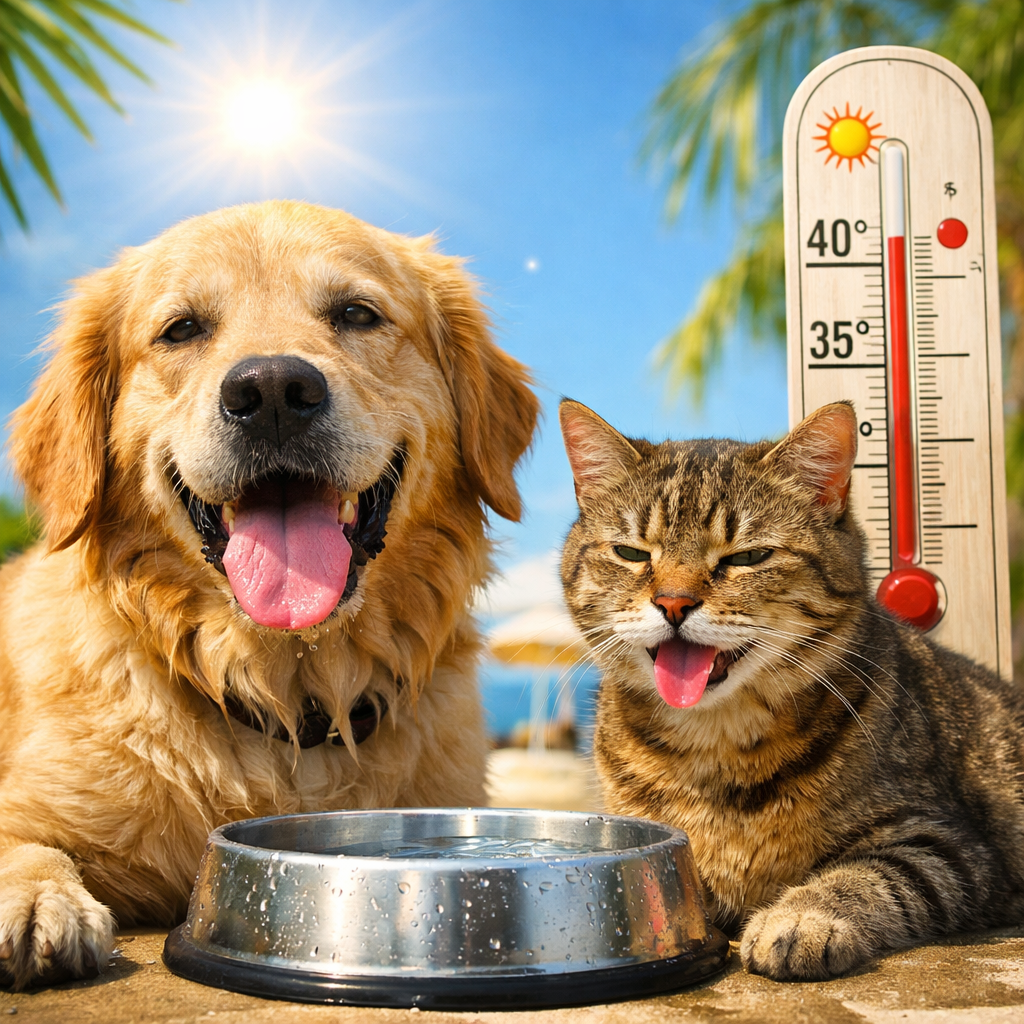
With rising temperatures, the requirement changes:
-
Dog
- Water: 60–80 ml per kg per day (more than usual)
- Food: slightly reduced during the hottest hours
-
Cat
- Water: 50–70 ml per kg per day
- Food: often eats less → pay attention to quality and hydration
👉 With heat, the main risk is not how much they eat, but how little they drink.
-
Dog
-
🌡️ Why heat changes everything
When temperatures rise:
- Fluid loss increases
- Appetite decreases
- Rhythms change (more active in the morning and evening)
👉 Result:
insufficient hydration + irregular feeding🔎 What are the health problems from dehydration
-
💧 How much water should a dog drink in summer?
📊 Updated requirement:
- 60–80 ml per kg of weight
📌 Examples:
- Dog 10 kg → 600–800 ml
- Dog 25 kg → 1.5–2 liters
🔺 Factors that further increase the need:
- Walks in the sun
- Physical activity
- Long hair
- Dry food
⚠️ Risk signs:
- Excessive panting
- Dry gums
- Apathy after activity
👉 In summer, dehydration can happen much faster.
🔎 Discover which solutions can help
-
🐱 How much water should a cat drink in the heat?
📊 Requirement:
- 50–70 ml per kg
📌 Example:
- Cat 4 kg → 200–280 ml per day
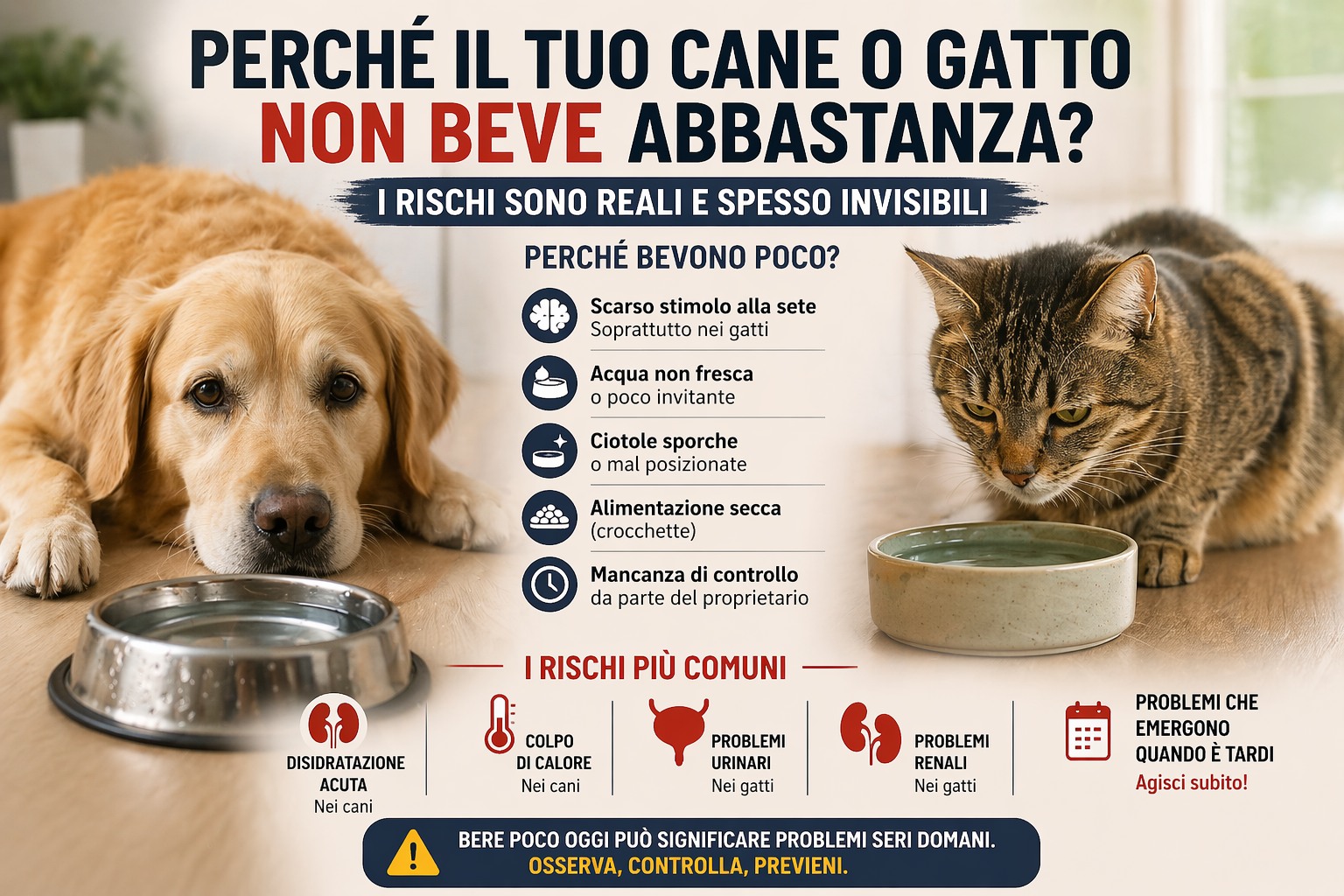
❗ Real problem:
The cat:
- does not perceive thirst well
- avoids water that is not fresh
- drinks little by nature
👉 With heat, this becomes a serious risk.
🍽️ Nutrition: what changes with high temperatures
🐶 Dog
- Tends to eat less during hot hours
- Prefers light meals
👉 Practical advice:
- Divide meals (early morning / evening)
- Avoid activity immediately after eating
🐱 Cat
- Even more sensitive to heat
- It can drastically reduce food intake
👉 Attention:
If it eats less and drinks little → double risk.
❌ Common summer mistakes
Many owners make the same mistakes over and over:
- Leaving stagnant water all day
- Not checking how much water is actually drunk
- Thinking “if it’s hot, it will drink more”
- Leaving food out during the hottest hours
- Not adjusting quantities
👉 The problem isn’t lack of water, but lack of real control.
🚨 Signs of dehydration (more common in heat)
🔍 Symptoms:
- Sudden lethargy
- Rapid breathing
- Dry gums
- Less elastic skin
- Poor appetite
👉 In more severe cases:
- heatstroke (especially in dogs)
📋 Summer checklist (essential)
✔ Always fresh water (changed often)
✔ Clean bowls in cool areas
✔ Monitoring the amount drunk
✔ Meals during cooler hours
✔ Behavior observation👉 In summer, “leaving the bowl full” is no longer enough.
🤔 FAQ – Frequently Asked Questions
My dog drinks more in summer: is that normal?
Yes, it’s normal. But if it drinks too much or too little, it should be monitored.
The cat doesn’t drink even in the heat: what to do?
It’s common, but it shouldn’t be ignored. It needs to be actively encouraged.
Can I leave water out all day?
Yes, but it must be fresh and clean, not stagnant.
Does heat reduce appetite?
Yes, especially in cats. It’s physiological, but it needs to be managed.
🧠 The point many underestimate
Knowing how much water is needed is useful.
👉 But the real problem is:can you really ensure your pet drinks enough every day?
- When you’re away from home?
- When it’s very hot?
- When don’t you have direct control?
👉 Most people don’t have real control.
🔚 Conclusion
With the arrival of the first warm days:
- water needs increase
- appetite decreases
- the risk of imbalances increases
Yet, in daily practice:
- we don’t really monitor
- we don’t adjust habits
- we rely on chance
👉 And this is where the problems begin, often invisible at first.
-


Leave a comment
All comments are moderated before being published.
This site is protected by hCaptcha and the hCaptcha Privacy Policy and Terms of Service apply.