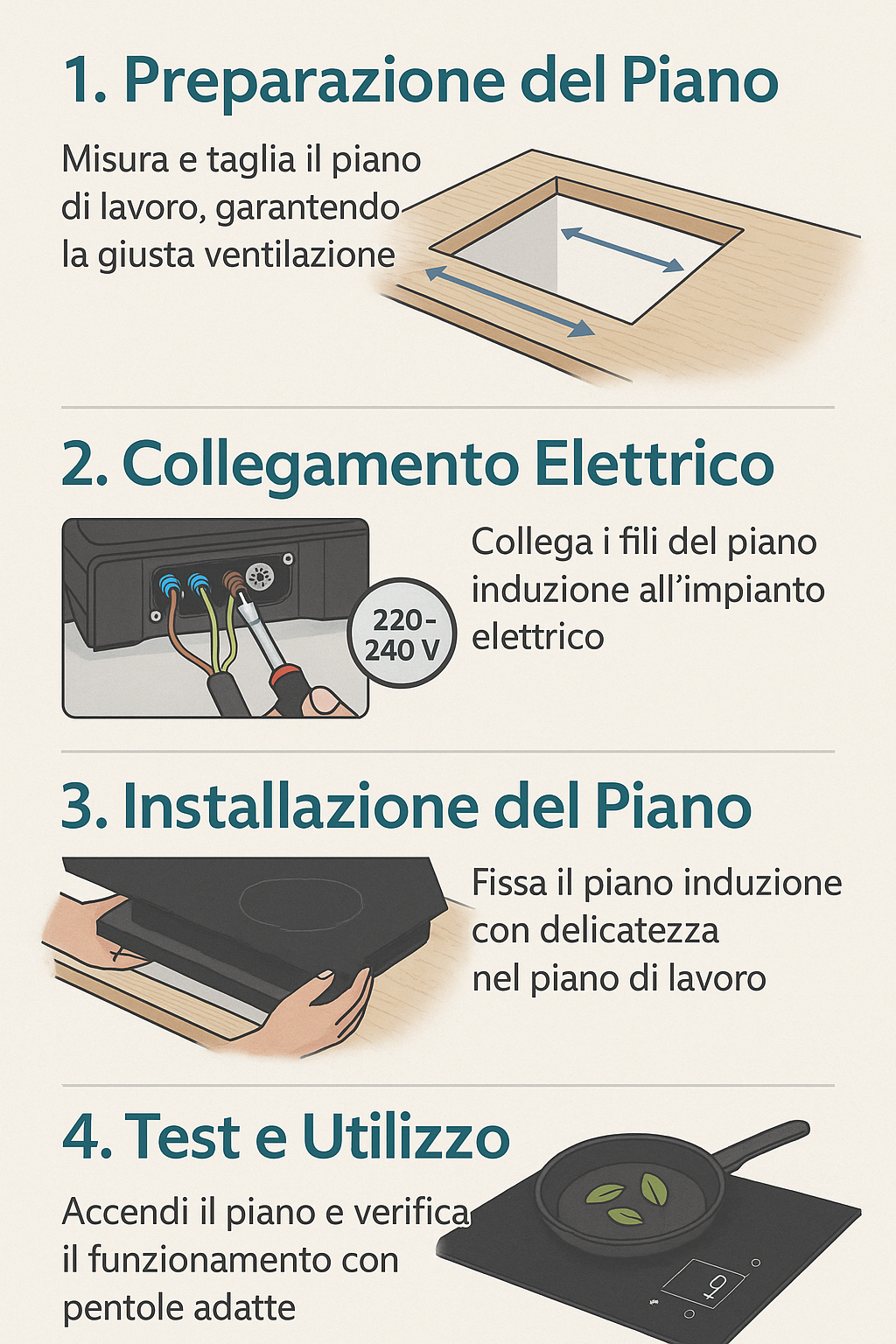
Induction cooking is becoming increasingly popular in Italian homes thanks to its efficiency, safety, and environmental friendliness. However, before installing an induction hob, it's essential to be well-informed to avoid mistakes and get the most out of this technology. In this guide, we'll look at how to install an induction hob , how to use an induction hob , and what to use with an induction hob for effective and safe cooking.
✅ 1. How to install an induction hob: inspection, installation, and safety
Installing an induction hob requires some technical requirements that should not be overlooked.
Here are the main steps to follow:
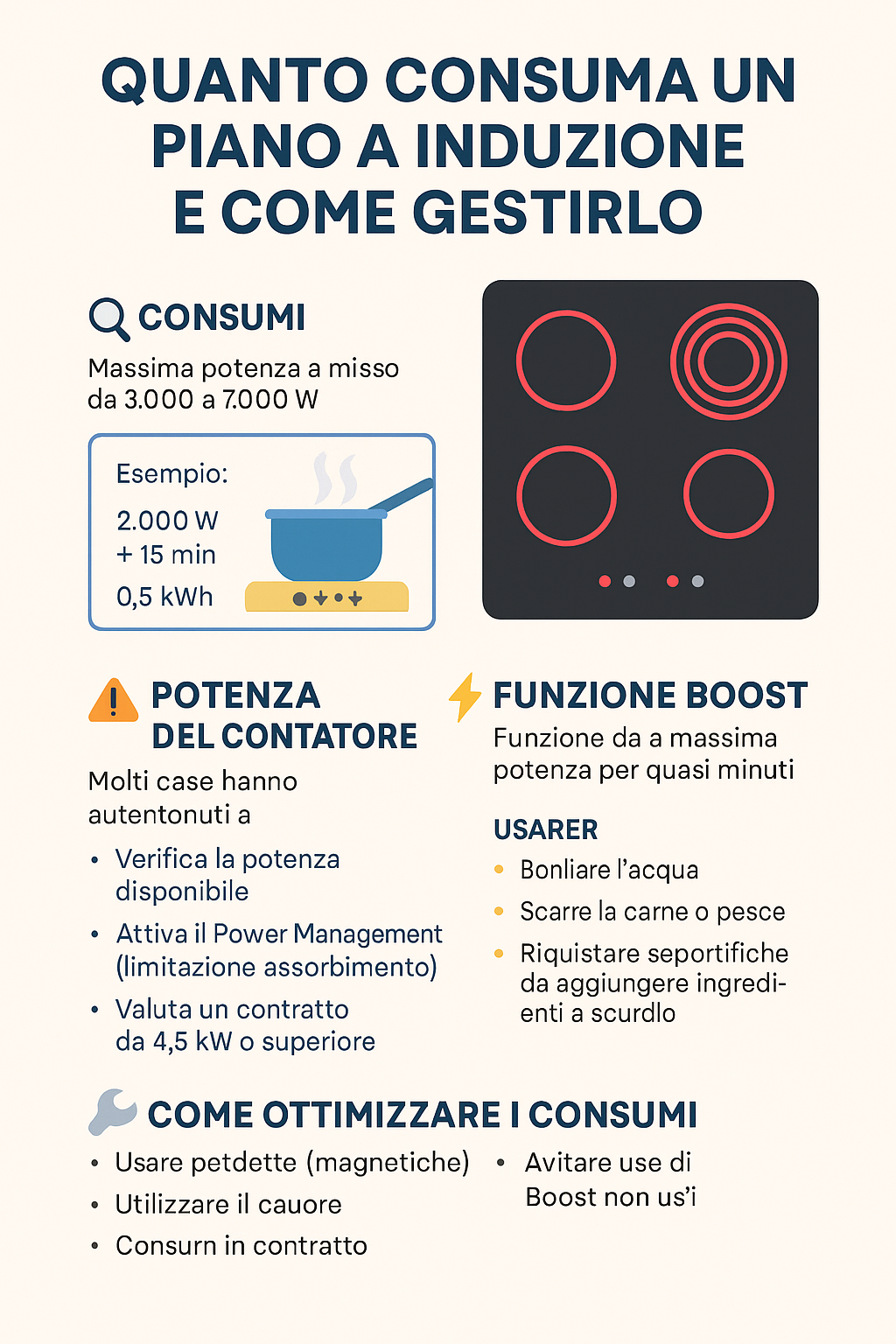
🔌 Check the meter power
First, make sure your electrical system is adequate. Induction hobs require a power rating of between 2.5 and 7.5 kW, depending on the model. If you have a 3 kW meter, you may have limitations. In this case:
-
Consider upgrading to a 4.5 or 6 kW contract
-
Or choose an induction hob with Power Management , which limits the power absorbed
🧰 Who can install it?
Installation must be performed by a qualified electrician, especially if modifications to the electrical system or panel are required. Remember:
-
You need a socket with a ground connection
-
The worktop must have sufficient space for ventilation (at least 5 cm on each side)
-
Always follow the manufacturer's instructions
📍 Where to install the induction hob?
It can be built into the kitchen countertop or flush-mounted. It's important to avoid installing it above non-ventilated ovens or drawers that can overheat.
👨🍳 2. How to use an induction hob: first steps to cooking efficiently
Once installed, using an induction hob is simple, but requires a small change in habits:
🔹 Turning on and adjusting the temperature
-
The surface is activated only when in contact with magnetic pans
-
You can adjust the heat precisely (often from 1 to 9 levels)
-
Many models have timers, boosters and combinable zones
🔹 Cleaning and maintenance
One of the main advantages is that the surfaces don't heat up , so food residues won't burn. Use a damp cloth and mild detergent.
🔹 Integrated security
Many induction hobs include features like child locks, automatic shut-off, and pan detection—ideal for those seeking efficiency and peace of mind.
🍳 3. What to use with the induction hob: pans, pots and accessories
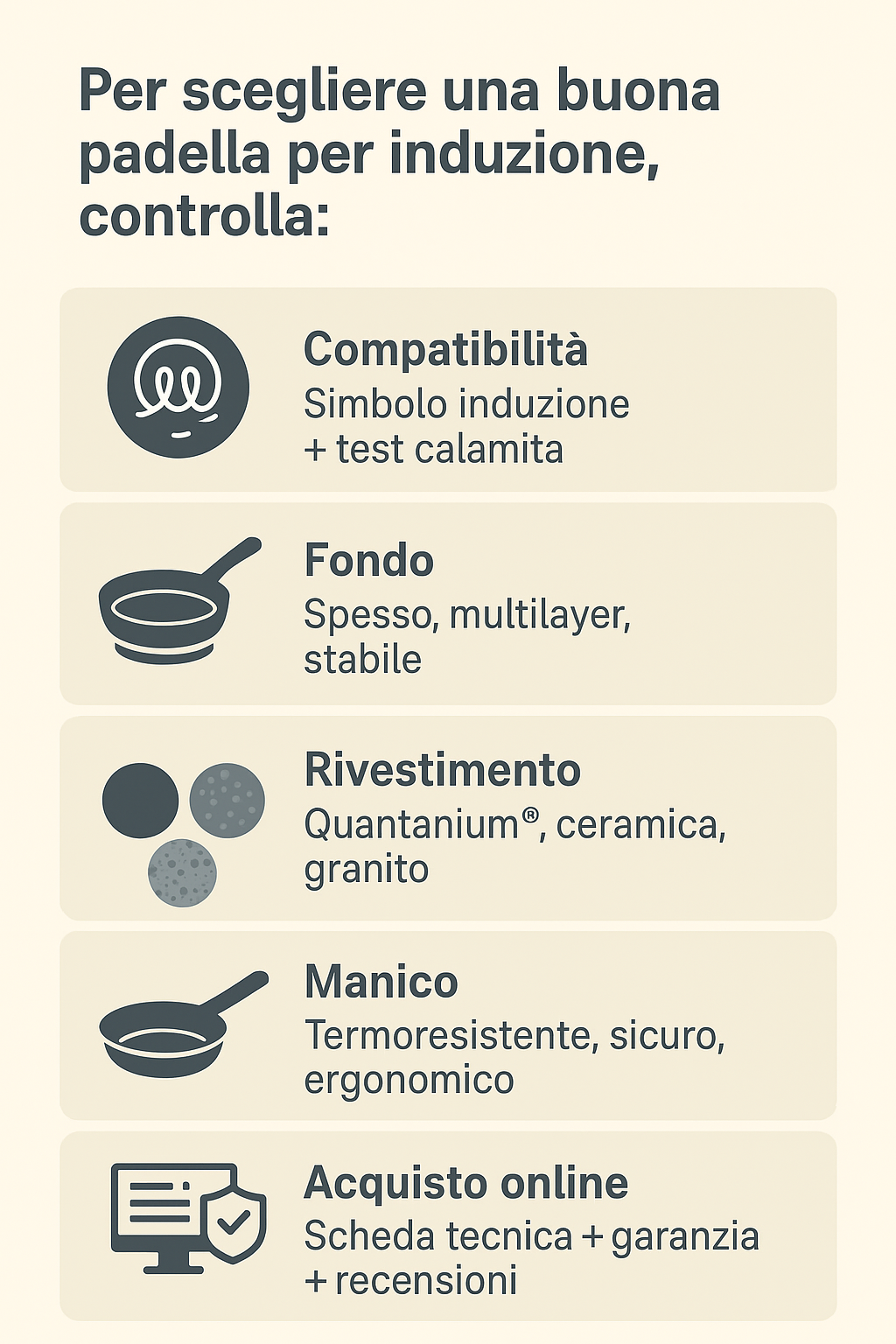
Not all pans are suitable for induction cooking. Here's what you'll need:
✅ Pots and pans with magnetic bottoms
Check for the induction symbol (a spiral) or do the magnet test : if it sticks to the bottom, it's good!
The ideal materials:
-
Stainless steel with thick bottom
-
Enamelled cast iron
-
Aluminum and copper only if they have a compatible ferritic base
✅ Recommended coverings
-
Quantanium or Ceramic non-stick (healthier)
-
Granite for natural cooking
✅ Heat-resistant handles
Choose pans with heat-insulated handles , ideal for induction which only heats the base, but can transmit heat through contact.
💡 Conclusion: awareness first
Installing and using an induction hob is a modern and sustainable choice, but it requires attention to the conditions of your home and the tools you use.
With this guide, you now know how to install an induction hob , how to use an induction hob intelligently, and what to use with an induction hob to take advantage of all its benefits.
Was this guide helpful?
👇 Leave your comments and discover our selection of magnetic accessories and recipes on Rustilia!

Leave a comment
All comments are moderated before being published.
This site is protected by hCaptcha and the hCaptcha Privacy Policy and Terms of Service apply.